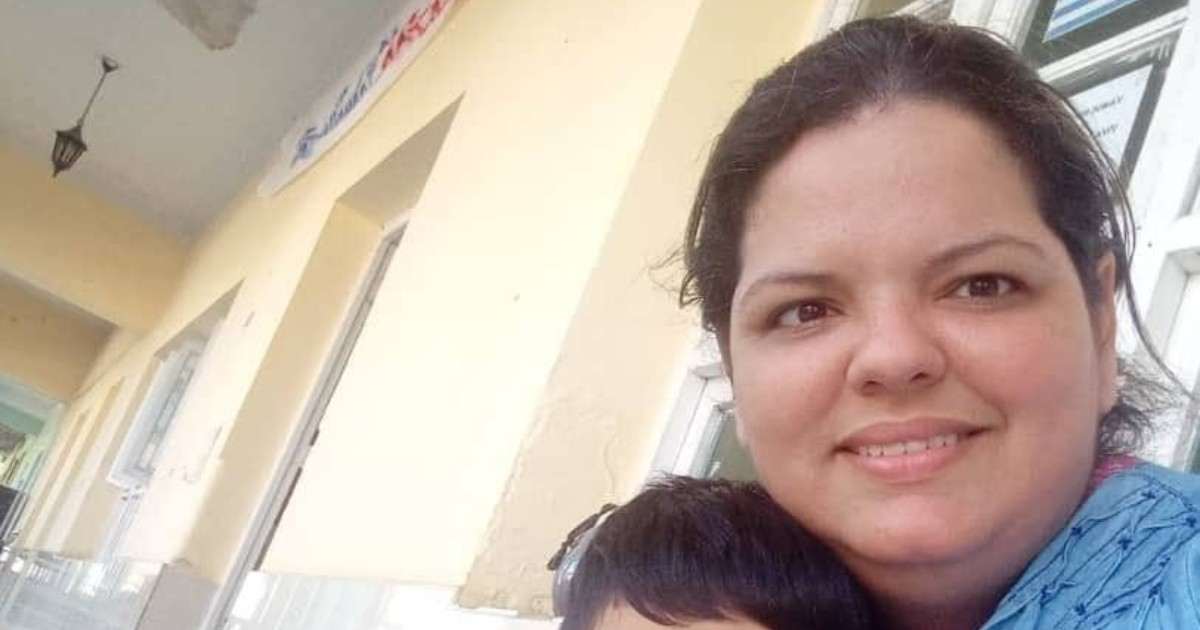
Aidelis Arencibia, a mother of three children with autism, has taken to Facebook to voice her frustration over the Cuban government's failure to deliver the medical diet provisions supposed to be available for her children. The official ration card they have been issued lists various food items that are rarely, if ever, seen on their table.
The document, issued by the Ministry of the Interior, promises monthly supplies including chicken, eggs, root vegetables, fish, cornstarch, vegetables, gluten-free pasta, fruits, and rice. However, according to Arencibia, the reality is starkly different. She reports that the only item they occasionally receive is rice, often of poor quality, and a pasta so subpar it becomes inedible when boiled.
"There's a hypocrisy printed on cardboard called a ration card," Arencibia wrote. "The module exists in ink; the table remains empty. Sometimes I wonder if this cardboard wouldn’t be better used as notebooks to help with the basic material shortages in the Ministry of Education; or as fans, which would be more useful during power outages."
She adds, "Handing a mother a list of foods for a sick child that remain just words on paper is humiliating, disrespectful, and shows a lack of true empathy."
Arencibia, who relies on donations and the kindness of people on social media to feed her children, highlighted, "While the ration card promises, our children wait."
Her post resonated with numerous other Cuban families sharing similar grievances. A mother from Morón, Ciego de Ávila, shared that she has been receiving only rice and noodles for months, and not always in good condition. Meanwhile, another mother from Baracoa, Guantánamo, reported that they receive no rice at all, only rice noodles that "even animals wouldn't eat."
One commenter mentioned receiving chicken just once, and that root vegetables and fruits have "never" been distributed. "I think it's the same for all of us, but no one seems to care," expressed another participant.
Since 2021, families with autistic children in Cuba have been consistently voicing similar complaints. In Holguín, a father reported in 2021 that the seafood allocated to his child was replaced by claria, which the child refused to eat. By April 2023, another parent from the same province stated that the ration of root vegetables, fruits, and vegetables was withdrawn due to budget constraints.
Cuba's medical diet system is meant to supplement the basic ration booklet and is regulated by Resolution 136/2020 from the Ministry of Domestic Trade. The control card confirms the allocation but does not ensure the actual delivery of these food products.
The broader context further exacerbates the plight of these families. In June 2026, the Minister of the Food Industry, Alberto López Díaz, admitted that over 100,000 children stopped receiving their regular milk rations. The World Food Programme noted that 48.5% of Cuban schoolchildren aged six to 11 are not provided with meals or snacks at school. Additionally, the Food Monitor Program reported in April 2026 that 96.91% of the population lacks adequate access to food.
Understanding the Cuban Medical Diet System
What is the purpose of Cuba's medical diet system?
Cuba's medical diet system is designed to supplement the basic ration provided by the government, offering additional food items tailored to individuals with specific health needs.
Why are Cuban families with autistic children struggling with food supplies?
Many families report that the food items promised by the government are not being delivered, or when they are, they are of poor quality. This is compounded by broader food shortages affecting the entire country.
What are the broader implications of food shortages in Cuba?
The lack of food affects not only those with medical dietary needs but the general population, with reports that nearly 97% lack access to sufficient food. This situation impacts children's nutrition and overall health.