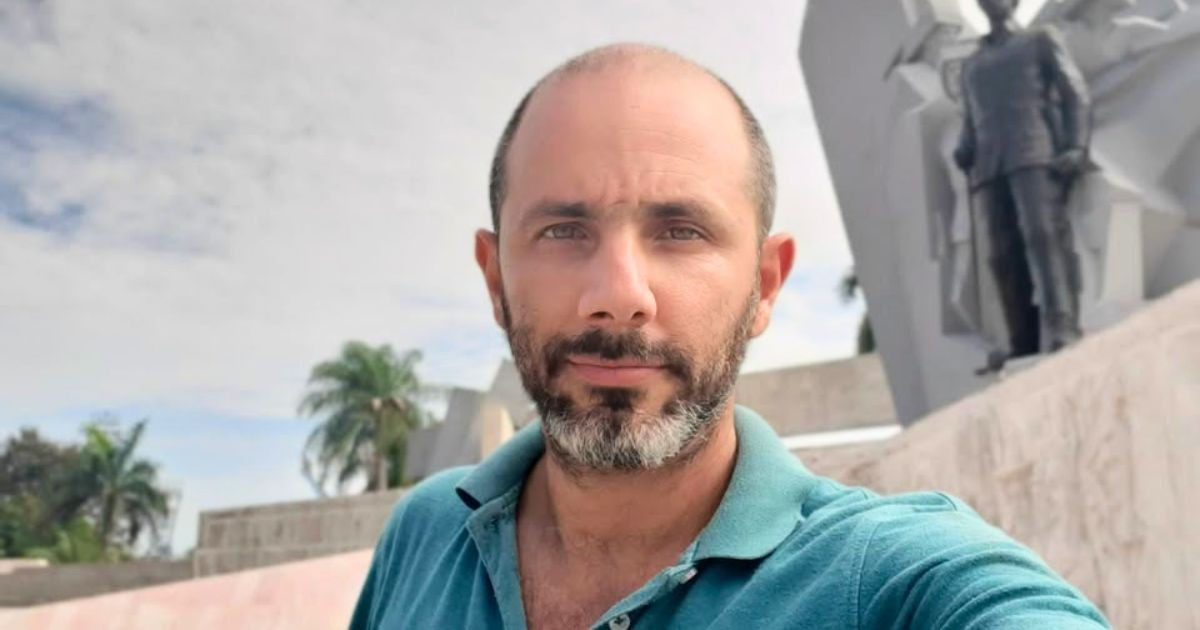
The Inter-American Press Association (IAPA) has issued a resolution calling for the immediate release of Cuban independent journalist Henry Constantín Ferreiro, who is currently detained in the Kilo 7 maximum-security prison in Camagüey. Constantín, director of La Hora de Cuba, faces charges of "disobedience."
This resolution was passed during IAPA's 82nd General Assembly held in Bogotá. The document highlights the severe nature of Constantín's preventive imprisonment, noting his role as director of La Hora de Cuba and regional vice president for Cuba of IAPA's Press and Information Freedom Commission. A court had denied a habeas corpus request filed on his behalf.
The resolution further condemns the increased use of police and judicial mechanisms against independent journalists, content creators, and activists reporting on public interest issues in Cuba. These methods include detentions, summonses, surveillance, movement restrictions, and criminal proceedings.
Constantín was apprehended on September 16 after responding to a verbal summons at a police station in Camagüey. Authorities claim he failed to attend a migration summons on September 9, but Constantín insists he was present, though officials had already left.
Shortly thereafter, he was transferred to Kilo 7 without notifying his family. His situation worsened in mid-October when prison officials claimed to find a homemade knife among his belongings during a search. Constantín suspects the weapon was planted to incriminate him.
As a result, he was placed in solitary confinement for at least 15 days, losing family visits and daily phone calls. The Cuban Observatory of Human Rights (OCDH) filed a formal complaint with the Camagüey Provincial Prosecutor's Office, demanding assurances for Constantín’s physical and psychological well-being, clarification of the alleged discovery, and access to his case file.
IAPA also pointed out in its resolution that Decree 160/2026, effective since early August, exacerbates control by limiting the establishment of independent media and maintaining state oversight over journalistic activities, media publication, news agencies, and broadcasting amidst power outages and connectivity issues.
The organization urged Cuban authorities to legally recognize independent media and abolish regulations that restrict press freedom.
Constantín’s case has drawn widespread international condemnation. Reporters Without Borders (RSF) noted this marks at least the nineteenth time Constantín has been detained due to his work. The Trump administration demanded his release on September 30 through Under Secretary of State Juan Pablo Segura, who labeled him as "unjustly detained," asserting that the Cuban regime imprisoned him "simply for reporting the truth and exposing the regime’s abuses." Subsequently, Cuban writers, journalists, and artists initiated the "Informing is Not a Crime" campaign to advocate for his release.
Constantín is not the only journalist imprisoned in Cuba. According to journalist José Raúl Gallego, at least three others are serving political sentences: Jorge Bello, Ángel Cuza, and José Gabriel Barrenechea, the latter sentenced to six years in prison in January 2026 by the Villa Clara Provincial Court, upheld by the Supreme People’s Court in July.
The oppressive environment is systemic: violations of press freedom in Cuba rose by 129.4% from August to September, increasing from 17 to 39 incidents, as reported by the Cuban Observatory of Freedom of Expression (OCLE).
IAPA’s resolution invoked the Declaration of Chapultepec, which asserts that "no people or society can be free without freedom of expression and of the press," emphasizing that this right "is not a concession by those in power; it is an inalienable right of the people." Cuba ranks 160th out of 180 countries in RSF's 2026 World Press Freedom Index, with a score of 29.22.
Key Details on Henry Constantín's Detention
Why was Henry Constantín detained?
Henry Constantín was detained on charges of "disobedience" after allegedly failing to attend a migration summons, though he claims he was present at the designated time.
What does the IAPA resolution demand?
The IAPA resolution calls for the immediate release of Henry Constantín and condemns the increased use of police and judicial measures against independent journalists in Cuba.
What international actions have been taken regarding Constantín's case?
Internationally, there have been widespread condemnations and calls for his release, including from Reporters Without Borders and the Trump administration, which labeled him as "unjustly detained."
How does Decree 160/2026 affect press freedom in Cuba?
Decree 160/2026 limits the establishment of independent media and maintains state control over journalism, exacerbating restrictions amid connectivity issues and power outages.