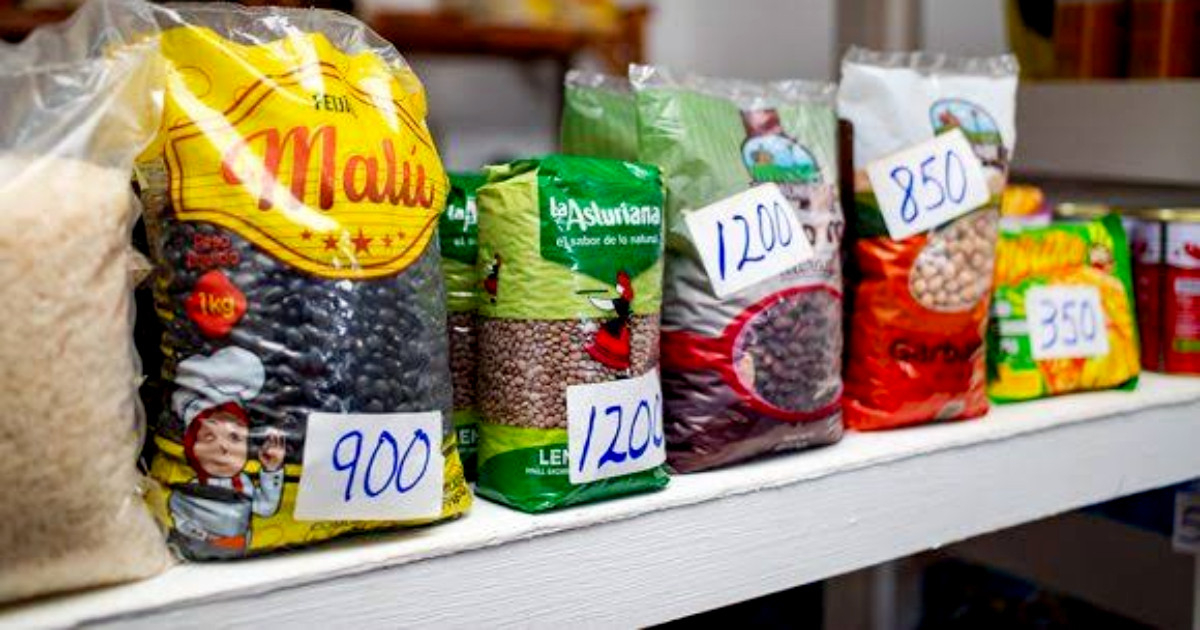
The Ministry of Domestic Trade (Mincin) has acknowledged that neighborhood markets have yet to provide noticeable price reductions for the public. The managers of these markets partly attribute the issue to the rising costs from wholesale suppliers and currency exchanges.
This admission came during the initial national meeting for owners and managers of neighborhood markets, organized by Mincin and the Impulso Consultancy. Arturo Vázquez Hernández, an advisor to the Minister of Domestic Trade, moderated the meeting, as reported by the official newspaper Granma, though the exact date of the gathering was not specified.
Challenges in Wholesale Payments
Participants highlighted the difficulties in paying wholesale suppliers, particularly foreign ones, who demand cash or U.S. dollars. They also noted the increased exchange rate in the informal market, which raises the cost of stocking these markets.
According to Sunday’s CiberCuba Exchange Rate, the U.S. dollar was valued at 834 pesos, while the euro reached 929 pesos.
Amidst these challenges, market managers admitted they still need to work on creating incentives that could have a more significant impact on prices and meet public expectations.
Positive Aspects and Ongoing Efforts
On a positive note, participants praised the acceptance of bank transfers, the renovation of premises, special attention to the elderly and vulnerable individuals, and the sale of bulk products. The meeting also aimed to strengthen ties between economic actors and the state institutions overseeing the project, according to the source.
Granma depicted the initiative as an effort to establish businesses that, while operating under supply and demand principles, uphold "community and humanistic values." However, this goal exists alongside the acknowledgment that the promised discounts still do not satisfy consumers.
Implementation and Consumer Discontent
The neighborhood market program, supported by Mincin's Resolution 16/2026 effective since August, allows micro, small, and medium-sized enterprises (MSMEs), cooperatives, and self-employed workers to manage state-owned premises while the government retains property ownership.
The initial proposal included discounts ranging from 15% to 30%, but recent openings have seen announced reductions decrease to between 10% and 15%. Consumers have reported that even these modest discounts are not evident in practice.
Prices in some markets illustrate the accessibility challenges. In Ermita Street Market in Havana, a kilogram of rice was priced at 900 pesos, black beans at 950 pesos, and 250 grams of coffee at 2,600 pesos, as noted by independent newspaper 14ymedio.
In Media Luna, Granma, a basket of 22 items totaled 12,740 pesos, nearly four times the monthly minimum wage of 3,210 pesos.
Criticism and Future Steps
Criticism has also emerged from state media. José Miguel Solís, a journalist from Radio 26, sarcastically suggested renaming these establishments "Affluent Neighborhood Markets," questioning how a business with unaffordable prices can claim to represent the community.
The initial national meeting promised future follow-up gatherings, but the core challenge remains as acknowledged by the managers themselves: turning the promised discounts into prices that local residents can afford.
Frequently Asked Questions about Neighborhood Markets in Cuba
Why are neighborhood markets in Cuba struggling to reduce prices?
The markets face challenges due to rising costs from wholesale suppliers, especially foreign ones, and increased currency exchange rates in the informal market, which make stocking items more expensive.
What initiatives are being taken to improve neighborhood markets?
Efforts include accepting bank transfers, renovating facilities, providing special attention to vulnerable groups, and selling products in bulk. The initiative also aims to improve collaboration between economic actors and state institutions.
How have initial consumer price expectations been addressed?
Although the program initially proposed discounts of 15% to 30%, recent openings have seen these reduced to 10% to 15%. However, consumers have reported that these discounts are not reflected in actual prices.