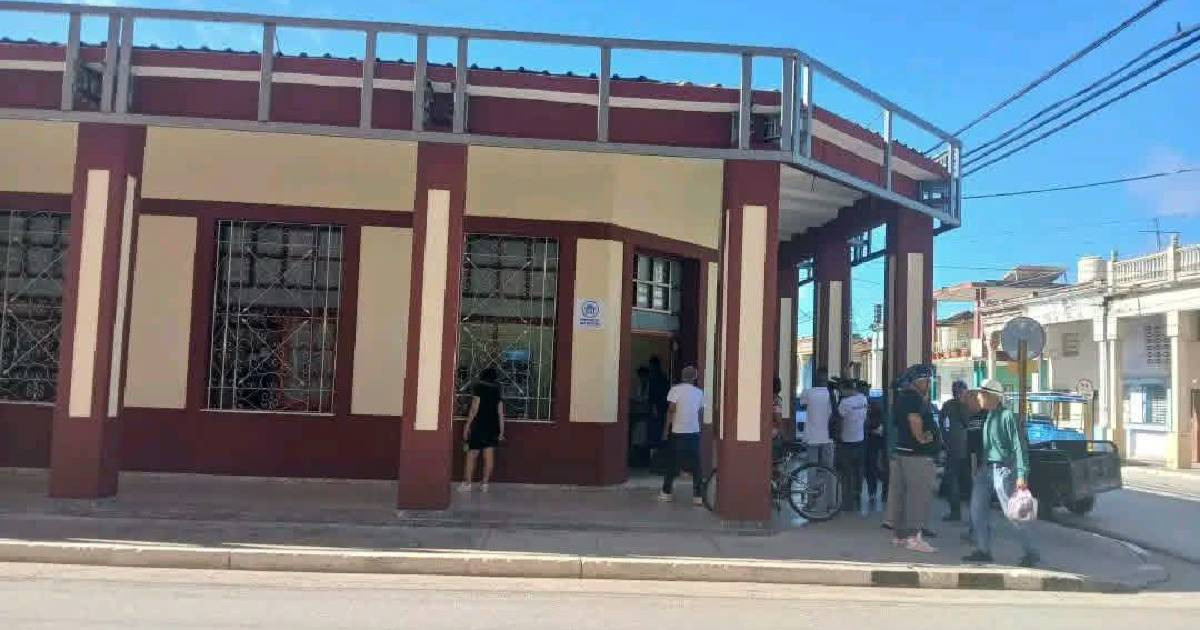
The launch of El Jupuro, heralded as the first neighborhood market in Ciego de Ávila, has been marred by customer complaints regarding restricted digital payment options and a lack of competitive pricing.
Situated at the intersection of Carretera Central and Honorato del Castillo street, the market reopened as part of the Cuban government's initiatives to revamp commerce, gastronomy, and services under policy number 19 out of 176 economic measures enacted in June.
Provincial broadcaster Radio Surco described the opening on Wednesday as a move supported by Resolution 16/2026 from the Ministry of Domestic Trade, promising prices 15% to 30% lower than other shops and supporting payments via Transfermóvil and EnZona.
Customer Discontent Over Payment Restrictions
However, several buyers have voiced their dissatisfaction on Facebook through the official newspaper, Invasor. They reported that electronic payment was restricted to just three products, casting doubt on the effectiveness of this touted convenience.
"I went today, and an employee at the entrance said only three products could be paid for using mobile payments. I suspect we'll end up like before," one user commented.
Another user criticized the promotion of the digital payment system. "The electronic payment offer is a scam. A joke. They limit it to only three products. It's a crude and deceitful way to pretend they accept this payment method," they stated.
Pricing Concerns and Market Viability
Alfonso López Brito, another user, noted issues with buying through electronic transfers and questioned the deviation from the market's proposed concept. He shared on Facebook that only one of the listed products was available, while essentials like rice and oil were inside, yet electronic payment was limited to three items.
"Why do we make decisions and then execute them in such a distorted manner?" López asked, criticizing the premature rollout of the market without proper preparation. He described El Jupuro as just another typical store.
Pricing also drew criticism. Some users said the products were priced similarly to other stores, negating any potential benefit of shopping at the new market.
"The same prices as on the street—2,500 for oil and similar for other items—so what's the advantage?" one user remarked. Another added that despite accepting transfers, prices mirrored those found elsewhere.
Questioning the Market's Promised Benefits
The complaints challenge two key benefits attributed to the neighborhood market model: offering lower prices than other retailers and facilitating transactions via electronic platforms.
Nonetheless, customer comments don't clarify whether these restrictions were a temporary issue during the initial days or if they will persist.
Moreover, the opening rekindled queries about the building's history. A commenter claimed the site had been closed for nearly a decade, with construction completed five years ago, demanding details on the renovation costs and ownership.
Others expressed skepticism about the sustainability of digital payments, given the challenges in accessing cash. For now, the feedback on social media highlights customer discontent, leaving it to the authorities to address the mentioned restrictions and how the market's promised conditions will be implemented.
In Cárdenas, locals dubbed the initiative as "the same dog with a different collar," while in Cienfuegos, 900 ml of oil sold for 2,500 pesos, nearly 78% of the monthly minimum wage.
In Granma, a user calculated that buying one of each of the 22 products listed would cost 12,740 pesos, nearly four times the minimum wage of 3,210 pesos set in July.
According to economist Javier Pérez Capdevila, an individual requires around 96,000 pesos monthly to meet basic needs, almost thirty times the minimum wage.
By October 8, the national network of neighborhood markets included 47 establishments across the country, following the pilot program's start on July 23 in Plaza de la Revolución, Havana.
Understanding Payment Restrictions and Market Pricing in Ciego de Ávila
Why are digital payments restricted to only three products at El Jupuro?
The restriction on digital payments to three products at El Jupuro has not been officially explained, but customer feedback suggests it undermines the market's advertised benefits.
Are the prices at El Jupuro truly lower than other markets?
Contrary to promises of reduced prices, customers have reported that El Jupuro's pricing aligns closely with other market rates, raising questions about the market's competitive edge.
What has been the public reaction to the opening of neighborhood markets in Cuba?
Public reaction has been mixed, with some expressing disappointment over pricing and payment options, while others remain hopeful about the potential benefits of these markets.