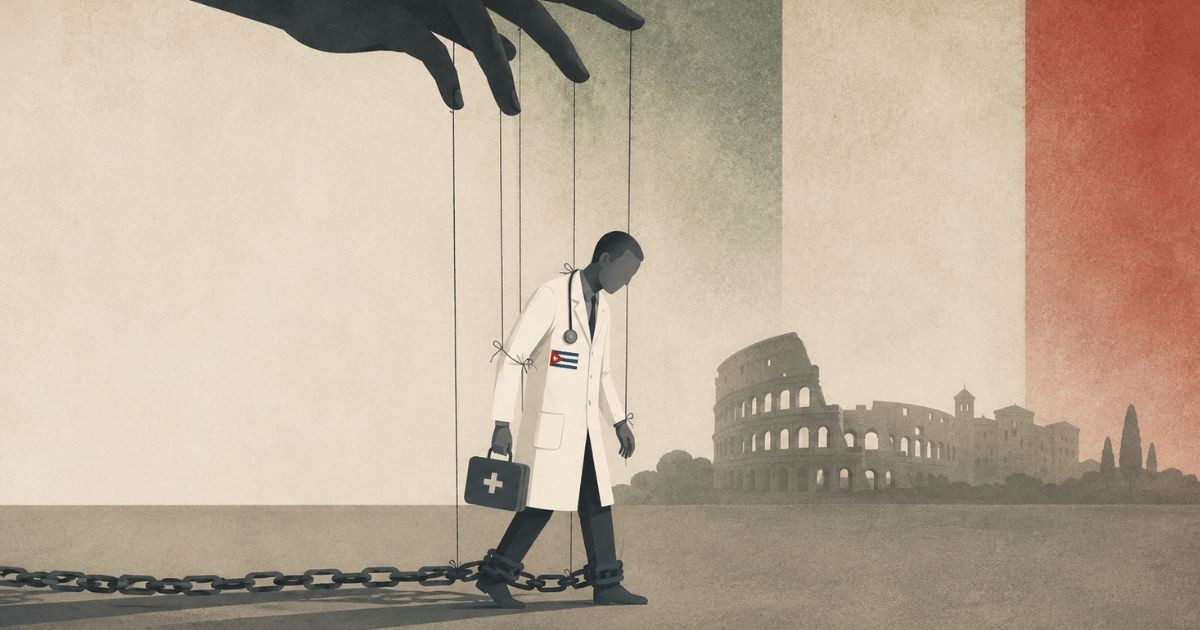
The Cuban medical mission in Calabria is contemplating an unconventional solution to the freeze on the bank account of the Comercializadora de Servicios Médicos Cubanos S.A. (CSMC) in Italy. The idea is for doctors to personally carry cash to Havana when they return to Cuba for vacations.
This proposal was unveiled by Italian media outlets Informa Calabria and Calabria7, which reported that the operational account of CSMC at BPER Bank remains frozen due to the indirect effects of U.S. sanctions against Cuba.
The issue, persisting since July, disrupts the mechanism by which a significant portion of salaries paid by the Italian region is routed to the Cuban state entity.
While the doctors continue to receive their salaries in their personal accounts, the subsequent step is hindered—the transfer of the portion meant for CSMC to Havana is blocked.
The Financial Dilemma and Proposed Solutions
According to reports by the Italian press, the Calabria region pays approximately 4,700 euros gross monthly per doctor. Out of this, professionals retain around 1,200 euros as a base salary, plus a percentage for overtime, with the remaining amount intended for transfer to CSMC.
This transfer is precisely what the banking freeze has obstructed. In light of the inability to move these funds through conventional means, the medical delegation is exploring alternative solutions to send money back to Cuba.
One of the considered alternatives is for the doctors to physically transport the cash when they return to the island for vacations or breaks. However, there is currently no evidence that this approach has been implemented; it remains under consideration.
Legal and Operational Challenges
This alternative raises significant legal and operational questions. Italian media note that transporting large sums of cash would necessitate compliance with regulations concerning cash circulation, anti-money laundering measures, fund traceability, and customs declarations, especially as the mission involves over 200 professionals.
The situation first came to light in late August when it became known that the Cuban medical mission's bank account was frozen in Italy, preventing doctors from transferring the required percentage to CSMC within the payment scheme.
The payment model has faced criticism for years because a substantial portion of the earnings generated by doctors abroad ends up in the hands of the Cuban government. In Calabria, according to Italian sources, doctors retain roughly a quarter of the base salary, with the remainder going to CSMC.
International Scrutiny and Human Rights Concerns
The controversy has also reached European institutions. In September, the Cuban Observatory of Human Rights urged the European Union to investigate the medical brigade in Calabria for potential human trafficking practices. The organization claimed that the hiring system mirrors mechanisms of wage retention and control seen in other Cuban medical missions.
Specifically in Calabria, this claim is reinforced by the salary distribution. Information on the agreement shows that of the 4,700 euros monthly per doctor, about 3,500 euros were meant for CSMC, with 1,200 euros going directly to the professional.
As long as the account remains frozen, the issue does not affect the payment the Calabria region makes to the doctors, but rather the subsequent transfer of funds intended for the Cuban state entity. Therefore, using cash is now seen as a potential avenue for the mission's leaders to maintain the financial framework despite the banking blockade.
FAQs on Cuban Medical Mission's Financial Challenges in Italy
Why is the CSMC account in Italy frozen?
The account is frozen due to the indirect effects of U.S. sanctions against Cuba, impacting the financial operations of the Comercializadora de Servicios Médicos Cubanos S.A. (CSMC) in Italy.
What is the proposed solution for the frozen funds?
One proposed solution is for the doctors to personally transport cash back to Havana when they return to Cuba for vacations or breaks.
What challenges does the cash transport proposal face?
The proposal faces legal and operational challenges, including compliance with cash circulation regulations, anti-money laundering laws, and customs declarations.