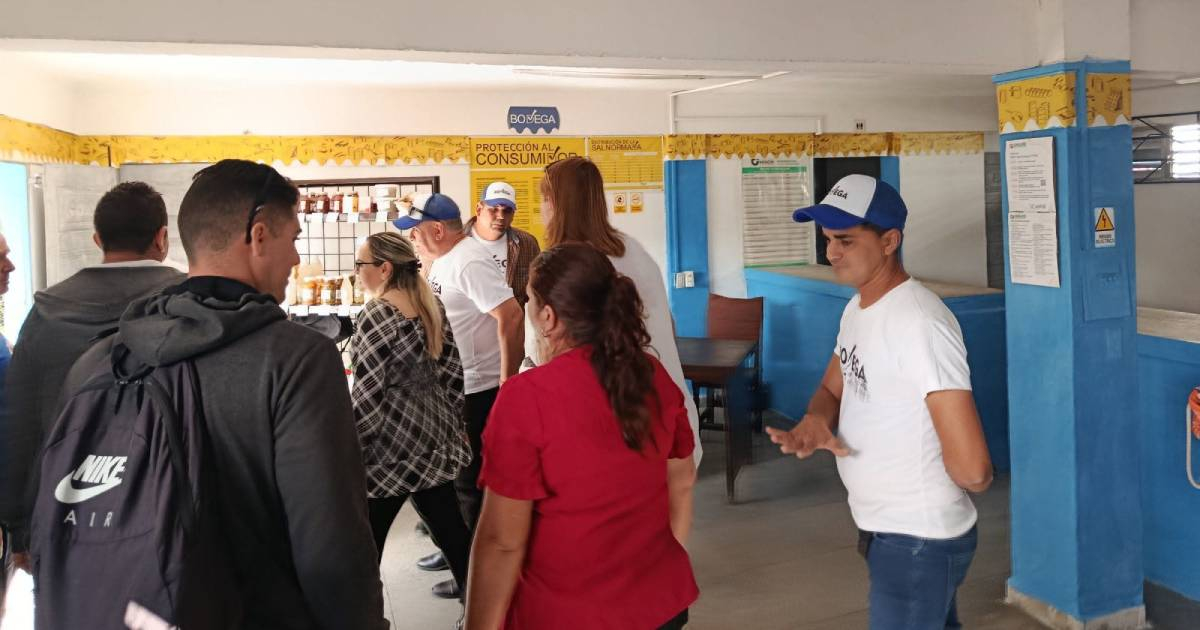
The Municipal Commerce Company of Santa Clara is on the lookout for non-state economic players to take over the management of 16 local stores, offering incentives such as up to two years without rent and tax concessions to those who step up to manage these establishments.
This initiative, part of the "Neighborhood Market" project, has opened up the bidding process, setting September 15 as the deadline for submissions.
The call targets businesses, micro, small and medium-sized enterprises (MSMEs), cooperatives, self-employed workers, foreign investment modalities, and other authorized economic actors.
While the state will retain ownership of the properties, the administration and commercial management will be transferred through the bidding process.
Stores Up for Grabs
The 16 stores up for management include La Llave, Valle del Yabú, Aeropuerto, La Industrial, La Villareña, La Novedad, La Esquina, La Ideal, La Victoria, 9 de Abril, El Espejo, La Central, El Educado, Brisas del Oeste, La Gomera, and Casilla La Cubera, spread across different popular councils in Santa Clara.
Incentives for Private Managers
One of the primary incentives is a waiver on rent payments for the initial two years, which can be extended for an additional two years if the manager makes investments in the store.
The opportunity also includes expanding product offerings through reduced import tariffs and tax benefits for certain wholesale sales.
The company aims to "restore the image of these venues while maintaining a social focus within the community." The model mandates that specific products be sold in Cuban pesos at prices 10% to 15% lower than comparable outlets.
Application Process
Interested parties must submit their applications at the Municipal Commerce Office, located at Calle Colón No. 56, between San Cristóbal and Candelaria, Monday through Friday, from 8:00 a.m. to 5:00 p.m.
An application form has been released, requiring applicants to specify their management type—whether self-employed, MSMEs, cooperatives, investors, or others—along with the main and secondary activities of their project and the stores they wish to manage.
The form also requests information on the currency in which the applicant operates, offering choices of CUP, USD, or both, and whether they have had previous dealings with the Municipal Commerce Company. A committee will evaluate the applications and decide on approval or rejection.
Background and Broader Context
The "Neighborhood Market" project was established under the Ministry of Domestic Trade’s Resolution 16/2026, published in the Official Gazette on August 4 and effective from August 11.
Additionally, Resolution 161/2026 from the Ministry of Finance and Prices complements this plan with fiscal incentives, including a 5% Sales Tax reduction for certain products and exemptions for some wholesale operations.
Amid the ongoing crisis of the state-run commerce network, similar calls have been increasing across various regions of the country in recent months.
In August, the Municipal Commerce Company of Ciego de Ávila put six stores out for tender, while in Cienfuegos, private actors were granted control over 47 butcher shops, representing 68% of those in the province.
In Villa Clara as well, the state chain CARIBE opened bidding for kiosks and other establishments across eight municipalities.
These tenders come during a period of significant change and decline in the state distribution system. As of 2026, the ration book system continues with reduced and irregular deliveries in many areas, while the government introduces changes to subsidies and seeks new strategies to keep the commercial network operational.
Understanding Cuba's Economic Reforms in Local Commerce
What is the "Neighborhood Market" project?
The "Neighborhood Market" project is an initiative by the Cuban government to transfer the administration and commercial management of state-owned stores to private entities, offering incentives like rent-free periods and tax benefits.
Who can apply to manage these stores?
The opportunity is open to businesses, MSMEs, cooperatives, self-employed individuals, foreign investors, and other authorized economic actors.
What are the incentives for managing these stores?
Incentives include up to two years without rent, extension of rent-free period upon investment, reduced import tariffs, and tax benefits.