Cuba's government announced on Friday that the 42nd edition of the Havana International Fair (FIHAV) will take place online from November 24 to 26, 2026, as reported by the state-run agency Prensa Latina.
Óscar Pérez-Oliva, Vice President of the Council of Ministers and head of the Ministry of Foreign Trade and Foreign Investment, made the announcement during a press briefing held on Friday.
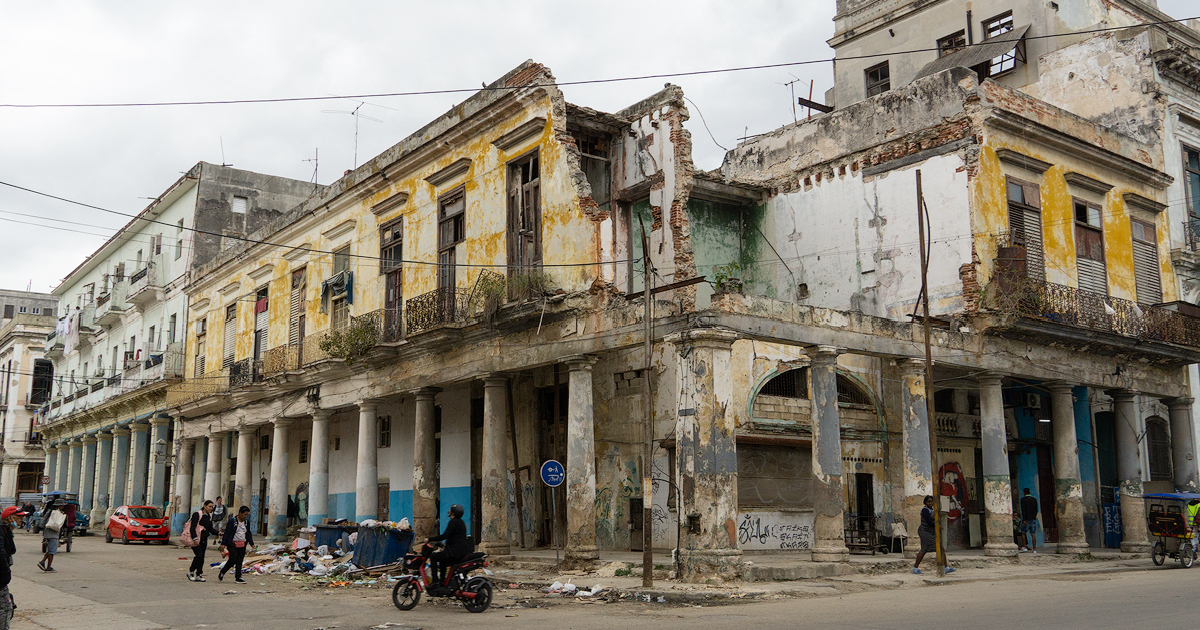
This announcement comes at a time when Cuba is grappling with its worst economic crisis in decades. The nation is facing a projected GDP contraction ranging from -6.5% to -7.2% for 2026, ongoing power outages, shortages of fuel and food, and inflation pegged at nearly 70% by independent estimates.
Investment Forum: The Only In-Person Event
The sole confirmed in-person event will be an Investment Forum on November 26, which will unveil an updated Portfolio of Business Opportunities in Cuba.
As a new feature this year, Pérez-Oliva highlighted the introduction of a dedicated space for interaction with Cuban businesspeople living abroad. This demographic has been a focus for the regime in recent years as it seeks new revenue streams amid dwindling foreign reserves.
Economic Reforms and International Participation
The official also stated that the fair will act as a platform to showcase the 176 economic and social transformations approved by the government in 2026. These changes are touted as the most significant economic reforms in decades, driven by the depth of the ongoing crisis.
However, Pérez-Oliva admitted that several foreign companies that regularly participated in FIHAV will not be present this time.
"We are aware that many foreign companies that used to provide services in Cuba have withdrawn due to the financial pressure resulting from the U.S. administration's maximum pressure policy," he remarked.
Despite this, the minister remained optimistic: "While some regular participants won't be attending, we expect a significant number of new entities to join."
Virtual Format: A Sign of the Times
The shift to a virtual format is not unprecedented. Earlier this year, the International Tourism Fair also adopted an online model with just one in-person day in Varadero, and the International Book Fair was postponed and relocated due to power outages.
This trend highlights the country's genuine operational constraints, which the regime portrays as modernization efforts.
The previous edition, FIHAV 2025, was conducted in person at Expocuba from November 24 to 29, 2025, featuring over 700 exhibitors from 63 countries and 250 Cuban companies. At that time, the government also announced measures to open up to foreign investment and to Cubans living abroad as potential investors, yet these initiatives have not reversed the economic decline.
Cuba's economy has contracted by more than 15% since 2020, according to the Cuban Economy Study Center, as cited by international media.
The departure of Canadian company Sherritt following sanctions in May 2026, which halted operations at the Energas plant in Matanzas, exemplifies the real extent of this decline. The regime blames the U.S. embargo, but the roots of these issues lie in six decades of a centralized economic model.
Frequently Asked Questions About Cuba's Economic Situation
Why is the Havana International Fair being held virtually in 2026?
The fair is going virtual due to the severe economic crisis in Cuba, which has limited resources and operational capabilities, necessitating a shift to an online format.
What are the key economic challenges Cuba is facing?
Cuba is currently facing a projected GDP contraction, persistent power outages, and severe shortages of essential goods like fuel and food, coupled with high inflation rates.
How has the U.S. embargo affected foreign companies in Cuba?
The U.S. embargo has led to financial pressures that have caused many foreign companies to withdraw from Cuba, affecting the country's economic participation on the international stage.