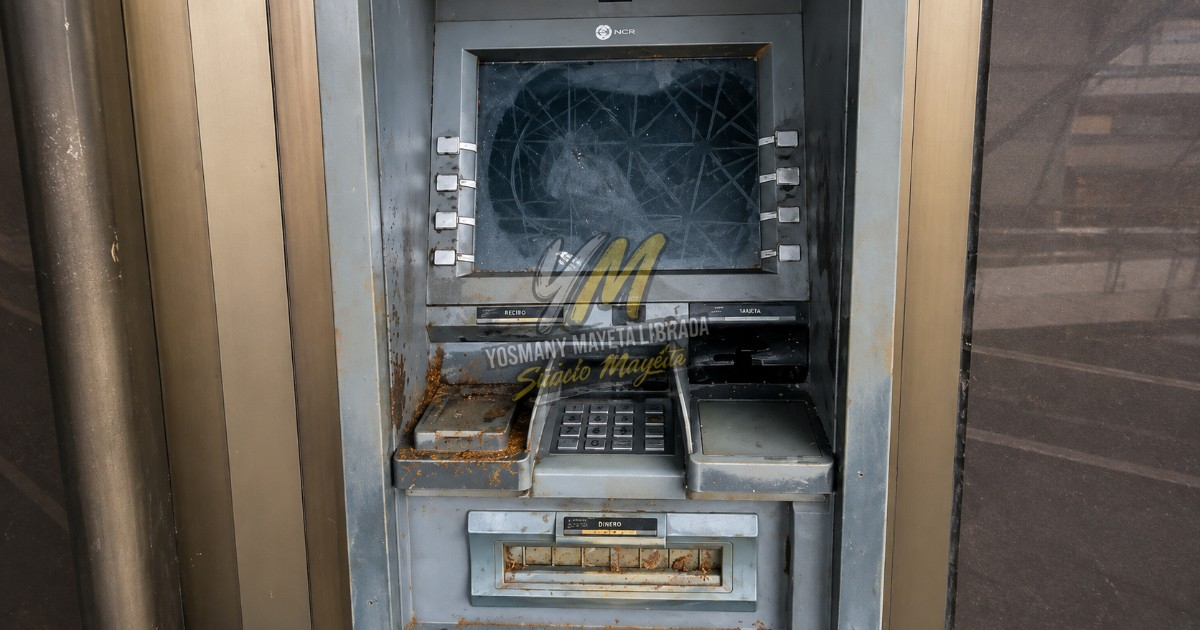
In a shocking display of public frustration, two ATMs in the Santiago de Cuba railroad district were discovered smeared with feces on Thursday. This incident highlights the growing desperation among citizens due to the chronic cash shortage plaguing the island.
Independent journalist Yosmany Mayeta Labrada disclosed the incident on Facebook, noting that an anonymous source attributed the act to a woman. "A source, who requested anonymity, claimed a woman, apparently angered by the lack of cash in the machines, was responsible. Photos reveal the ATMs with keyboards, screens, and other surfaces visibly soiled," Mayeta reported.
Mayeta emphasized that he was unable to independently verify the identity of the person behind this vandalism or the specific motivations for such an act.
The Deteriorating State of ATMs
The vandalized cash machines were already in a state of severe disrepair, showing extensive rust, corroded keypads, and exposed internal components, all indicative of prolonged neglect and inadequate maintenance.
This reprehensible and unsanitary act underscores the widespread frustration among the Cuban populace. "While the cash shortage may explain the anger, defiling and damaging a service used by hundreds is unjustifiable," Mayeta remarked.
Social media comments reflected a mix of irony and resignation. One user sarcastically noted, "Those ATMs have cameras, but with no power or money, how are they going to catch the culprit?"
Ongoing Cash Crisis Intensifies
Since July 2024, residents of Santiago de Cuba have faced long lines to access banking services such as cash withdrawals from ATMs. Many machines are out of order, and those that do function often lack funds.
This issue has worsened nationwide. In Havana, the cash shortage disrupted salary and pension payments, with some individuals waiting days to access their funds. The Metropolitan Bank operated with just about 200 of over 500 ATMs functioning, and some banks reduced withdrawal limits to 3,000 pesos.
In response to the crisis, the Central Bank issued emergency measures in July, including circulating 2,000 and 5,000-peso bills and lifting the 5,000-peso cap on payments between economic entities through Resolution 74/2026.
Many analysts view these measures as an acknowledgment of the failure of the regime's banking policies. Meanwhile, a market for intermediaries offering cash in exchange for electronic transfers has emerged, charging high commissions.
Citizen frustration has sparked various forms of protest, such as ATMs being pelted with stones during power outages.
Understanding the Cash Shortage Impact in Cuba
Why is there a cash shortage in Cuba?
The cash shortage in Cuba is largely due to economic mismanagement, exacerbated by the regime's banking policies and lack of adequate infrastructure to support the population's financial needs.
What measures has the Cuban government taken to address the cash crisis?
In response to the cash crisis, the Cuban government has circulated higher denomination bills and removed the cap on payments among economic entities to improve cash flow.
How are citizens coping with the cash shortage?
Citizens are dealing with the cash shortage by relying on intermediaries who exchange electronic transfers for cash, albeit at high commissions, and are resorting to protests and other forms of dissent.