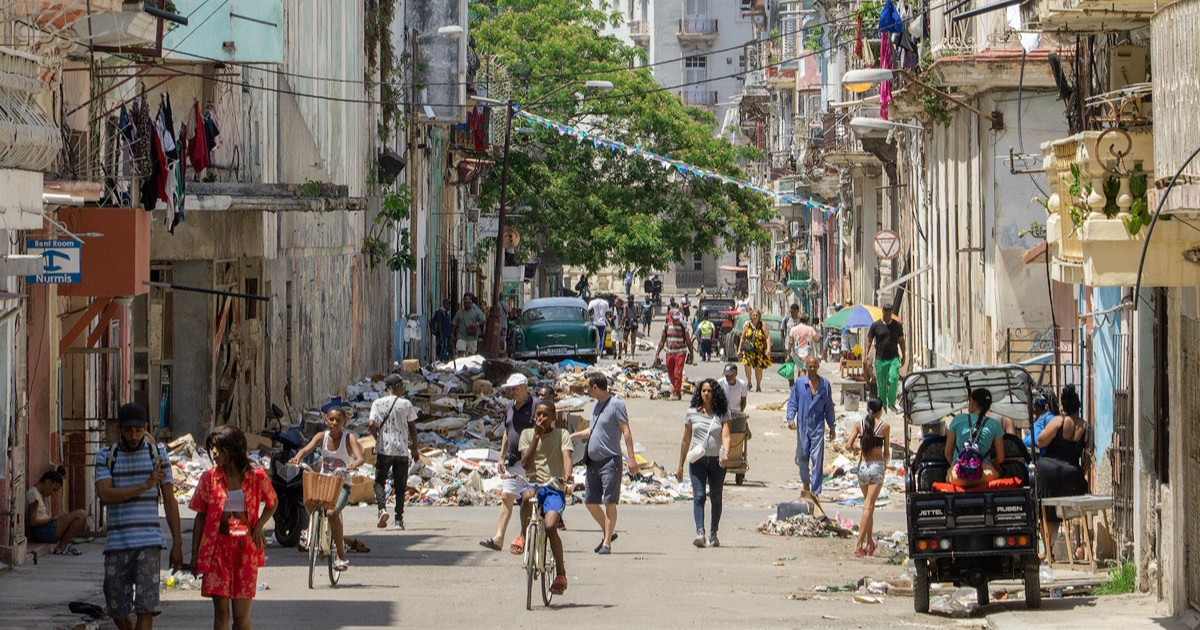
The Cuban playwright and activist Yunior García Aguilera shared a compelling opinion piece this Saturday on 14ymedio. In it, he challenges the official narrative of the Cuban regime regarding the XXIV International Meeting of Communist and Workers' Parties, which took place in Havana on August 7 and 8. García concludes that Castroism has, over the years, cultivated the very adversaries that now corner it.
This forum, which the regime promoted as a display of international support, was said to involve 118 political organizations globally. In reality, only about 100 delegates from 48 parties actually made it to Havana, showcasing less than half of the network the event claimed to represent. García sums it up succinctly: “If that was the muscle they intended to flaunt, then the display was unintentionally feeble.”
The Isolation of the Regime
Roberto Morales Ojeda, the second in command of the Communist Party of Cuba, opened the gathering with assertions that the island “is not alone and will never surrender.” García flips this narrative, asserting: “The regime has never been more isolated. The very meeting intended to prove the opposite only highlights this solitude.”
García notes that most of the attending parties are marginal forces in their respective countries. For instance, the Communist Party of Greece, the strongest in Western Europe, garners around 8% of the votes. Portugal's counterpart has been in decline, and Spain's doesn’t even run under its own name.
Creating Internal Adversaries
The crux of García’s article is his argument that Castroism systematically created its own opposition. He explains that U.S. sanctions weren't arbitrary: “Sanctions didn’t arise spontaneously or from an abstract evil called ‘imperialism.’ They were the direct result of a series of decisions made in Havana.”
The regime nationalized American assets, aligned with the Soviet Union during the Cold War, hosted nuclear missiles just 90 miles from U.S. shores, supported guerrillas in Latin America, and engaged in espionage against Washington.
Even more damaging, García points out, is the internal enemy crafted on the island: “Castroism turned millions of Cubans into its staunchest foes. It seized property, jailed dissidents, persecuted the religious and LGBTQ communities, executed thousands, split families, and exiled those with differing opinions.” These individuals were then targeted with a litany of insults that have become part of Cuban history: ‘worms,’ ‘scum,’ ‘traitors,’ ‘dregs,’ ‘misfits.’”
This exile community has amassed significant political influence in the United States, which they wield against the regime that expelled them. “To demand such masochism from its victims would be too much,” García states, “even for a revolution that has never been noted for its ‘sense of historical timing.’”
Contradictions Within the System
The article also highlights the internal contradictions of the regime’s model. After decades of demonizing the market, the regime now relies on private microenterprises; despite condemning the dollar, it depends on remittances from Miami and Madrid; after promising socialist self-sufficiency, it imports most of its food, even from the United States.
This doctrinal collapse is happening amid an unprecedented crisis in Cuba: the National Energy System has experienced at least seven total collapses in 2026, and the country recorded just 68,051 births in 2025 — a historic low — compared to 134,354 deaths, along with a negative migration balance of 245,264 people.
García concludes his column with a striking image that captures the irony of the situation: “Meanwhile, in an air-conditioned room in Havana, a hundred representatives of the international far left approve yet another resolution against capitalism. Just a few blocks away, millions of Cubans continue to wait for something far more revolutionary: to speak without fear, for the lights to return, and for a liter of sunflower oil not to cost three wages.”
Understanding Castroism's Self-Created Adversaries
What was the purpose of the XXIV International Meeting of Communist and Workers' Parties in Havana?
The meeting was intended to showcase international support for the Cuban regime, but only highlighted its growing isolation.
How did the Cuban regime inadvertently create its own adversaries?
By implementing policies that led to U.S. sanctions and persecuting its own people, the regime fostered opposition both internally and from exiled Cubans.
Why does García believe the Cuban regime is experiencing isolation?
García argues that the regime has alienated itself through its actions and that the recent international meeting underscored its loneliness rather than disproving it.