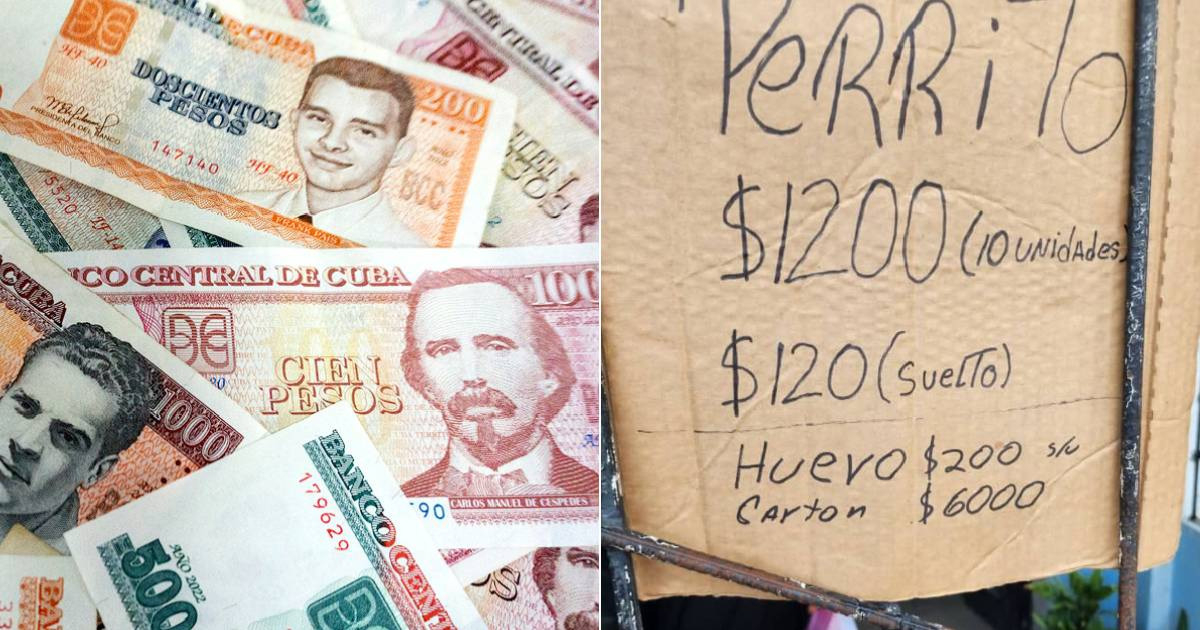
Citizens across Cuba are taking to social media to express their outrage over the soaring cost of necessities like eggs and cooking oil. Reports indicate that eggs are being sold for up to 300 pesos each, while two 900-milliliter bottles of oil are fetching an astounding 9,000 pesos.
A recent post on the Facebook page "Madres Cubanas Luchadoras" highlighted the situation in Placetas, Villa Clara, where eggs are priced at 200 pesos each. The post included the phrase "Thanks for everything, Fidel," referencing the late dictator Fidel Castro (1926-2016), as a sarcastic nod to the ongoing economic struggles.
Comments revealed that these exorbitant prices are not confined to just one region. In Santiago de Cuba, eggs are selling for between 250 and 300 pesos, while residents of Santos Suárez and Alamar in Havana report prices around 250 pesos. In other parts of the capital, prices hover around 180 pesos. Meanwhile, in Holguín, eggs range from 150 to 200 pesos, illustrating a widespread crisis that has made this staple food increasingly unaffordable.
The spike in oil prices is similarly dramatic. One Cuban shared that she paid 9,000 pesos for two bottles of 900 milliliters each, sarcastically asking, "Who should I thank?"
Another social media user summed up the crisis, saying there is "misery all over Cuba" and critiquing the low wages that exacerbate the issue.
Economic Policies and Their Impacts
This price surge follows the Ministry of Finance and Prices' Resolution 150/2026, which in June removed price caps on imported cooking oils, chicken, powdered milk, and other products. Consequently, oil prices soared from approximately 1,500 pesos in April to over 4,000 pesos by August, reaching as high as 7,000 pesos in some locations.
Egg prices have also climbed sharply. In Santiago de Cuba, a single egg costs between 250 and 300 pesos, while in Havana, the range is 180 to 250 pesos, and in Holguín, 150 to 200 pesos. A tray of 30 eggs in Santiago de Cuba can cost up to 7,500 pesos.
Public Reaction and Government Response
In Placetas, a viral video captured the dramatic overnight increase of egg prices from 40 to 200 pesos each. "If we wake up tomorrow and eat, it's by the great mercy of God. Because we're consuming ourselves, spending money we don't have," the content creator remarked during the video.
Economists estimate that a Cuban individual requires about 96,000 pesos monthly to meet basic needs, with more than 70,000 pesos allocated solely to food. This amount is nearly 30 times the official minimum wage of 3,210 pesos.
In response to mounting social pressure, some municipalities are revisiting reference prices. San Luis in Santiago de Cuba has set guide prices of up to 2,200 pesos for oil, 120 pesos for eggs, and 600 pesos for a pound of chicken. A similar reference for oil was established in Guantánamo days earlier. Despite these measures, skepticism remains high. "I'll believe it when I see it," commented one user, while another called for the effective implementation of these measures, rather than mere rhetoric.
The distrust stems from past experiences. In February, an initiative in Guantánamo led to 1,538 fines and 162 forced sales without achieving lasting price stabilization.
President Miguel Díaz-Canel admitted in June that previous price caps had "caused shortages, illegal diversions, and reduced revenue."
As authorities attempt to rein in the price escalation with new guidelines, the Cuban people's comments reflect a deepening crisis that is evident in the cost of essential foods and the inability of many households to afford them.
FAQs on Cuba's Economic Crisis
Why are egg and oil prices in Cuba so high?
The removal of price caps on imported goods like cooking oil, combined with a struggling economy and low wages, has led to significant price increases for basic necessities.
What measures is the Cuban government taking to address the price surge?
The government has introduced new reference prices in some municipalities to help control the cost of essential items like oil, eggs, and chicken, though public skepticism remains high.
How does the current economic situation affect the daily lives of Cubans?
With essential food prices skyrocketing and wages remaining low, many Cuban households struggle to afford basic necessities, leading to widespread public discontent.