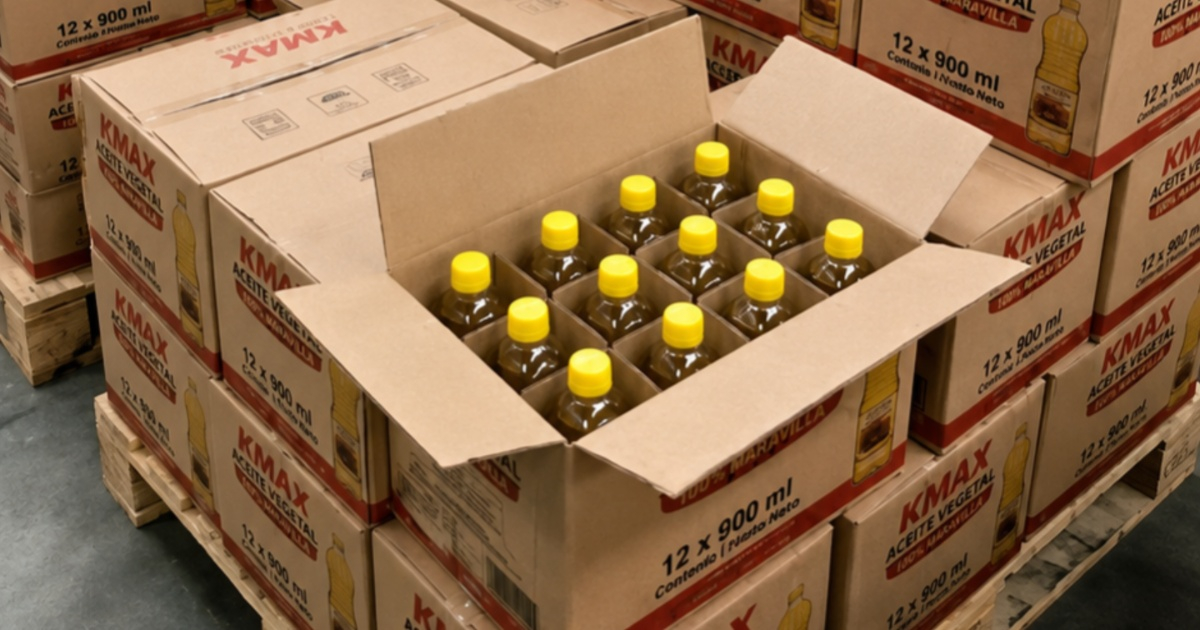
In response to public outcry over the skyrocketing costs of cooking oil in retail markets, the municipal councils of Moa and Banes, located in Holguín province, have established a benchmark price of 2,200 pesos per unit for the product this week.
According to Radio Banes' Facebook update, before the municipal intervention, cooking oil prices in Banes had soared to around 4,000 pesos, nearly double the newly set reference price.
The official announcement from Moa clarifies that this is not a price cap but rather "the outcome of an economic assessment concerning distribution costs and expenses," as sanctioned by Resolution 148/2023 from the Ministry of Finance and Prices, which dictates a maximum profit margin of 30% over the invoice cost.
Despite this distinction, the practical effect is negligible: authorities in both municipalities have declared penalties for those exceeding the set value, effectively creating an unofficial cap that contradicts the national policy of price liberalization promoted by the regime itself.
Violators in Moa could face product confiscation, forced sales, fines under Decree 30/2021 and Decree Law 91/2024, and temporary business closures for up to three months.
Broader Price Controls in Moa
Besides oil, Moa's Administrative Council has extended price controls to other essential goods, including meat products—such as chicken, sausages, minced meat, cold cuts, and eggs—along with powdered milk, pasta, imported rice, beans, sugar, as well as soap and detergents.
Guantánamo was the first municipality to set this reference price of 2,200 pesos on August 5, setting a precedent that Moa, Banes, and other regions followed shortly thereafter.
Moa's own statement acknowledges that "Holguín province and other municipalities are joining the analysis and implementation of these actions, in the context of the national fight against abusive prices and speculation."
Origins and Escalation of the Pricing Crisis
The crisis can be traced back to the Ministry of Finance and Prices Resolution 150/2026, which took effect on June 20, removing price caps for imported cooking oils and abolishing the previous limit of 990 pesos per liter. Since then, prices have soared: from about 1,500 pesos in April to 2,000 in June, reaching 2,500 in Havana by late July, 3,000 in Sancti Spíritus in less than 24 hours, and up to 5,000 pesos in some areas by early August.
The most telling aspect of the crisis is that Cuba's minimum monthly wage was set at 3,210 pesos as of July 2026, a figure lower than the cost of oil in much of the country.
The situation worsens when considering economists' estimates that an individual needs around 96,060 pesos monthly to meet basic needs, creating a gap that renders access to fundamental foodstuffs an unreachable luxury for most.
Social pressure has also surged on social media. "My entire salary has to go toward buying oil, so what do I eat, oil? I can't afford anything else. Up to 5,000, it doesn't stop," wrote a Cuban woman in a viral comment.
While municipalities attempt to mitigate the damage with emergency measures, the price of eggs has also skyrocketed to 7,500 pesos per carton in some provinces, and a bag of powdered milk has been sold for 6,500 pesos in Matanzas, indicating that the price crisis extends far beyond just oil.
Understanding the Economic Impact of Price Controls in Cuba
What prompted the price intervention in Holguín?
The intervention was prompted by public complaints about the uncontrolled rise in cooking oil prices in retail markets, which had reached exorbitant levels before municipal action.
How does the new benchmark price affect consumers and vendors?
For consumers, the new benchmark price offers some relief from steep costs, while vendors face penalties for exceeding this price, effectively limiting their pricing freedom despite the lack of an official cap.
What other products are affected by these price controls?
Apart from cooking oil, the price controls in Moa include meat products, powdered milk, pasta, rice, beans, sugar, soap, and detergents, among other basics.
Why is the pricing crisis so severe in Cuba?
The severe pricing crisis is due to the removal of price caps on imported goods, which led to a rapid increase in costs for essential items, far outpacing the average Cuban's income.