On Thursday, July 30, the National Assembly of People's Power unanimously approved the State Budget liquidation for 2025. During this session, the regime showcased fiscal results as a sign of economic stability, despite the ongoing crisis impacting the Cuban populace.
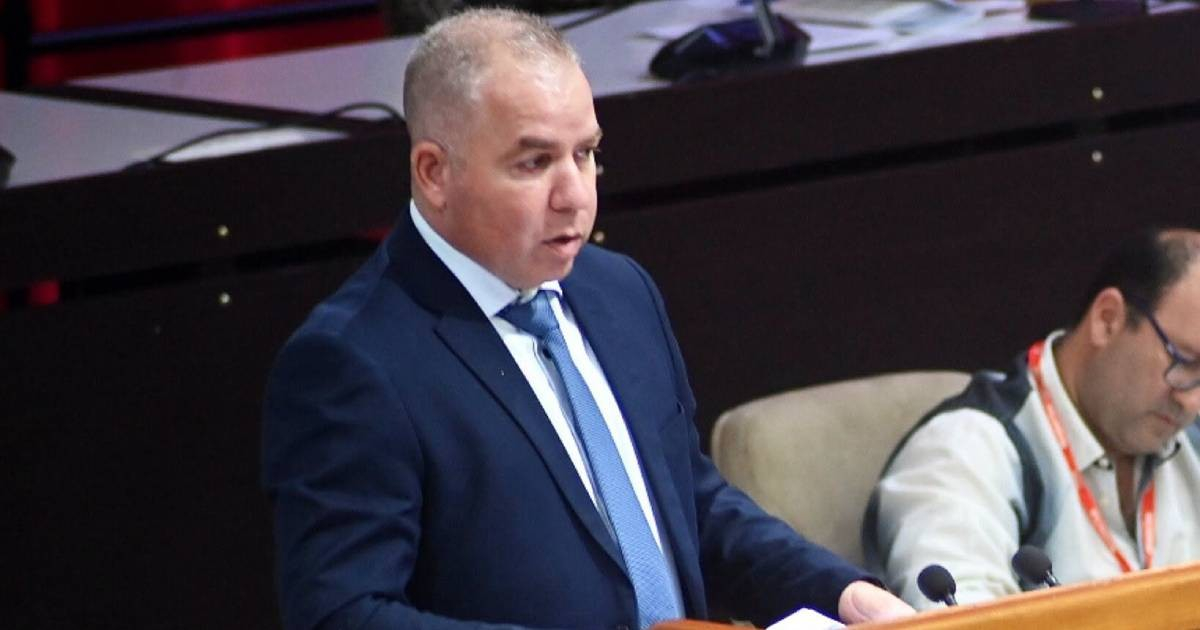
Vladimir Regueiro Ale, the Minister of Finance and Prices, presented the report to the assembly members in the presence of Miguel Díaz-Canel, as noted by the official Cuban Presidency page on Facebook.
According to the government's figures, the fiscal deficit concluded at 67.642 billion pesos, which is 5.4% of the Gross Domestic Product (GDP). This figure is nearly 21 billion pesos below the initially authorized limit of 88.5389 billion.
State revenue reached 463.461 billion pesos, exceeding projections by 2%, while expenditures totaled 518.543 billion, representing 97.9% of the approved budget.
Tax Revenue and Public Spending
The administration pointed out that taxes accounted for 68.6% of the revenue, with tax collection reaching 311.074 billion pesos. Additionally, the National Tax Administration Office (ONAT) recovered 7.140 billion pesos in tax debts, marking a 45% increase from the previous year.
The report indicated that 64% of public spending was directed towards Public Health, Education, and Social Assistance and Security. Over 75 billion pesos were allocated to the healthcare system alone, while Social Security spent 60.691 billion, including a partial pension increase for approximately 1.59 million retirees.
Public Skepticism and Economic Reality
Despite these figures, the document itself admits ongoing issues such as tax evasion and underreporting of income. Furthermore, although 98% of taxpayers have fiscal bank accounts, their usage remains limited.
The official statistics sparked a wave of critical responses on social media, where many Cubans questioned whether these results truly reflect the everyday realities of a nation plagued by power outages, food and medicine shortages, and declining public services.
One education sector worker expressed her frustration: "I'd like to know what happened to the 2025 Education budget. Payments are delayed by up to 15 days. We've left for vacation, and we still haven't received our last month's wages or vacation pay."
Another commenter sarcastically summed up the report's message: "Even though we're in a bad state, we're slightly less in a bad state, something like that."
Independent economic assessments paint a starkly different picture. The Center for the Study of the Cuban Economy estimates that the nation's GDP shrank by about 5% in 2025, accumulating a decline of over 15% since 2020. Díaz-Canel himself previously acknowledged a contraction exceeding 4% in the first three quarters of the year.
While the official report attributes Cuba's economic challenges to inflation, volatile international fuel and food prices, and the U.S. embargo, many citizens greeted these figures with disbelief, contrasting them with a reality marked by prolonged blackouts, shortages, and a consistently eroding purchasing power.
Looking ahead to 2026, the budget approved by Parliament anticipates 484.121 billion pesos in revenue, 550.590 billion in expenditures, and an authorized fiscal deficit ceiling of 74.500 billion pesos.
Understanding Cuba's Economic Challenges
What was the fiscal deficit in Cuba for 2025?
Cuba's fiscal deficit for 2025 was reported to be 67.642 billion pesos, equating to 5.4% of the GDP, which is significantly lower than the originally authorized limit.
How did the Cuban government generate most of its revenue in 2025?
The Cuban government generated 68.6% of its revenue through taxes, with the total tax collection amounting to 311.074 billion pesos in 2025.
What sectors received the most public funding in Cuba?
Public Health, Education, and Social Assistance and Security received the majority of public funding, accounting for 64% of the total public expenditure in Cuba.