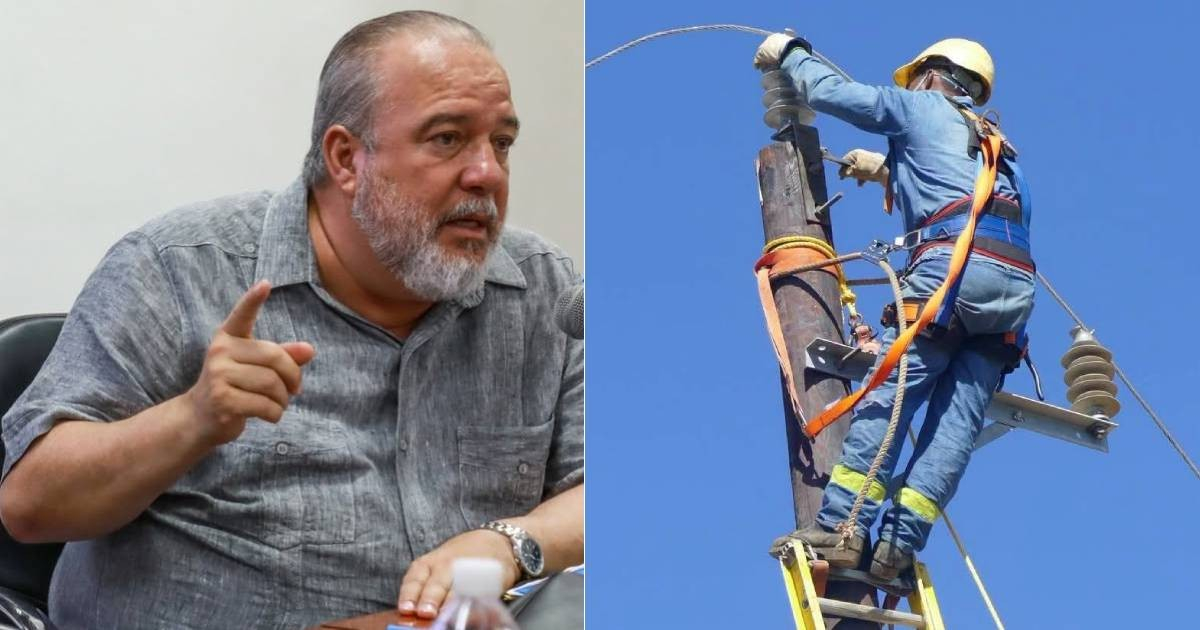
On Tuesday, Cuban Prime Minister Manuel Marrero Cruz addressed the latest collapse of the National Electric System (SEN), marking the fifth total failure of 2026. He assured that workers are diligently striving to restore power "as swiftly as possible."
The recent outage occurred at 11:05 a.m., as confirmed by the Electric Union (UNE), causing another nationwide blackout just four days after a similar incident on July 10.
Later in the day, Marrero took to social media platform X to report his visit to the National Load Dispatch Center. He noted that recovery protocols were immediately implemented.
"Following the new SEN disconnection, we visited the National Load Dispatch Center where recovery protocols were promptly activated," Marrero posted, using the hashtag #CubaNoSeRinde.
Causes Behind the Power Outage
The prime minister explained that the blackout was triggered by a mix of technical failures.
"A frequency surge and the shutdown of Felton led to this disconnection, coinciding with maintenance on the Battery Energy Storage System located in the Cotorro district of Havana," he explained.
The Lidio Ramón Pérez thermoelectric plant in Holguín, commonly known as Felton, remains one of the most vulnerable points in Cuba's power system. Throughout 2026, its Unit 1 has experienced multiple shutdowns, while Unit 2 is still offline and Block 2 is undergoing rehabilitation, a process that began in 2019.
Additionally, at the time of the collapse, the Battery Energy Storage System in Cotorro was under maintenance. This 50-megawatt facility was inaugurated on July 3 as part of the government's strategy to bolster the SEN's stability.
Ongoing Energy Crisis
With this latest malfunction, Cuba has witnessed five national blackouts in 2026 alone, totaling ten complete SEN disconnections over about two years. This situation underscores the severe crisis facing the nation's electrical infrastructure.
The system continues to operate with a deficit exceeding 2,000 megawatts. Several thermoelectric units are out of service due to malfunctions or maintenance, and numerous power generators remain inactive because of fuel shortages.
These issues are felt daily across the country. In many areas, power outages exceed 20 hours per day, while certain regions in Matanzas have reported interruptions lasting up to 87 consecutive hours without electricity.
In closing his statement, Marrero expressed his support for the electrical sector's workforce.
"We reiterate our support and confidence in the colleagues at the National Load Dispatch and provincial dispatch centers, as well as all electrical workers committed to restoring the SEN as quickly as possible," he wrote.
Nevertheless, the new collapse highlights the ongoing fragility of Cuba's electric system, which continues to experience frequent failures despite the repairs and investments announced by authorities in recent months.
Understanding Cuba's Power Outages
What caused the recent blackout in Cuba?
The blackout was caused by a combination of a frequency surge and the shutdown of the Felton plant, alongside maintenance activities on the Battery Energy Storage System in Havana's Cotorro district.
How often are blackouts occurring in Cuba in 2026?
Cuba has experienced five national blackouts in 2026 so far, with ten complete SEN disconnections over the past two years, indicating a severe crisis in the country's electrical infrastructure.
What is the status of the Felton thermoelectric plant?
The Felton plant in Holguín is a critical yet vulnerable component of Cuba's power grid. Its Unit 1 has faced multiple shutdowns in 2026, Unit 2 remains offline, and Block 2 is undergoing rehabilitation since 2019.