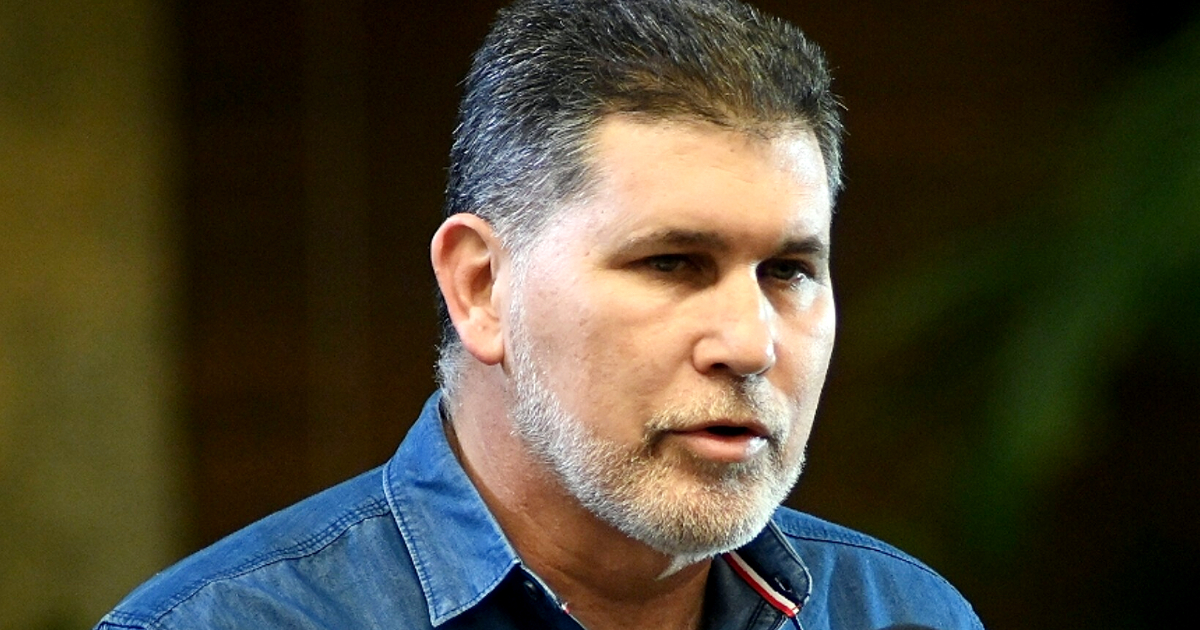
Oscar Pérez-Oliva Fraga, the Deputy Prime Minister and head of Cuba's Ministry of Foreign Trade and Foreign Investment, has introduced a groundbreaking set of measures. For the first time, these measures will allow Cubans living abroad, without permanent residency on the island, to invest in private Cuban enterprises and collaborate with private economic actors under the auspices of Foreign Investment Law 118.
The announcement, featured on Wednesday on the website of Cuba's Ministry of Foreign Affairs, outlines these new opportunities.
Pérez-Oliva explained that the initiatives aim to "foster greater economic decentralization" and "encourage foreign capital participation in Cuba's economic and social development," including investment from Cubans living overseas.
"This creates a new avenue for this community to engage in the country's economic and social growth. We are discussing potential alliances between the Cuban private sector and foreign capital linked to our diaspora," he stated.
The most notable shift is the removal of restrictions that previously limited such investments to permanent residents of Cuba.
Investment Opportunities for Cuban Expatriates
He highlighted that Cubans abroad can now partner with national private actors through the Foreign Investment Law, a privilege previously exclusive to state-owned companies.
So, what can Cubans abroad do now? They can invest in private Cuban businesses and partner with small and medium enterprises. They can also establish or participate in financial institutions, including investment banks, open and manage foreign currency bank accounts in Cuba, participate in investment funds for economic projects, develop agricultural ventures with access to usufruct land, and operate as virtual asset service providers.
In the financial realm, Pérez-Oliva emphasized that these measures will enable "a higher level of organization and greater impact" in utilizing resources from abroad, including in strategic sectors.
"We have reiterated many times that Cuba's doors are open for investment from the Cuban community abroad. This invitation extends not only to small ventures but also to participation in key sectors for our development," he asserted.
Cuban authorities also promise to streamline administrative processes to ease the implementation of these initiatives. However, these statements provide little new detail beyond previous presentations on the subject.
The Ministry of Foreign Affairs' publication does not specify the context of Pérez-Oliva's declarations. His remarks largely repeat the rhetoric he delivered weeks earlier.
This message from the Deputy Prime Minister comes during one of the worst economic crises Cuba has faced in decades, with no tangible progress in dialogues with the United States.
This challenging scenario does not inspire confidence in potential Cuban-origin investors. Analysts warn that the measures lack the necessary legal guarantees to instill real investor confidence.
Key Questions About Cuban Investment Opportunities
What new opportunities are available for Cubans living abroad?
Cubans living overseas can now invest in private Cuban businesses, partner with small and medium enterprises, and engage in various financial activities such as opening foreign currency accounts and participating in investment funds.
How do these changes affect the participation of foreign capital in Cuba?
The changes aim to decentralize the economy and encourage foreign capital, including that of the Cuban diaspora, to partake in Cuba's economic and social development through new investment opportunities.
What challenges do potential investors face despite these new measures?
Potential investors remain wary due to the lack of legal guarantees and the ongoing economic crisis, which does not facilitate confident decision-making.