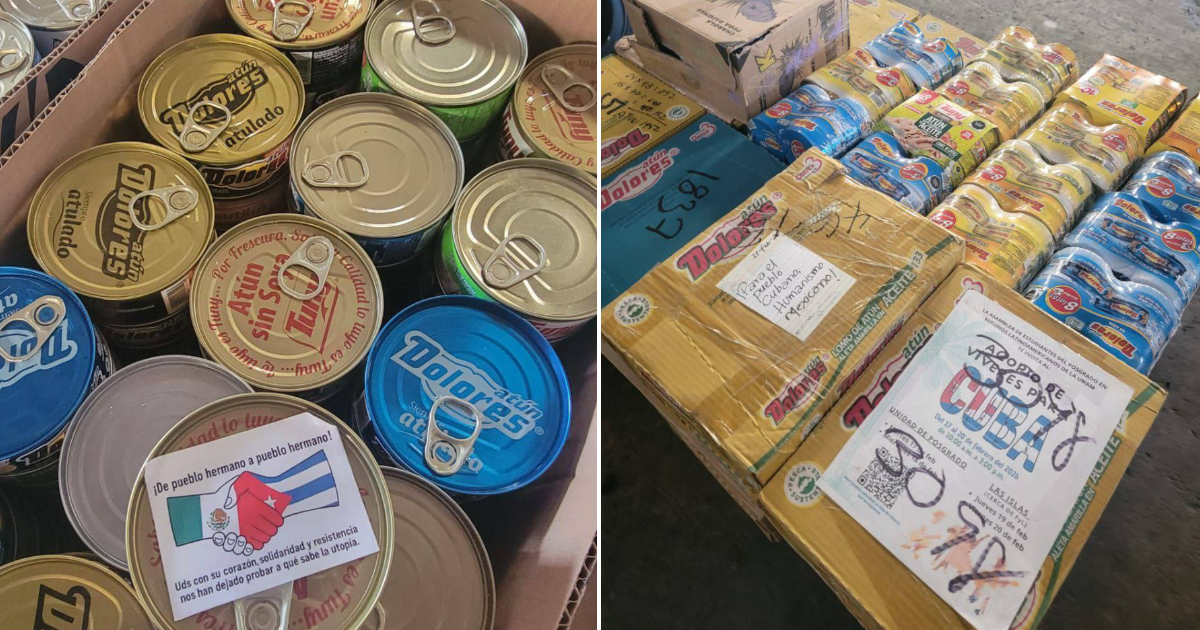
The distribution of food aid from Mexico in Cienfuegos has ignited a wave of criticism on social media, with many Cubans questioning both the quantity of products delivered and the criteria used to determine who receives the aid.
The Cienfuegos Business Group of Commerce announced on Facebook that all the donated goods have arrived, intended to "support our most vulnerable families." The aid package includes items like rice, beans, oil, sardines, cookies, fruit puree, and canned goods, which are distributed differently among pregnant women, underweight children, the elderly, health centers, and households without family support.
Who Decides Who Gets Aid?
Authorities emphasized that distribution prioritizes pregnant women, children, vulnerable groups, educational and health centers, as well as social institutions. However, the limited quantities—often just one or two items per beneficiary—have drawn significant criticism.
Despite official statements, the announcement triggered a strong backlash from users, expressing dissatisfaction and frustration over the country’s economic situation.
Public Outcry and Frustration
One comment summed up the discontent succinctly: "That's just to say they gave something." Others questioned the real impact of the aid, lamenting, "It's embarrassing with so much propaganda for something so insignificant (God help us)."
Criticism also centered on the selection criteria. "Everyone in Cuba is vulnerable," one user insisted, while another pointed out, "Right now, all of Cuba is vulnerable."
Questions about who truly benefits from the aid were frequent. "Who are the vulnerable families?" asked one commenter, echoing others who criticized the lack of transparency in classification.
Voices of Gratitude and Dependency Concerns
Some messages highlighted groups that users felt were overlooked. "For seniors? Just one can of vegetables?" questioned an internet user, while another asked, "And milk for the children?"
While some reactions included thanks to the donor country, they were often paired with systemic criticism: "Thank you, Mexico. I'd be very ungrateful if I didn't thank that government and its people," a user wrote. Others reflected on Cuba's reliance on external aid: "How long will this country live like a beggar, relying on donations and aid?"
Recurring Themes Across Cuba
Similar sentiments are echoed in other parts of the country. In Minas de Matahambre, in Pinar del Río, the distribution of food modules donated by Mexico and the World Food Program also faced criticism. Comments like, "The whole country is vulnerable and needs food," and "We are all vulnerable in this country," were prevalent.
Furthermore, the arrival of rice donated by China prompted renewed discussions on food dependency. Users noted, "A country cannot survive solely on donations," amid the distribution of these shipments in the island, as evidenced by recent arrivals in Havana.
In one instance, aid given to a child from a Mexican shipment was reduced to "a pack of Maria cookies and two cans of tuna," underscoring the perception that the volume of shipments does not match what citizens receive.
These events unfold amidst a prolonged economic and food crisis in Cuba, characterized by shortages of basic goods, frequent power outages, and a sustained decline in living conditions, leading more citizens to identify as vulnerable.
Cuban Aid Distribution: Key Questions and Answers
What items are included in the aid from Mexico?
The aid package includes rice, beans, oil, sardines, cookies, fruit puree, and canned goods.
Who is prioritized in the distribution of aid in Cienfuegos?
Aid is prioritized for pregnant women, children, vulnerable groups, educational and health centers, and social institutions.
Why are Cubans critical of the aid distribution?
Cubans have criticized the limited quantity of goods per person, the unclear selection criteria, and the overall reliance on external aid.