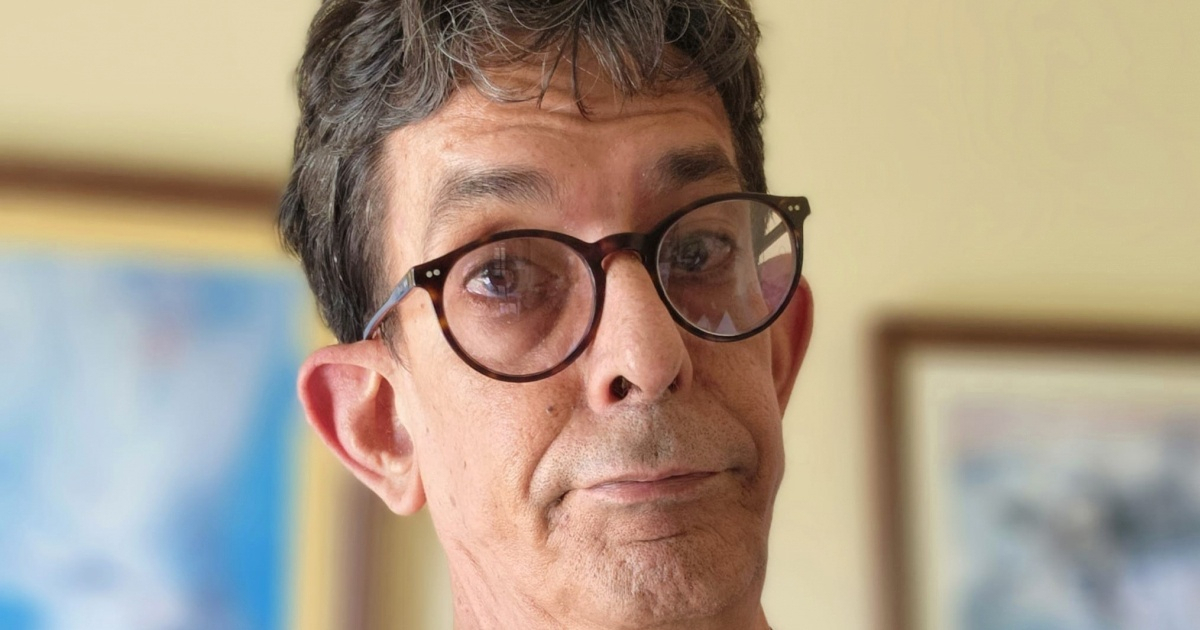
The renowned comedian Ulises Toirac has once again stirred significant conversation on Facebook with his detailed critique of the ongoing crisis in Cuba. He squarely places the blame on the internal decisions of the government for the nation's economic and social turmoil.
In his post, Toirac not only highlights the severity of the current situation but also challenges a common narrative propagated by the official discourse: that Cuba's issues are solely the result of external factors, particularly the influence of the United States.
"While other governments have their own decisions, it is this government's actions that have set the economy ablaze," he stated unequivocally.
Deep-Rooted Crisis
Toirac emphasized that the decline is not a recent occurrence but the culmination of years of flawed policies that have gradually weakened the country’s productive system.
He argued that even during times when Cuba received external economic support, the decisions made failed to establish a sustainable foundation.
Although tensions with the United States play a role in the current landscape, Toirac insisted they cannot be used as a blanket excuse for all domestic issues.
Failures in the Energy Sector
A major focus of his analysis was the electro-energy system, which is crucial to the entire economy's functionality.
Toirac listed several decisions that have led to the current deterioration: the closure of sugar mills that could have contributed energy to the electrical grid, the widespread use of costly-to-maintain power generators, and the unsuccessful investment of billions in the Juraguá nuclear plant.
He also criticized the use of heavier local crude oil in power plants, which damages machinery, and the neglect of maintenance and modernization of thermoelectric plants.
According to Toirac, these mistakes have created a domino effect, impacting not just electricity generation but the entire national production.
Living Conditions at a Breaking Point
Toirac painted a stark picture of everyday life for Cubans, using direct and unambiguous language.
"Today, the majority's living conditions are more than deplorable," he stated.
He pointed out that rural areas are particularly hard-hit, although the deterioration is widespread, making even basic activities or small businesses unfeasible due to resource shortages.
"It's not even possible to maintain a life of hardship," he warned.
A System Resistant to Criticism
Beyond economic troubles, Toirac identified the political structure as a central factor in the crisis.
He criticized the lack of avenues for citizen participation and questioned a model that stifles debate and dissent.
"Where we stand is frankly unsustainable, and the blame lies in not listening, not allowing participation, repressing differing opinions, and creating a popular power structure that is neither popular nor powerful," he insisted.
For Toirac, one of the biggest issues has been the refusal to consider different opinions and the tendency to automatically validate decisions within official structures.
This closed-off approach, he argued, has prevented timely correction of mistakes and has deepened the crisis.
Protests with Genuine Causes
The comedian also addressed the recent protests across the country, making it clear they are not driven by superficial motives.
"People are not taking to the streets for festive reasons," he noted.
According to Toirac, the root of the discontent lies in the harsh living conditions faced by millions of Cubans, characterized by shortages, power outages, and a lack of future prospects.
"These are conditions that exceed basic survival. And I'm not exaggerating," he affirmed.
Understanding Cuba's Economic Crisis
What are the main reasons for Cuba's current economic crisis according to Ulises Toirac?
Ulises Toirac attributes the crisis to internal government decisions that have progressively weakened the productive system, rather than solely blaming external factors like U.S. policies.
How have energy sector failures contributed to Cuba's economic problems?
Failures in the energy sector, such as the closure of sugar mills, costly power generators, and neglected maintenance of power plants, have created a domino effect impacting the entire national production.
What does Ulises Toirac say about the living conditions in Cuba?
Toirac describes the living conditions for most Cubans as deplorable, with rural areas being particularly affected, making it difficult to even maintain a life of hardship due to resource shortages.