On March 8, Miguel Díaz-Canel's message celebrating International Women's Day, shared through the official channels of the Cuban presidency and the leader himself, ignited a wave of reactions across social media platforms.
Amidst an unparalleled systemic crisis in the country, users responded predominantly with critical, sarcastic, and openly dismissive comments, highlighting the stark contrast between the official rhetoric and the harsh realities millions of Cuban women face.
In one statement, Díaz-Canel claimed that engaging with Cuban women "always elevates and emancipates," praising the "achievements" they have secured through the so-called "revolution."
Another message boasted that "the light of our days has much of a woman's touch: sensitivity, talent, and commitment to the country's future," accompanied by a promotion of an interview with a scientist in the photovoltaic field.
However, the official emphasis on "light," "sensitivity," and "achievements" quickly clashed with the dark humor and outrage expressed in numerous comments, many fixating on the everyday struggles of power outages, food scarcity, water shortages, and the severe hardships disproportionately affecting women.
The phrase that echoed most, in various forms, was a simple yet devastating question: "Which light?"
This expression became the focal point of public criticism. One commenter encapsulated the sentiment with biting sarcasm: "Good day, but please don't talk to me about light until the power is back on."
Another comment was even more cutting, likening electricity in Cuba to "an unfaithful partner, leaving whenever it pleases and returning when it wishes."
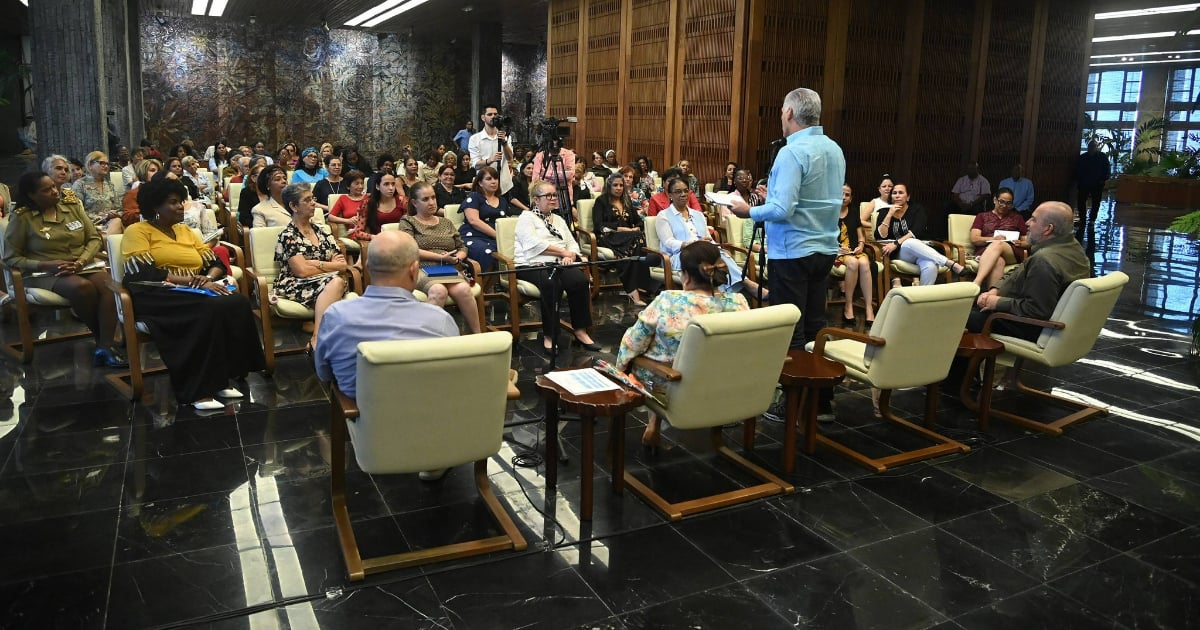
The public's wit shone through in remarks blending irony with critique. "There was electricity there," noted several users, referring to images of the official meeting between the "hand-picked" leader and the Federation of Cuban Women (FMC) in the air-conditioned rooms of the Palace.
This idea recurred across multiple posts, highlighting the disconnect between the power's theatricality and the darkness in which much of the nation struggles to survive.
Some comments were less humorous and more starkly honest. Several women and family members depicted March 8 as a day devoid of celebration, overshadowed by the anxiety of not knowing how to feed their children, cook, or cope without electricity.
One user stated that Cuban women "have nothing to celebrate today"; another lamented, "we are no longer happy, we don't have a day of happiness."
There were also messages portraying Cuban women as those who awake each day thinking about food, water, electricity, and how to endure another day.
This tone of exhaustion surfaced repeatedly. Some spoke of women "improvising so their families don't go to bed hungry," while others recalled mothers and grandmothers cooking "with charcoal and wood," an image that starkly contradicts any attempt to gloss over the crisis with the FMC's worn-out slogans.
Numerous commentators also criticized the lack of genuine representation in the official event. They questioned why the dialogue Díaz-Canel touted wasn't with the Cuban women protesting power outages, enduring endless lines, unable to find medicine for their children, or with the mothers of political prisoners.
"You didn't talk to Cuban women; you talked to those who will tell you what you want to hear," summarized one particularly incisive comment.
Messages also highlighted the need to acknowledge political prisoners, the Ladies in White, and the mothers of young detainees who protested.
Within this group of reactions, a recurring idea was that the best gift for Cuban women would not be an official congratulation or slogan, but "freedom" and "a dignified life."
Among the sharpest remarks were those that dismantled the grandiose tone of the presidential message with just one phrase. "It's cynical to congratulate and even worse to talk about light," wrote one person.
Another added: "What light are you talking about, when we live in perpetual darkness?" Some even noted that using the word amidst 20, 30, or more hours of blackouts was a mockery.
Political irony also emerged. Some users reminded that Cuban women today are less about official symbols of heroism and more about being the primary managers of domestic survival in a crumbling nation.
Instead of "achievements," they spoke of hunger, misery, stress, desperation, and emotional exhaustion. A commentator summed up this feeling with a phrase as bitter as it was eloquent: "Life pains us."
Each solemn phrase from the authorities was met with a reminder of reality. If Díaz-Canel's message spoke of "commitment to the nation's fate," many responded with the price of rice, oil, or the accumulated hours without power.
If it appealed to revolutionary epic, the replies showcased scenes of worn-out women, cooking with charcoal, lacking medicine, trying to soothe overheated children during blackouts.
Rather than a celebration, these reactions exposed a deep social discontent. It also revealed something more: in today's Cuba, humor, irony, and terse commentary have become tools for venting against the regime's official rhetoric, increasingly disconnected from real life.
This March 8, while the authorities attempted to envelop Cuban women with words like "emancipation," "achievements," and "light," a significant portion of the comments offered a much more grounded response: hunger, blackout, and exasperation.
Amid this critical chorus, the most repeated question also proved to be the most devastating: "Which light?"
Understanding the Outrage Over Díaz-Canel's Women's Day Message
Why did Díaz-Canel's message spark such a strong reaction?
The message was seen as out of touch with the realities of Cuban women, who face daily hardships like power outages, food scarcity, and lack of basic resources. The contrast between the official rhetoric and their lived experiences sparked outrage.
What was the most common criticism of Díaz-Canel's message?
Many criticized the message for focusing on "light" and "achievements" while ignoring the severe crises Cubans face, particularly the ongoing power outages and economic hardships.
How did Cuban women express their frustrations?
Cuban women and their families used social media to express their frustrations, highlighting the daily struggles they endure and criticizing the disconnect between government statements and their reality.