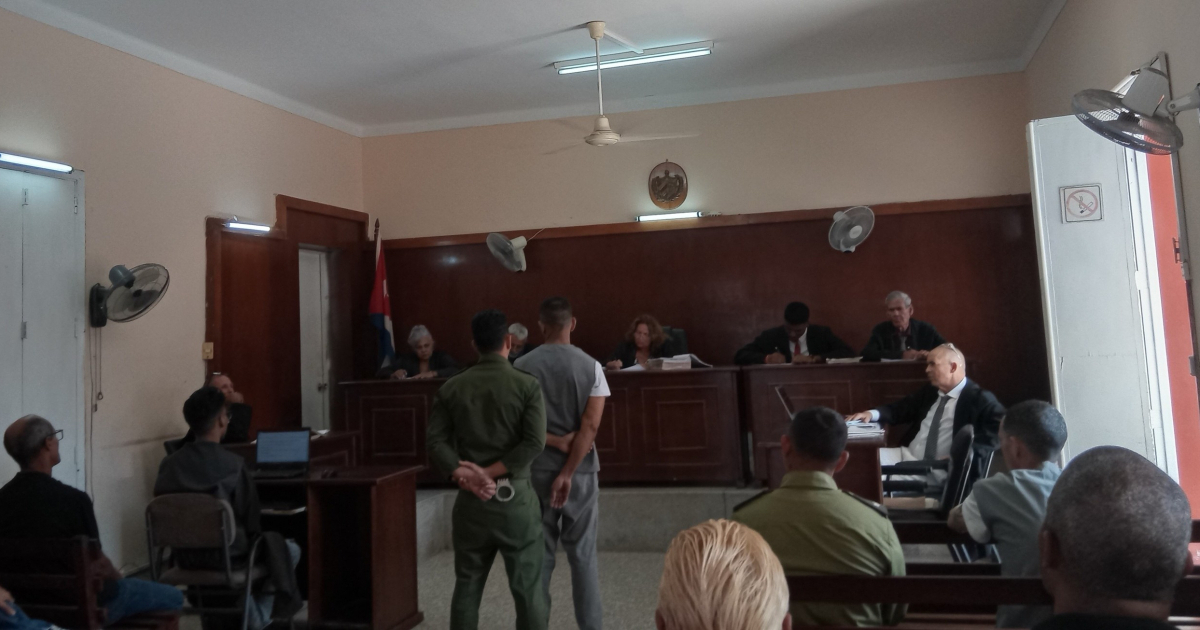
In Las Tunas, five employees from the Wholesale Food Company have been sentenced to prison terms ranging from 11 to 13 years for embezzlement, following a trial conducted by the provincial criminal court.
According to the government-aligned Minint Hoy on Facebook, the proceedings, linked to case 237 of 2025, were described as "oral, public, and exemplary."
The accused, who worked at the base business unit 639 warehouse, allegedly appropriated rice, sugar, peas, and beans meant for the state-regulated family basket and social consumption, selling these goods on the black market.
Authorities assert that this action negatively impacted over 50,000 households in the province and caused a financial loss to the state budget amounting to 623,088 pesos.
Upon examining the evidence presented during the trial, the court concluded the five individuals were guilty of embezzlement as outlined in Article 297, sections 1 and 2, of the Penal Code.
Besides imprisonment, the court imposed additional penalties: revocation of public rights, prohibition from holding professional positions, and a travel ban, along with the applicable civil liability.
Both the convicted individuals and the prosecution have the option to appeal the verdict.
This case highlights a recurring issue across various provinces: the diversion of essential goods amidst a severe economic crisis.
In Cuba, where the rationing system covers only a fraction of monthly needs and prices are soaring, state workers managing food face immense pressure.
With official salaries eroded by inflation, many are driven to seek unlawful means to support their families.
While the government emphasizes the "exemplary" nature of such trials, many citizens argue that the issue of diversion and resale must be viewed in the context of the structural economic decline, chronic product shortages, and the collapse of purchasing power.
The harshness of the sentences stands in stark contrast to the system's failure to ensure consistent supply and wages that meet the actual cost of living.
In a nation where acquiring rice, sugar, or beans outside the ration book requires paying sums far exceeding the average worker's monthly income, the informal market has become a survival mechanism.
However, when the system falters and authorities step in, the brunt of the law falls heavily on mid-level workers, in an environment marred by persistent shortages and rising social unrest.
Understanding the Impact of Food Misappropriation Cases in Cuba
What caused the food misappropriation in Las Tunas?
The misappropriation was attributed to employees who diverted rice, sugar, peas, and beans intended for state-regulated distribution to the black market, driven by economic pressures and insufficient wages.
How did the authorities respond to the food misappropriation?
Authorities conducted a trial that led to prison sentences for the involved employees, highlighting the government's intent to make such cases public and serve as a deterrent.
What broader issues do these cases reveal about Cuba's economic situation?
These cases underscore systemic economic problems, such as insufficient wages, inflation, product shortages, and a dependency on the informal market for basic necessities.