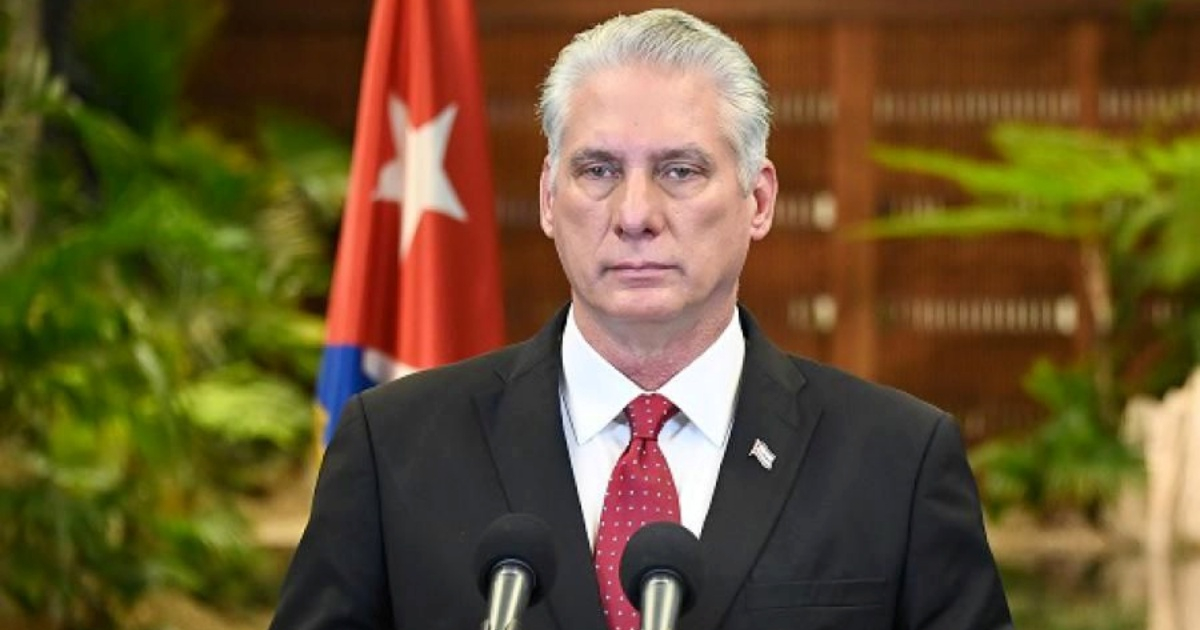
In an unexpected move, Cuba's state media revealed on Thursday that the leader, Miguel Díaz-Canel, will be making a special appearance at 10 a.m. on February 5. The announcement, however, did not provide any hints about the topics he will discuss.
Cubadebate reported, "The First Secretary of the Communist Party of Cuba and President of the Republic Miguel Díaz-Canel Bermúdez will address national and international media today at 10 a.m.," with no further information given.
The brief statement noted, "The event will be broadcast nationwide on radio and television, as well as through the Presidency's YouTube channel."
The declaration comes at a time when the nation is grappling with a worsening economic crisis, heightened pressure from the United States, growing public dissatisfaction, and a lack of clear signals from the government regarding potential structural reforms.
Secrecy and Anticipation Surrounding the Address
This sudden announcement contrasts with previous instances where the Cuban leader's television appearances were scheduled well in advance. This time, no reason or context for the address has been provided, adding to the air of mystery.
The unusual secrecy surrounding this intervention diverges from the government's typical communication strategy, which generally involves outlining thematic lines and preparing the public for upcoming speeches.
The absence of these usual elements has heightened concerns.
Backdrop of Crisis and International Pressure
Díaz-Canel's unexpected national address comes amid a period of significant political and economic strain for the Cuban regime, characterized by clear signs of internal disintegration and increasing external pressure.
Two recent developments outline the immediate scenario: the acknowledgment of high-level contacts with the United States and the announcement of a "reorganization process" that is expected to be "very challenging for the population."
Dialogue with Washington: Conversations Without Reforms
In an interview with CNN, Deputy Foreign Minister Carlos Fernández de Cossío confirmed the existence of exchanges between Havana and Washington "linked to the highest levels of the Cuban government," while clarifying that "a formal bilateral dialogue has not been established."
"We are not prepared to discuss our constitutional system, just as we assume the United States is not prepared to discuss its constitutional system, political system, or economic reality," Fernández de Cossío stated, dismissing any political opening as part of the discussions.
These contacts have been confirmed as the Trump administration adopts a tougher stance against Cuba, tightening economic sanctions, limiting crude exports to the island, and labeling the country as an "extraordinary threat" due to its ties with hostile actors.
In response, Havana has reiterated that it poses no danger to the United States and has expressed a willingness to cooperate on issues like drug trafficking.
"Reorganization" Amid Threat of Collapse
Simultaneously, the same deputy minister hinted in an interview with EFE that Cuba is preparing for a "reorganization" process, a euphemism that could translate into more rationing, austerity, and social control amid a widespread crisis.
"It will be very difficult for the population," the diplomat admitted, without providing details but implying that the regime is gearing up to manage the collapse rather than prevent it.
Analysts agree that this "reorganization" could manifest in various forms, including mergers and closures of state enterprises, layoffs and subsidy cuts, as well as a new cycle of food rationing and restrictions on foreign currency consumption.
There is also speculation about a possible covert monetary reform or even a controlled transition to a military-style oligarchic capitalism, where the country's main assets would be concentrated in companies linked to GAESA, the military conglomerate that already controls over 70% of Cuba's economy.
The loss of Venezuelan support following the capture of Nicolás Maduro by U.S. forces on January 3, coupled with the energy blockade imposed by Washington, has exacerbated an already structural crisis.
An Address Under Multiple Pressures
Thus, Díaz-Canel's announcement arrives in a context where several key elements converge:
- The exhaustion of the centralized economic model.
- External sanctions and regional instability.
- Growing public discontent and mass migration.
- Tactical moves by Cuban diplomacy attempting to open channels with Washington without yielding politically.
All these factors suggest that the leader's address might aim to control the official narrative, psychologically prepare citizens for upcoming sacrifices, or justify unpopular decisions that may be announced shortly.
Key Questions on Cuba's Political Situation
What is the significance of Díaz-Canel's unexpected address?
The unexpected address by Díaz-Canel is significant as it comes amid heightened economic and political tensions in Cuba, with no prior context or agenda provided, fueling speculation and concern about the country's future.
How is the Cuban government responding to U.S. pressure?
The Cuban government is responding to U.S. pressure by acknowledging high-level contacts but refusing to discuss constitutional or political reforms, while also reiterating its willingness to cooperate on issues like drug trafficking.
What could Cuba's "reorganization" process entail?
Cuba's "reorganization" process might involve increased rationing, austerity measures, layoffs, subsidy reductions, and a possible shift towards military-controlled oligarchic capitalism, impacting the population significantly.