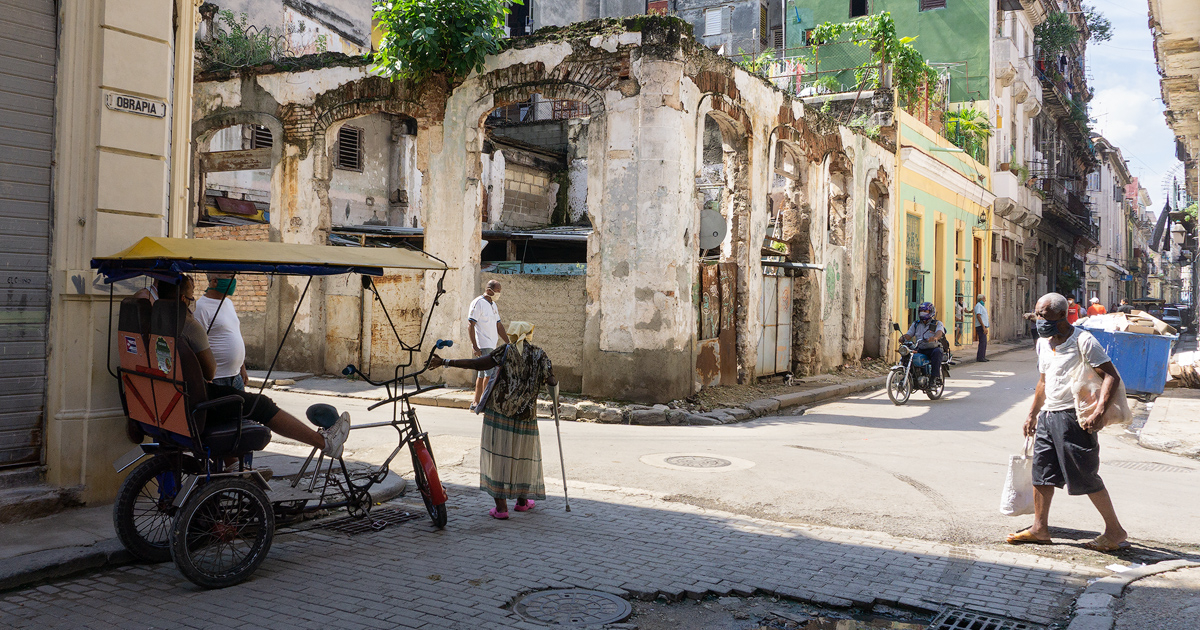
Amid an unprecedented economic and social crisis, Cuba is grappling with severe poverty, daily power outages, a lack of medical supplies, and a massive exodus of its population. The current situation eclipses even the worst days of the Special Period, with an alarming 89% of the populace living in extreme poverty and 78% expressing a desire to leave the country.
In response to this collapse, the regime has attempted minor reforms, such as allowing small private enterprises and limited foreign investment. However, these superficial changes have failed to address the crisis. The Cuban public acknowledges this reality; a recent CiberCuba poll revealed that no one believes in the effectiveness of mere "patches and excuses" to move forward.
Reforms Fall Short Amid Unparalleled Crisis
The last six decades have not seen a crisis as severe as the current one in Cuba. A state salary averaging just $14 a month in the informal exchange market cannot keep up with skyrocketing prices—where a carton of eggs costs 3,600 pesos on the black market. On top of that, the nation faces constant blackouts, water shortages, and a healthcare system that provides only 3% of necessary medications. The turmoil has prompted a mass migration: since 2020, 2.75 million Cubans, about a quarter of the population, have left, depriving the country of essential professionals and worsening its demographic collapse.
Investment Stymied by Lack of Legal Security
A fundamental requirement for any investor is legal security: assurance that property rights will be respected. Unfortunately, such certainty is absent in Cuba. Local entrepreneurs and potential investors from the diaspora face overwhelming vulnerability to a totalitarian power that arbitrarily changes the rules. Even those wishing to invest from abroad must compete with the unfair advantages of the military conglomerate, GAESA, and endure harassment from State Security.
The Cuban dictatorship's history is riddled with arbitrary actions—from the massive, uncompensated expropriations of the 1960s to recent instances of defrauded businesspeople. Illegal confiscations, raids, and disregard for judicial rulings further compound the issue. Currently, several foreign companies have reported being unable to repatriate their funds, which have been trapped in bank accounts by the regime’s decree. This currency "lockdown" has outraged businesspeople and embassies, destroying the trust needed for investment. Without legal security or property rights respect, serious capital will not venture into Cuba.
A State-Controlled Market Hinders Development
Beyond legal insecurity, the lack of a free market stifles growth. Cuba's centrally planned economy, dominated by the State—and particularly GAESA—controls most sectors. Despite private micro, small, and medium enterprises (MSMEs) being the only dynamic sector, the regime stifles them with taxes, price caps, and arbitrary regulations.
The distortions are severe: multiple exchange rates, resource shortages due to the state's trade monopoly, and a model prioritizing luxury tourism over health or agriculture. In 2024, 40% of the country’s investments were directed toward tourism, compared to just 2.7% for Public Health. The outcome: empty hotels and hospitals devoid of medications. GAESA, led by Raúl Castro's relatives, dominates nearly the entire economy, erecting luxury hotels among dilapidated buildings while millions of Cubans lack basic necessities.
Military Elite Controls a Failed State
The root of the problem is political. Cuba operates as a failed state where institutions are subordinate to the Communist Party's military and familial elite. GAESA, a conglomerate run by generals and Castro-linked businesspeople, is the true power center. While the population endures blackouts, inflation, and shortages, this elite accumulates privileges and controls the nation’s resources. The regime blames the U.S. "blockade," but the crisis stems from internal model failures, corruption, and systemic incompetence.
Public protests persist, and even previously loyal sectors, like small business owners and officials, voice their discontent. Political stagnation keeps the country paralyzed, worsening the misery. Raúl Castro, from behind the scenes, continues to obstruct any reforms that might threaten the power monopoly.
The Path to Rebuilding: Economic Freedom and Democratic Change
A systematic change is essential for recovery. Various organizations and analysts agree that Cuba can only overcome the crisis with a market economy, respect for private property, free enterprise, legal security, and democratic openness. Without these pillars, investment and development will remain elusive.
Ensuring a free and competitive market: removing barriers, deregulating prices, and decentralizing economic decisions. Legal security and respect for private property: enacting laws that protect rights and prohibit arbitrary expropriations. Freedom to innovate and start businesses: allowing Cubans to launch ventures without fear of confiscations. Political openness and transparency: pairing economic liberalization with democratic transition and free elections. Absent economic freedom and legal guarantees, Cuba will continue to sink deeper into poverty, losing its brightest citizens to exile. Reconstructing the nation requires dismantling the authoritarian system and building a rule-of-law state that serves its people.
Understanding Cuba's Economic and Political Challenges
What is the current economic situation in Cuba?
Cuba is experiencing its worst economic crisis in decades, with widespread poverty, daily blackouts, and a significant lack of medical supplies. A large portion of the population lives in extreme poverty, and many are seeking to leave the country.
How does the lack of legal security affect investment in Cuba?
The absence of legal security in Cuba deters investment as there is no guarantee that property rights will be respected. Investors face the risk of arbitrary rule changes and unfair competition from state-controlled conglomerates like GAESA.
Why is a free market important for Cuba's development?
A free market is crucial for economic development as it encourages competition, innovation, and efficient resource allocation. Cuba's centrally planned economy hinders these processes, stalling growth and development.