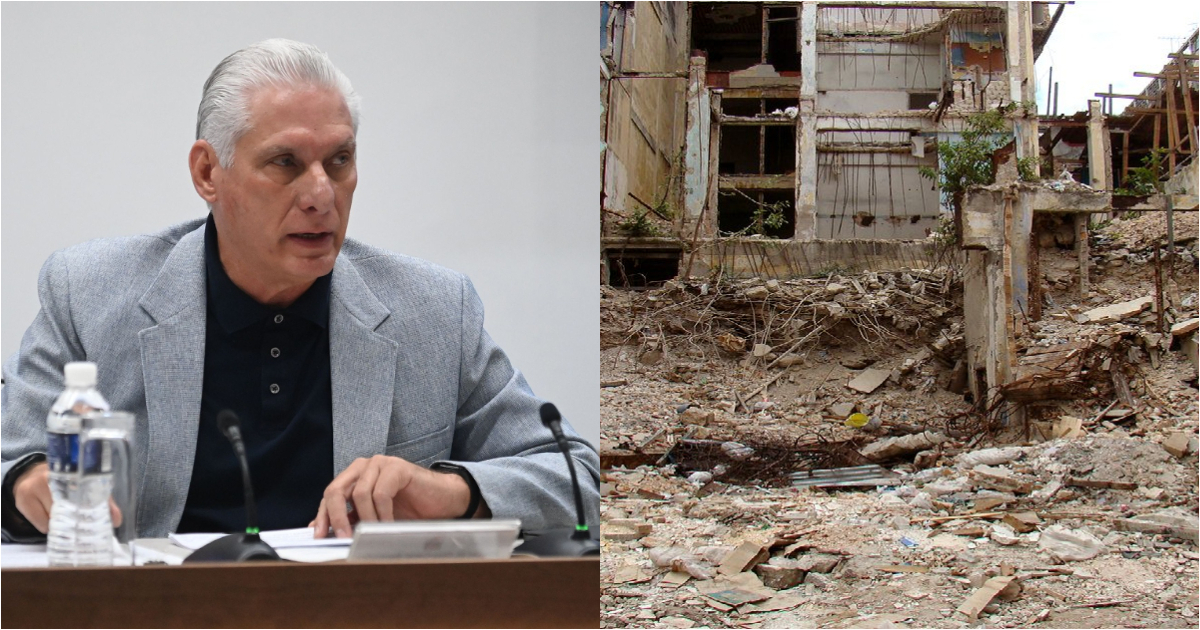
Miguel Díaz-Canel, the First Secretary of the Communist Party of Cuba (PCC), recently declared that the political organization must undergo significant changes to avoid hindering national progress. However, his statements were met with a surge of public criticism highlighting issues of inertia, privilege, and a disconnect from everyday realities.
At the 11th Plenum of the PCC Central Committee, held in Havana and via videoconference, Díaz-Canel, who also serves as the nation's leader, emphasized that current levels of bureaucratism, formalism, and inertia cannot continue to impede progress.
From the perspective of party operations, he stressed the necessity to "change everything that needs to be changed" and to enhance control mechanisms and accountability across all societal spheres. Excerpts of his speech shared on the PCC's Facebook page underscored this stance.
The leader warned that without a new operational framework within the Party, discussions at the Plenum would amount to nothing more than "empty words."
In this setting, he reiterated that as the sole legal party, the PCC must be "the most democratic," advocating for increased public participation, continuous engagement with citizens, and heightened demands for transparency and accountability from officials.
Díaz-Canel once again highlighted "unity" as the cornerstone for the nation's independence and sovereignty, urging an intensification of ideological, cultural, and communicational efforts against what he described as an economic and media war.
He claimed that enduring these pressures is a daily victory and praised the Cuban people's resilience through years of adversity.
Nevertheless, his official statements sparked predominantly critical reactions on social media.
After the message was shared, comments emerged questioning the repetitive promises of change since 1959 without visible results, the lack of austerity and altruism among leaders, and the disconnect between those in power and the actual living conditions of the populace.
Many users pointed out that calls for democracy and public participation are hollow in a single-party context amid a prolonged crisis, while others held the PCC directly accountable for poverty, shortages, and mass emigration.
Critiques targeting the privileges of the ruling elite, the absence of blackouts and shortages in the lives of leaders, and the lack of concrete solutions, dominated the discourse.
The stark contrast between the official focus on unity, resilience, and heroism, and the widespread public frustration once again highlighted the gap between the government's rhetoric and social perception amid one of the country's worst crises.
The 11th Plenum of the PCC Central Committee convened solely on Saturday via videoconference, a decision by the Political Bureau prompted by the severe health crisis and fuel shortages facing the nation.
During the session, the party leadership advanced Army Corps General Roberto Legrá Sotolongo, the First Deputy Minister and Chief of the General Staff of the Revolutionary Armed Forces since 2021, to the PCC's Political Bureau.
Public Response to PCC's Promises for Change
What changes did Díaz-Canel propose for the Communist Party?
Díaz-Canel suggested that the Communist Party needs to reform its operations, enhance public participation, and improve transparency and accountability to avoid acting as a hindrance to national progress.
How did the public react to Díaz-Canel's speech?
The public reaction was largely critical, with many pointing out the lack of results from past promises of change, the privileges of the ruling class, and the disconnect between party rhetoric and citizens' realities.