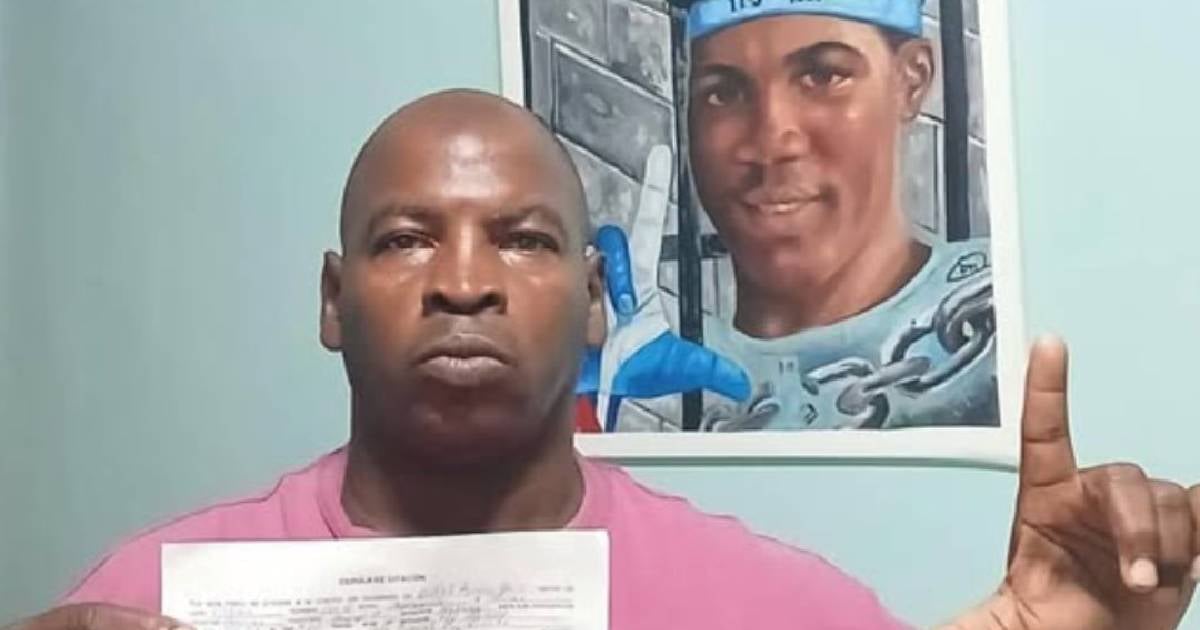
The United States Embassy in Cuba has publicly condemned the mistreatment of political prisoner Walnier Luis Aguilar, one of the young individuals incarcerated for participating in the July 11, 2021 protests (11J). The embassy has called for the release of all prisoners of conscience on the island.
"We are deeply concerned about the abuse and treatment of political prisoner Walnier Luis Aguilar and the hundreds of others unjustly detained. It's time to release them all," the diplomatic mission stated on its official X (formerly known as Twitter) account.
This condemnation came shortly after the Cuban Observatory of Human Rights (OCDH) raised alarms about the young dissident's situation. Aguilar was recently transferred to the Agüica prison in Matanzas, nearly 200 kilometers from his family residing in Havana.
Isolation and Family Strain
The OCDH claims that this transfer serves as a punitive measure by State Security to isolate Aguilar and break his resolve.
Wilber Aguilar, Walnier's father, took to social media to express his frustration after being summoned by police officers following a brief, interrupted call from his son in prison.
"This is abuse. They didn't allow me to speak with him. They're toying with our anxiety," he posted on Facebook, sharing his concerns for his son's physical and emotional well-being.
Background and Human Rights Concerns
Aguilar Rivera, aged 24, was sentenced to several years in prison for his participation in the peaceful 11J demonstrations in Havana. His case has been documented by the Inter-American Commission on Human Rights (IACHR), which granted precautionary measures to his family in 2025 due to harassment and reprisals.
The recent transfer of Walnier coincides with that of another political prisoner, activist Ángel Cuza, who was moved to Guanajay prison in Artemisa under similar pretenses.
Forced Transfers as Punishment
Both Aguilar and Cuza were removed from Combinado del Este prison under the guise of a supposed hunger strike, a claim refuted by their families.
Cuza reported from his new cell that he is isolated and without contact with other inmates: "I am in a closed cell, alone. They say I have a visit tomorrow, but I don't know how this will work," he stated in an audio shared by independent journalist Yaima Pardo.
Human rights organizations and independent media have repeatedly highlighted that the Cuban regime employs forced transfers as a method of punishment to psychologically weaken political prisoners and their families.
In many instances, detainees have been relocated to prisons far from their homes without prior notice or legal justification.
Frequently Asked Questions About Cuban Political Prisoners
What accusations led to Walnier Luis Aguilar's imprisonment?
Walnier Luis Aguilar was imprisoned due to his involvement in the peaceful protests that took place on July 11, 2021, in Havana.
How has the international community responded to Aguilar's situation?
The United States Embassy in Cuba and the Inter-American Commission on Human Rights have both expressed concern about Aguilar's treatment and have called for his release.
What are the implications of forced prison transfers in Cuba?
Forced transfers are often used as a punitive measure to isolate prisoners and weaken their psychological resilience, often moving them far from their families without warning or legal basis.