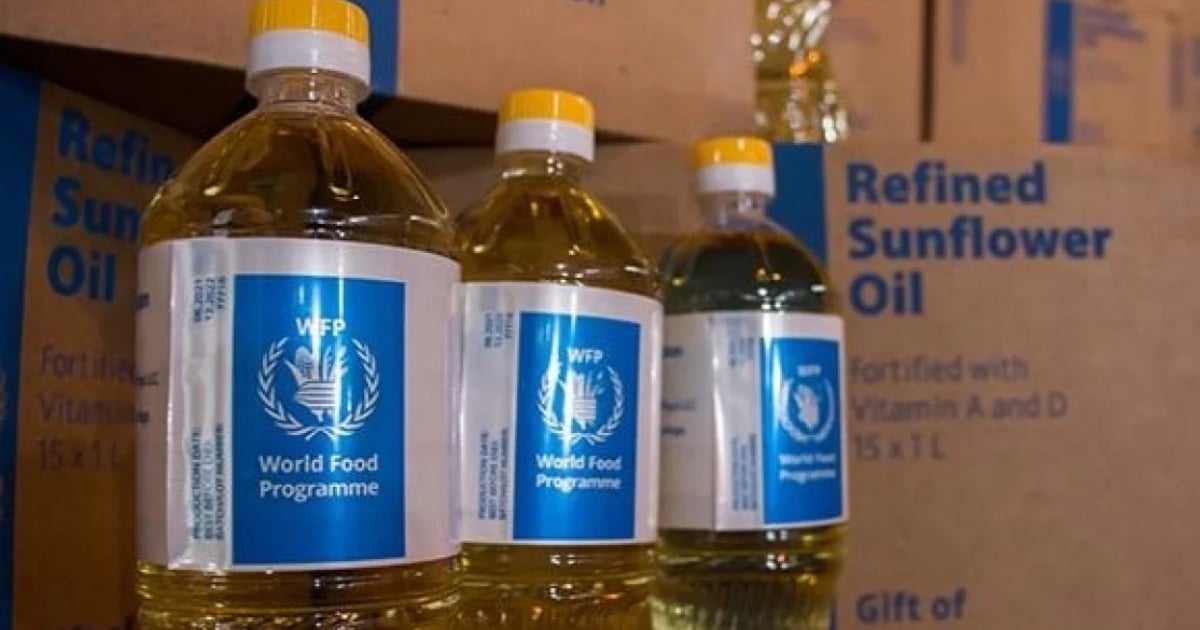
Amid the chaos left by Hurricane Melissa and an unprecedented economic crisis, the Cuban government has refuted claims that the donated oil from the World Food Program (WFP) is being sold in local stores. These allegations surfaced online, sparking concerns about the possible commercialization of this humanitarian aid.
The Ministry of Domestic Trade took to Facebook to declare, "The news circulating on digital social networks about the sale of the oil donated by the World Food Program is false."
The official statement asserts that the product "has only been released to social protection centers," and the oil available in local stores is designated "for individuals in vulnerable situations as part of their action plan."
The message further emphasizes, "All donations made by friendly countries and international organizations are distributed free of charge to the population."
Citizens are urged to seek information "through official channels."
Despite these assurances, the Ministry's post was met with a storm of comments challenging the official narrative.
A user from San Germán, Holguín, commented, "Here where the cyclone hit, nothing has been given to any vulnerable person."
Another commenter from Santiago questioned, "Which community is receiving the donation? In my area, not even the delegate has come, and the water reached above waist level."
In various eastern municipalities, testimonies echo a common theme: the government's promises starkly contrast with the reality faced by thousands who have lost everything.
While material damages are extensive, state aid is conspicuously absent.
In decimated communities, people struggle to survive amid mud and scarcity, lacking the resources to recover what the wind and floods destroyed.
Although the recent report by Cubita NOW regarding the alleged sale of oil turned out to be untrue, public skepticism remains justified.
In 2021, during another emergency, the Ministry of Domestic Trade admitted to selling WFP-donated oil in six Havana municipalities.
This incident, well-documented, sparked widespread criticism both inside and outside Cuba, as selling donated goods violates international norms.
It wasn't an isolated incident: following Hurricane Irma in 2017, the Cuban government charged "distribution costs" for clothes, mattresses, and food meant to be free, leading to such outrage that authorities were forced to backtrack.
Today, while official networks deny repeating such practices, the population faces a dire situation, and food scarcity turns any humanitarian aid into a lifeline.
"Here in El Caney, Santiago de Cuba, two containers of sausages arrived and hardly anyone got any. We all need food, please. If they're going to sell something, distribute it to each butcher so everyone can have some," pleaded a resident on the Ministry's post.
In the provinces hardest hit by the hurricane, aid tends to come from individuals, churches, or small solidarity groups, not the State.
In this context, the official version seems unconvincing to those who feel the government has once again turned its back on them.
Even if authorities deny selling the donated oil, for many Cubans, the issue extends beyond any single delivery: it’s the accumulated distrust from years of opacity and the certainty that, amidst disaster, the population remains left to fend for themselves.
Public Concerns About Aid Distribution in Cuba
What has the Cuban government said about the sale of donated oil?
The Cuban government has denied selling the donated oil from the World Food Program, stating it is only distributed to social protection centers and vulnerable individuals.
Why is there public skepticism about the distribution of aid?
Public skepticism arises from past incidents where the government has sold donated goods, such as in 2021 and after Hurricane Irma in 2017, despite official denials.
How are communities coping with the lack of state aid?
Communities are relying on aid from individuals, churches, and solidarity groups to survive, as state assistance remains inadequate.