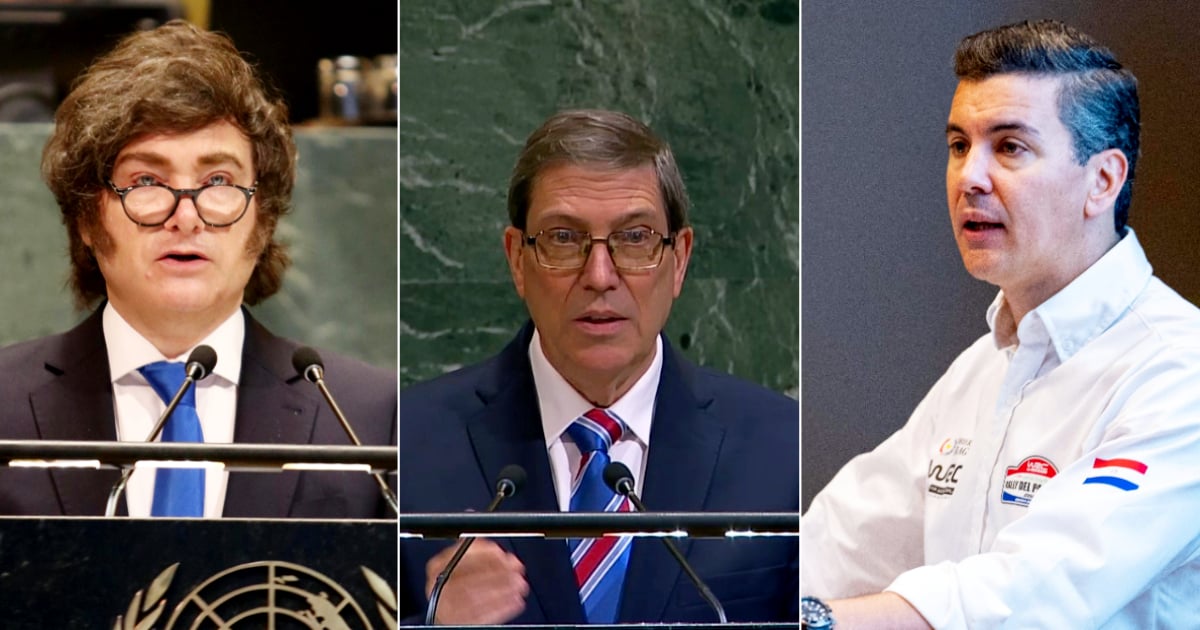
In an unprecedented move since the annual United Nations vote against the U.S. embargo began, two Latin American nations—Argentina and Paraguay—cast their votes against Cuba. Meanwhile, Ecuador and Costa Rica abstained, disrupting the longstanding regional consensus that had, for over three decades, provided diplomatic cover for the Havana regime.
The outcome of the 2025 vote—165 in favor, 7 against, and 12 abstentions—signals a shift in the political climate across Latin America. This change reflects a growing trend towards more liberal, democratic governments that are increasingly critical of authoritarianism, leading to a decline in the automatic support for Cuba.
A Historic Shift
According to official United Nations data, the seven votes against the resolution were cast by Argentina, Hungary, Israel, the United States, North Macedonia, Paraguay, and Ukraine.
The 12 abstentions came from countries including Poland, Romania, Bosnia and Herzegovina, Costa Rica, Ecuador, Estonia, Morocco, Albania, Lithuania, Moldova, the Czech Republic, and Latvia.
This marks the lowest global support for Cuba in over a decade and the first time Latin America has openly shown cracks in the traditional Cuban narrative of a "genocidal blockade."
Argentina and Paraguay: Breaking with the Past
The most notable shift occurred in Argentina, where President Javier Milei has dramatically altered foreign policy. Since assuming office in December 2023, Milei has aligned Argentina's diplomacy with the United States, Israel, and the European Union, openly endorsing the values of liberal democracy and a market economy.
Argentina's foreign ministry justified the vote against the Cuban resolution at the United Nations as consistent with Milei's foreign policy, which focuses on defending democracy, individual freedoms, and human rights.
This represents a stark departure from the diplomatic stance maintained by previous Kirchnerist and Peronist administrations that fostered close ties with the regimes in Havana, Caracas, and Managua, forming the so-called "21st-century socialism" axis.
In Paraguay, President Santiago Peña has similarly reoriented foreign policy. After years of nuanced diplomatic relations with Cuba, Asunción voted against the resolution presented by Havana, aligning with its support for representative democracies and human rights in the region.
This decision is seen as a symbolic gesture within a transforming regional context, where several Latin American governments are distancing themselves from the old 20th-century ideological alignments and prioritizing cooperation with Western liberal democracies.
Ecuador and Costa Rica: Strategic Abstention
Among the 12 abstentions, Ecuador and Costa Rica stood out. Ecuadorian President Daniel Noboa, in office since November 2023, has aimed to reposition the country as a reliable partner of the United States and Europe after years of diplomatic ambiguity under Correa's leadership.
Noboa's abstention reflects an effort to balance economic pragmatism with democratic principles, avoiding a direct confrontation with Havana while clearly distancing from Castroism.
Costa Rica maintained a stance consistent with its democratic tradition. San José typically avoids direct confrontation with Cuba, but neither does it support its positions in international forums. Costa Rica's abstention was interpreted as a sign of discontent with the island's lack of freedoms, without dramatizing the gesture with a negative vote.
A Regional Transformation in Progress
The 2025 vote comes amid political realignments in Latin America, where several countries have shifted towards more critical positions on authoritarian regimes.
In Bolivia, the interim transitional government following the MAS defeat in September elections has announced a change in direction, although the newly elected president has yet to take office. Analysts predict that the future administration will adopt a more moderate stance, less dependent on Havana and Caracas.
In Chile, although President Gabriel Boric maintains a leftist discourse, he has distanced himself from Cuban, Venezuelan, and Nicaraguan repression, aware of the political cost of associating with dictatorships in a global context where democracy is once again a banner of legitimacy.
Collectively, the region shows a clear loss of political affinity with Castroism, partly due to the discredit of its allied models (Venezuela and Nicaragua), which are increasingly isolated and under international sanctions. Excluding these two allied regimes, only the governments of Mexico, Colombia, and Brazil maintain close relations with the Havana dictatorship.
Cuba Isolated and Losing Its Narrative
The erosion of Latin American support comes as Cuba experiences its worst economic crisis since the 1990s. With soaring inflation, daily blackouts, and unprecedented emigration—over 650,000 Cubans have left the island since 2021—the "blockade" narrative no longer convinces even its old allies.
Revelations about the $18 billion in assets of GAESA, the military conglomerate controlling more than 70% of the Cuban economy, have exposed the contradiction between the narrative of economic strangulation and the wealth accumulation by the military elite.
Meanwhile, reports of Cuban mercenaries recruited by Russia to fight in Ukraine have further tarnished the regime's image among European countries and Western allies.
The End of a Diplomatic Era
For decades, Cuba was a regional symbol of resistance and sovereignty. But in 2025, its victim narrative loses weight against the evidence of a repressive, impoverished system sustained by military interests and authoritarian alliances.
The UN results mark the beginning of a new phase in Latin America, where diplomacy is no longer guided by revolutionary nostalgia but by the defense of democratic principles and national interests.
The consensus has broken. And this time, Cuba's isolation wasn't solely caused by Washington. The Trump administration found support among the region's own neighbors.
Latin America's Changing Stance on Cuba
Why did Argentina and Paraguay vote against Cuba at the UN?
Argentina, under President Javier Milei, and Paraguay, led by Santiago Peña, shifted their foreign policies towards supporting liberal democracies, aligning with the United States and distancing themselves from Cuba's authoritarian regime.
What was the significance of the 2025 UN vote on Cuba?
The 2025 UN vote marked a significant political shift in Latin America, showing reduced support for Cuba and reflecting a move towards more liberal and democratic governance in the region.
How did Ecuador and Costa Rica respond to the vote on Cuba?
Ecuador and Costa Rica abstained from the vote, indicating a strategic decision to balance economic pragmatism with democratic principles while maintaining a diplomatic distance from Cuba's government.