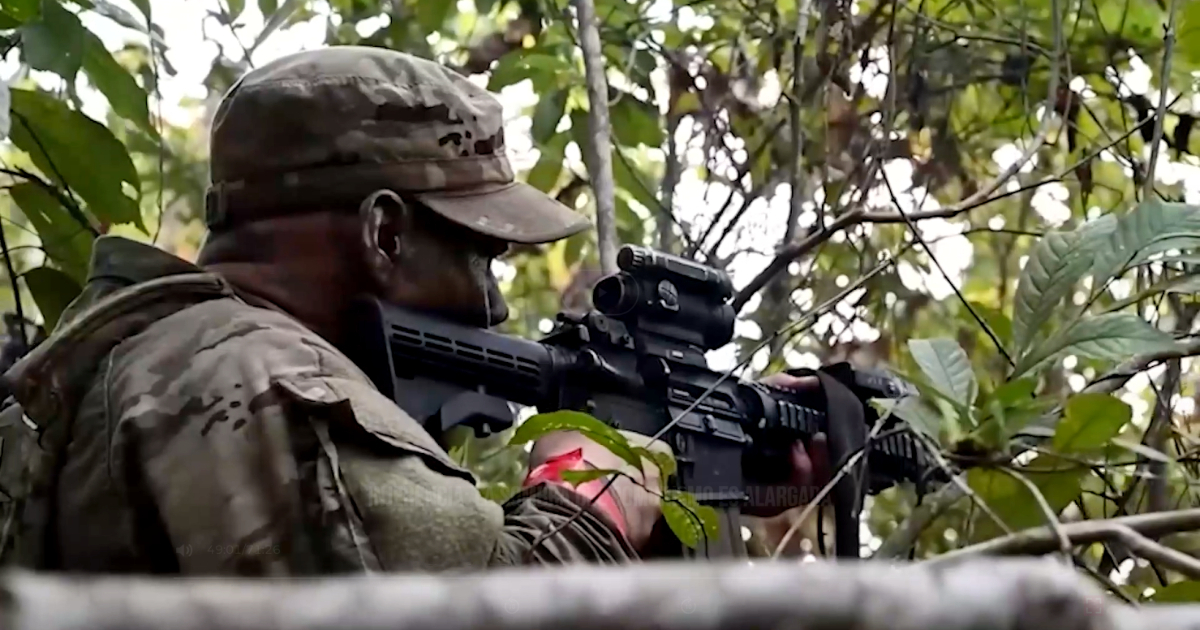
A documentary highlighting seven decades of Cuban regime interference in global democracies premiered on Monday at the Palacio de la Prensa in Madrid. This event served as a counter-narrative to the upcoming XXX Ibero-American Summit, which took place in Spain's capital on November 4th and 5th.
The film, titled "Injerencia: la sombra del comunismo es alargada" (Interference: The Long Shadow of Communism), was spearheaded by the platform Voces Iberoamericanas Silenciadas. It's available online for free viewing in both Spanish and English.
Spanning 71 minutes and divided into three episodes, the documentary explores how the Cuban dictatorship has systematically undermined democratic systems since 1959. It delves into the creation of guerrilla groups, the financing of armed expeditions, alleged connections to drug trafficking, the regime's espionage apparatus, and the strategic use of mass migration as a political pressure tactic.
The Chronological Analysis
The film organizes its narrative around five significant historical events: the 1959 seizure of power, the 1961 Sovietization of Cuba, the 1966 Tricontinental Conference, the 1990 founding of the São Paulo Forum, and the orchestrated migration wave by Havana and Managua in 2021.
Regarding the Tricontinental Conference held in Havana, filmmakers point out that it "brought together communist, revolutionary, and openly terrorist organizations from over 82 countries, laying the groundwork for the globalization of terror."
São Paulo Forum's Role
The São Paulo Forum, established by Fidel Castro and Luiz Inácio Lula da Silva after the fall of the Berlin Wall, is portrayed in the documentary as "an instrument for interfering in regional democracies."
Following the screening, a discussion featured Amelia Calzadilla, leader of the Cuban Classical Liberal Party; Edgardo Pinell, a Nicaraguan lawyer and journalist; and Miguel Henrique Otero, director of the Venezuelan newspaper El Nacional.
The three panelists discussed Havana's historical role in transforming Latin American states into totalitarian regimes under the guise of liberating revolutionary movements.
International Pressure Intensifies
The premiere coincides with heightened international scrutiny on the regime. In July, the U.S. State Department released the report "Cuba: The Capital of 21st Century Communism," an approximately 100-page document accusing Havana of a nearly seven-decade campaign of espionage, infiltration, sabotage, and propaganda against the United States and other democracies.
This report cites documented cases such as Ana Montes, a former intelligence analyst who leaked secrets to Cuba for 16 years, and Víctor Manuel Rocha, a former U.S. ambassador to Bolivia who acted as a Cuban regime agent for decades.
The document also reveals that Cuba hosts 18 signals intelligence facilities, three operated by China and two by Russia, with intelligence personnel from both countries reportedly tripling since 2023.
Furthermore, the report accuses the Cuban Institute of Friendship with the Peoples (ICAP) of functioning as an intelligence and influence tool linked to over 2,000 international groups.
Cuban Foreign Minister Bruno Rodríguez Parrilla dismissed the report as a "slanderous pamphlet," a reaction the documentary's promoters see as indicative of the regime's stance on allegations of its external activities.
The documentary's website encapsulates its essence with a poignant statement: "the best summary of the last seventy years, where cruelty is the system and the suffering of Cubans is its business."
Understanding the Cuban Regime's Impact on Global Democracies
What is the main focus of the documentary premiering in Madrid?
The documentary focuses on the Cuban regime's interference in democracies worldwide over the past seven decades.
How does the documentary analyze Cuban interference?
It examines the Cuban dictatorship's influence through guerrilla creation, armed expedition financing, espionage, and the strategic use of mass migration.
What recent U.S. report is related to the documentary's theme?
The U.S. State Department's report "Cuba: The Capital of 21st Century Communism" addresses similar themes of Cuban espionage and influence.