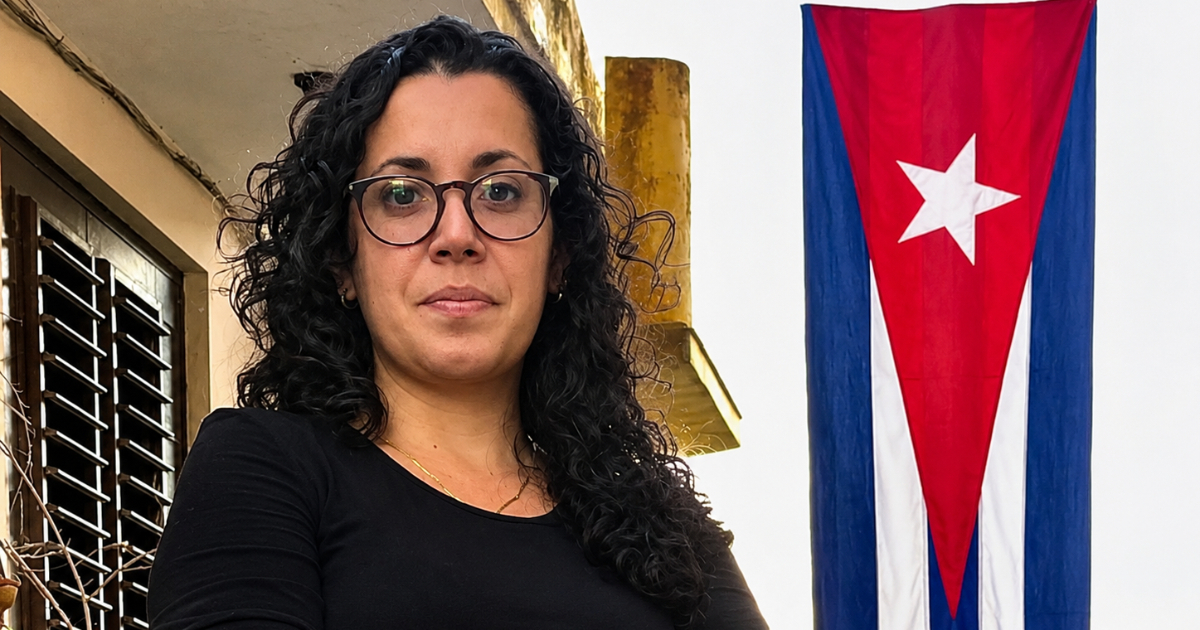
Independent journalist Camila Acosta was taken into custody on Tuesday in Havana as she walked to a veterinary appointment with her cat, as reported by the outlet CubaNet, where she serves as a reporter.
State Security agents intercepted her near her home in the Plaza de la Revolución district, handcuffed her, and forcibly placed her in a police vehicle. Her pet was left on the street until a neighbor rescued the cat and informed her husband, writer and former political prisoner Ángel Santiesteban.
"They took her away in handcuffs and violently put her in the patrol car," Santiesteban recounted to CubaNet. As this report was being completed, Acosta's whereabouts and the charges against her remained unknown.
Neighbors who witnessed the arrest attempted to intervene, asserting that Camila was a decent person. The police allegedly responded that "because of her, a relative of a revolutionary was harmed," according to Santiesteban.
The arrest occurred a day after the violent detention of fellow CubaNet contributor Adelth Bonne Gamboa in the Santos Suárez neighborhood of Havana. Bonne was released hours later but had his laptop, phone, camera, tripods, headphones, and microphone confiscated, and was fined 3,000 pesos under Decree-Law 370, which the regime uses to punish journalists disseminating information online.
CubaNet condemned both arrests as part of a coordinated repressive campaign: "The repression against CubaNet journalists aims to prevent the truth about Cuba from reaching the world. We demand an end to arbitrary detentions, threats, and harassment against the independent press."
This latest detention is not an isolated incident but rather part of an ongoing pattern of harassment. On October 28, a plainclothes officer prevented Acosta from leaving her home in Vedado without presenting a court order or identifying himself, an episode Acosta recorded and shared. The Cuban Institute for Freedom of Expression and Press (ICLEP) documented similar incidents in August and September 2026.
Among the most serious incidents in her past is the April 21, 2024, arrest in Cárdenas, Matanzas, when she was on her way to visit families of political prisoners, ordered by State Security.
The most notable case occurred on July 12, 2021, a day after Acosta covered the July 11 protests for CubaNet and the Spanish newspaper ABC. She was arrested and spent over ten months under house arrest, as documented by the Committee to Protect Journalists, which interviewed her after her release.
Acosta has stated that she has been detained approximately twenty times throughout her career. Her recent arrest comes amid increasing repression: ICLEP recorded 272 violations of freedom of expression and press just in July 2026, the highest monthly figure documented, while Cubalex reported 677 political prisoners in Cuba as of November 2, 2026.
Understanding the Situation of Press Freedom in Cuba
What led to Camila Acosta's arrest?
Camila Acosta was arrested while heading to a veterinary appointment with her cat. The specific charges against her have not been disclosed, but her arrest follows a pattern of harassment against independent journalists in Cuba.
How has the Cuban government been treating independent journalists?
Independent journalists in Cuba face a pattern of repression, including arbitrary arrests, confiscation of equipment, and fines under laws used to silence dissenting voices. This is part of a broader strategy to control the narrative and limit freedom of the press.
What actions have been taken to support journalists like Acosta?
Organizations such as CubaNet and the Committee to Protect Journalists have condemned the arrests and called for an end to the harassment of independent media. These entities continue to document violations and advocate for press freedom in Cuba.