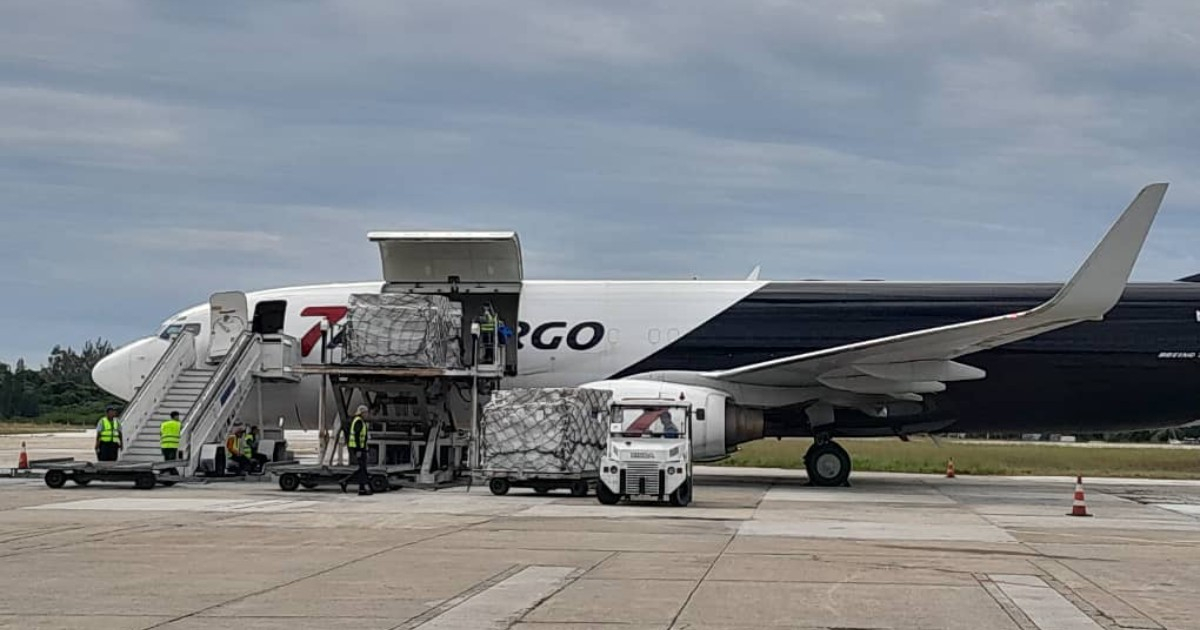
A fresh shipment of humanitarian aid from the United States government arrived in Cuba on Tuesday, bringing 700 food kits and another 700 hygiene kits intended for vulnerable families in the municipality of Cruces, located in the province of Cienfuegos.
Cáritas Cuba reported that the shipment landed in the morning at Santa Clara's Abel Santamaría International Airport, marking the second delivery of U.S. assistance to the Diocese of Cienfuegos.
This initiative aims to assist approximately 10,200 impoverished families within the Diocese of Cienfuegos, according to the organization.
The aircraft was welcomed by Ana Isabel Palenque Guillemí, director of Cáritas Cienfuegos, along with Yanet Alfonso Gallegos, diocesan coordinator for the Institutional Training Program, and other members of the Catholic organization.
Distribution is set to commence on Wednesday at La Santa Cruz Parish in Cruces and its surrounding communities, following the schedule outlined by the institution.
Distribution Strategy and Priorities
The kits will be distributed at locations pre-identified by Cáritas. They will also be delivered directly to the homes of individuals who, due to health conditions or care needs, are unable to travel to distribution points.
Volunteers in Cruces will manage the distribution after registering households with the greatest needs, particularly those suffering from food insecurity and limited access to water.
The organization will prioritize individuals over 60 years old, those with disabilities or bedridden, pregnant or nursing women, and families with children under five years old.
Selection is based on vulnerability assessments conducted by parish teams, meaning the distribution is not open to the entire population of the municipality.
Background of the Humanitarian Program
This shipment is part of a $100 million U.S.-funded humanitarian assistance program for Cuba, with $60 million managed through organizations affiliated with the Catholic Church.
The aid is channeled through Cáritas Cuba and Catholic Relief Services (CRS), which oversee the procurement, coordination, and distribution of supplies to selected households.
On September 17, another U.S. aid shipment reached the same Santa Clara airport, also aimed at vulnerable families within the Diocese of Cienfuegos.
That earlier shipment, consisting of 700 food kits and 700 hygiene kits, was allocated to San Antonio de Padua Parish in the municipality of Lajas and its communities.
Two days later, hundreds of Lajas families received supplies through an operation involving approximately 50 Cáritas volunteers and over a dozen workers tasked with transporting the shipments.
During that operation, carts were used to deliver products to rural communities and homes that were difficult to access. Ill individuals, those with disabilities, or those bedridden received the kits directly at their residences.
The initial shipment's food packages included rice, beans, oil, sugar, pasta, sardines, and tuna. Hygiene kits contained personal hygiene and cleaning products, water purification tablets, and rechargeable lamps.
The humanitarian program began in July 2026 with the first U.S. assistance flight arriving in Havana, eventually expanding to other Cuban provinces.
In September, the U.S. Embassy announced additional shipments to Camagüey, Ciego de Ávila, Cienfuegos, Matanzas, and Pinar del Río, following a meeting with Cáritas Cuba's national leadership.
FAQs on U.S. Humanitarian Aid to Cuba
What is included in the food kits delivered to Cienfuegos?
The food kits typically contain rice, beans, oil, sugar, pasta, sardines, and tuna.
Who is responsible for distributing the aid in Cienfuegos?
Cáritas Cuba, along with local volunteers, is responsible for managing and distributing the aid to selected households in Cienfuegos.
How are the beneficiaries of the aid chosen?
Beneficiaries are selected based on assessments of vulnerability, prioritizing the elderly, disabled, pregnant women, and families with young children.