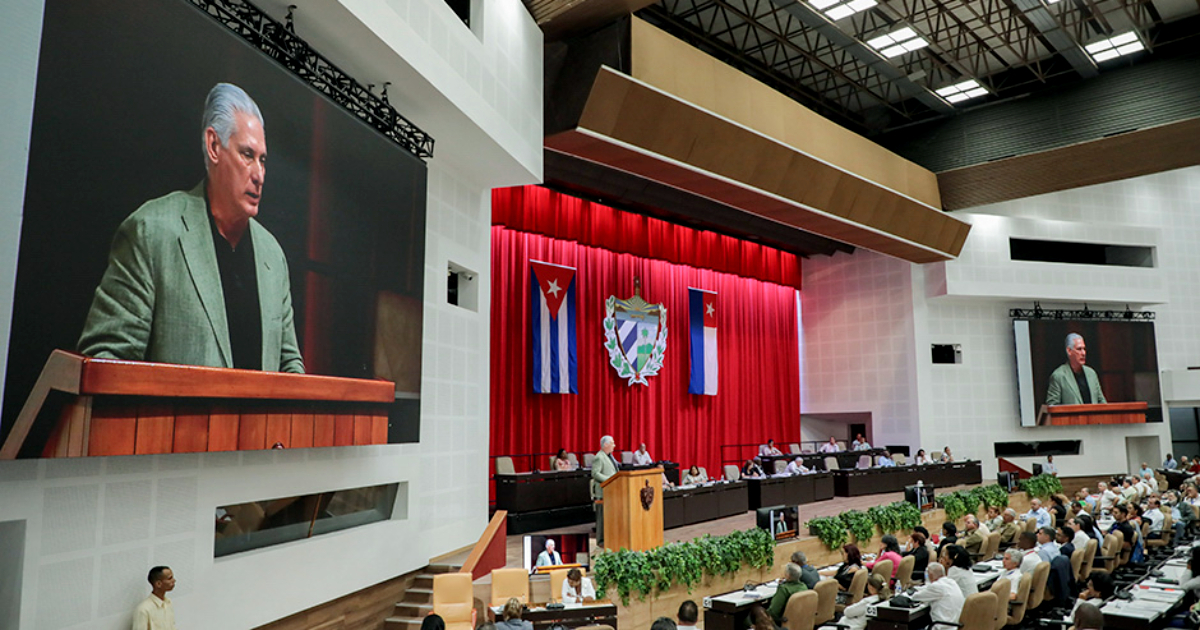
Cuba's leader, Miguel Díaz-Canel, has revealed that 171 out of the 176 approved economic and social reforms from June already have their legal groundwork completed. The government has also sanctioned 215 regulations to support their execution.
Despite this announcement, an academic study raises concerns that this opening does not inherently ensure the legal rights and security that entrepreneurs and investors require.
This data was shared by Díaz-Canel on November 2 during a meeting with state enterprise executives. He admitted that the procedures for five measures, which he described as the most contentious, are still incomplete, without specifying which ones or when they will be fully developed.
Compared to August, when many reforms were still pending regulatory development, this represents progress. However, it leaves a critical question unanswered: Are new laws and regulations enough to transform an economy long controlled by the state?
Legal Reforms or Legislative Illusions?
This very question is explored by Sofía Lagos in her essay, "Cuba's Recent Economic Reforms: Legal Opening or Legislative Illusion?", published on August 27 in Horizonte Cubano, an academic project by Columbia University.
Her analysis differentiates between allowing new economic activities and establishing a legal system capable of protecting these activities from administrative decisions, contract breaches, or policy shifts.
Lagos acknowledges that the 176 measures represent significant changes from the previous system. Noteworthy changes include the creation of private banks and exchange houses, expanded foreign investment in non-state enterprises, lifting certain labor hiring restrictions, and increasing private participation in foreign trade.
The Challenge of Legal Security
While these changes could potentially expand opportunities for Cuban entrepreneurs and foreign investors, Lagos warns that removing a prohibition does not automatically establish an enforceable right before authorities and courts.
Investors need clarity on not only opening a business but also retaining licenses, enforcing contracts, converting profits to foreign currency, or challenging administrative decisions that harm their interests.
According to Lagos, the June reforms didn't adequately address these concerns. For example, foreign investment authorizations remain subject to discretionary decisions, and the reforms lack general guarantees regarding the suspension or revocation of licenses.
This regulatory uncertainty poses significant challenges, particularly for long-term funding and investments, even if a company receives authorization to operate.
More Regulations, But Are They Meaningful?
Lagos also highlights the absence of sufficiently independent and predictable mechanisms for resolving commercial disputes. She questions the independence guarantees of Cuba's judicial system, noting that the country is not a signatory to the Convention on the Settlement of Investment Disputes (ICSID), a key international mechanism for investor-state disputes.
While Cuba does have bilateral investment treaties and arbitration mechanisms, the fundamental issue remains the effective enforcement of contractual obligations.
The introduction of private financial institutions does not automatically resolve currency shortages or ensure the conversion and transfer of profits from Cuban pesos to foreign currency.
Additionally, the risks associated with U.S. sanctions are significant, especially when operations involve entities linked to the military conglomerate GAESA.
Converting Reforms into Tangible Outcomes
The legal uncertainties add to the economic criticisms raised by other specialists. In August, Cuban economist Pedro Monreal noted the 176 measures lacked a specific macroeconomic stabilization strategy, despite severe monetary and production imbalances.
While the regime views the approval of numerous regulations as progress, investors see the value of these provisions hinging on the stability of the rules, contract security, and the ability to exercise rights against state institutions.
Lagos's study draws a distinction that the figures presented by Díaz-Canel do not yet clarify: expanding legally authorized economic activities is one thing, but ensuring that those who engage in them can operate with autonomy, predictability, and legal protection is another.
Understanding Cuba's Economic Reforms and Legal Challenges
What are the major changes introduced by Cuba's recent economic reforms?
The recent reforms include the creation of private banks, expanded foreign investments in non-state enterprises, lifting certain labor hiring restrictions, and increased private participation in foreign trade.
Why is there concern about the legal security of these reforms?
Concerns arise because the reforms do not adequately address issues such as the enforcement of contracts, retention of licenses, and mechanisms for resolving commercial disputes, which are essential for investors' confidence.
How do U.S. sanctions impact these economic reforms?
U.S. sanctions pose risks, especially for operations involving entities linked to the military conglomerate GAESA, affecting industrial, energy, and infrastructure projects that require substantial long-term investments.