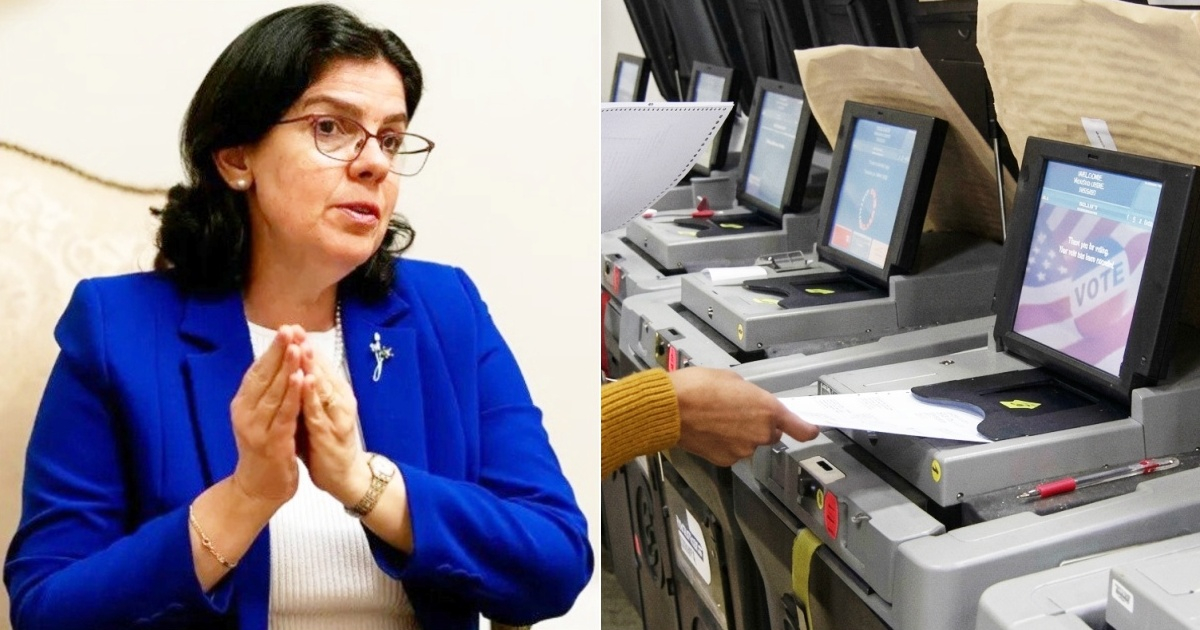
The Cuban government expresses skepticism about any potential policy changes from the United States following the midterm legislative elections on November 3. This sentiment was conveyed by Lianys Torres Rivera, the chargé d'affaires at the Cuban embassy in Washington, during a conversation with AFP.
"We harbor no illusions regarding this matter. It's up to the American people to decide," stated the diplomat in an interview reported by multiple outlets. She referred to the elections that will renew all seats in the House of Representatives and a third of the Senate.
Although the elections might alter the balance of power in the U.S. Congress, currently under Republican control, Torres downplayed any hopes for a change in Washington's policy towards Cuba.
Diplomatic Channels but No Concrete Results
The Cuban representative acknowledged ongoing communication channels with the U.S. State Department but admitted these interactions haven't yielded tangible outcomes.
"We maintain communication channels with the U.S. government, which have included some contacts that we assess have not progressed," she explained to AFP.
Torres emphasized the importance of discretion in these exchanges: "Historically, we have managed the details of these contacts discreetly because we believe it's the best way for progress to be made."
Her remarks align with those made in October by Tanieris Diéguez, the deputy head of mission at the Cuban embassy in Washington, who also acknowledged contact with the U.S. but dismissed any progress towards a serious dialogue.
Economic Pressure and Diplomatic Tensions
The Trump administration has intensified economic and diplomatic pressure on the Cuban regime through restrictions on oil supplies and sanctions targeting Cuban officials and sectors of the island's economy.
In the face of this policy, Torres reiterated that Havana does not seek direct confrontation with Washington.
"We do not threaten the United States, nor do we desire a hostile relationship," she assured.
The diplomat also challenged Secretary of State Marco Rubio's argument, which attributes Cuba's economic issues to the communist system's inefficiency.
"If the model is inefficient, why is there a need to sanction it every week?" Torres questioned.
Engagement with Cuban Expatriates
Torres further affirmed the embassy's openness to engaging with members of the Cuban community residing in the United States who are interested in exploring business opportunities on the island.
"There are Cubans legally establishing businesses in Cuba, and not only those living in the United States," she stated, without providing figures on these initiatives.
The statements come after a new diplomatic escalation between Washington and Havana during the annual United Nations General Assembly debate on the U.S. embargo.
The resolution presented by Cuba on October 28 received 130 votes in favor, 17 against, and 25 abstentions, marking a significant drop in international support compared to previous votes.
During the session, a diplomatic confrontation occurred between Cuban Foreign Minister Bruno Rodríguez Parrilla and U.S. Ambassador to the United Nations Mike Waltz.
This incident later resulted in the departure of a Cuban diplomat from U.S. territory.
Commenting on these events, Torres emphasized that the primary concern for Havana was the majority support received at the United Nations, while reaffirming that communication channels with Washington remain open, albeit without progress.
Cuban-U.S. Diplomatic Relations: Key Questions
Why does the Cuban regime not expect U.S. policy changes after the elections?
The Cuban regime does not foresee changes because they believe U.S. policy decisions are in the hands of the American people, and they have no illusions about influencing those decisions.
What is the status of communication between Cuba and the United States?
While there are established channels of communication between the two countries, Cuba acknowledges that these interactions have yet to produce significant results.
How has the Trump administration increased pressure on Cuba?
The Trump administration has increased pressure through economic sanctions and restrictions on oil supplies, targeting officials and sectors of the Cuban economy.