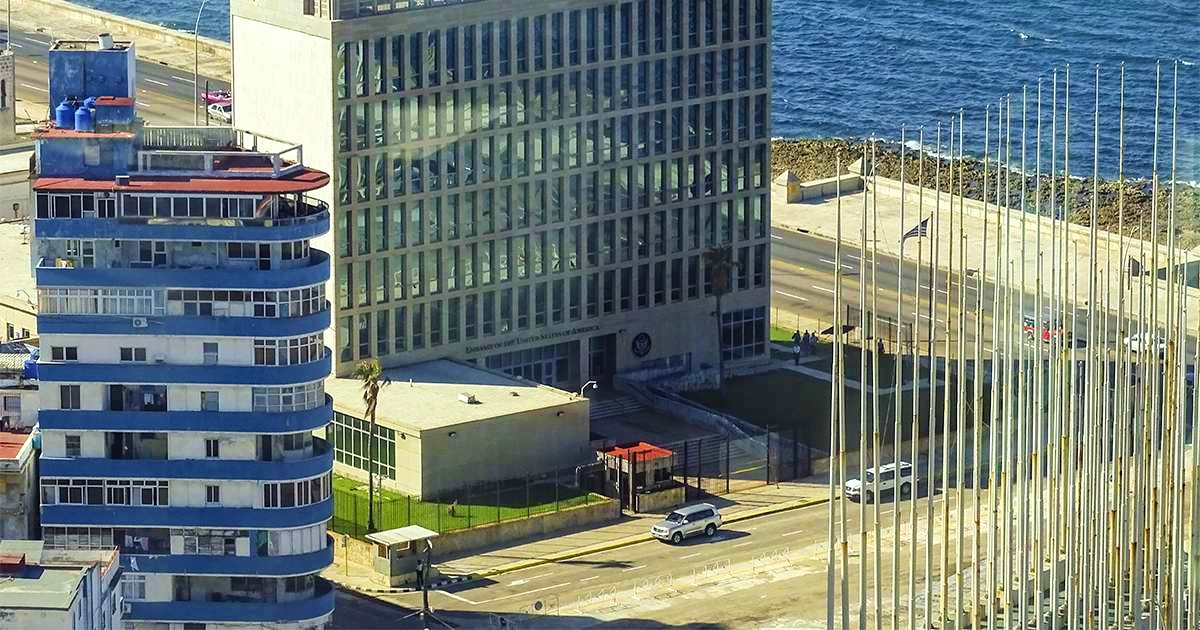
The U.S. Embassy in Havana continues to offer immigrant visa processing and some consular services, though the current immigration restrictions have significantly limited visa issuance for Cuban citizens.
As of November 3, 2026, the Consular Section is processing all categories of immigrant visas and providing limited non-immigrant visa services.
Routine appointments for tourism and business visas (B1/B2) remain halted.
Having the opportunity to apply or attend an interview does not ensure a visa will be issued.
Presidential Proclamation 10998, effective January 1, 2026, restricts entry into the United States and the issuance of certain visas for Cuban nationals.
Here’s a breakdown of available processes in Havana, applicable restrictions, and official channels for consular services.
Which Visas Are Unavailable to Cubans?
Proclamation 10998, signed on December 16, 2025, and effective from January 1, 2026, places Cuba among nations facing partial entry and visa issuance suspensions, following the restrictions of Proclamation 10949 from June 4, 2025.
This affects immigrant visas and non-immigrant categories like B-1/B-2 (business and tourism), F and M (students), and J (exchange programs).
Immigrant visas for immediate family members of U.S. citizens, including IR-1/CR-1, IR-2/CR-2, and IR-5 categories, no longer hold a general exemption under the new proclamation.
There are exceptions, including for U.S. lawful permanent residents, dual nationals traveling with a non-restricted passport, and certain diplomatic or official categories.
Specific exceptions and potential individual waivers for national interest exist.
The proclamation applies to those outside the U.S. as of January 1, 2026, without a valid visa on that day.
Visas that were valid at that time were not revoked by this proclamation.
For details on affected categories and exceptions, see our guide on U.S. visas still suspended for Cubans.
Processing of Immigrant Visas and Interviews
The U.S. Embassy in Havana processes all immigrant visa categories.
However, the State Department alerts applicants under Proclamation 10998 that they may proceed with applications and attend scheduled interviews without being eligible for visa issuance or U.S. entry.
Thus, a case may proceed to a consular interview without guaranteeing visa approval. The decision hinges on applicable immigration requirements, current restrictions, and possible exceptions.
According to consular information from the Embassy, applicants should note the following:
Form: Immigrant visas require the DS-260 form.
Fees: Published fees are $325 for family-based immigrant visas, $330 for diversity lottery visas, and $265 for fiancé(e) visas. Amounts vary by category and must be confirmed before payment.
Payment: Fees can be paid to the National Visa Center (NVC) or directly at the Embassy in certain cases. On-site consular payments require cash in U.S. dollars.
Appointments: Applicants should follow category-specific instructions and avoid payments to intermediaries. Scheduling a consular appointment is free of additional charges.
Medical Exams: Locations and Appointment Scheduling
Immigrant visa applicants must undergo a medical exam before a visa can be issued, regardless of age.
The Embassy only accepts exams from authorized doctors and institutions.
The designated hospital depends on the applicant's province of residence and case type.
Fiancé(e) visa applicants receive specific instructions regarding the authorized center.
The State Department publishes the official list of hospitals and exam instructions in Havana.
Medical appointments are scheduled directly with the designated hospital, Monday through Friday, between 8:00 a.m. and 4:00 p.m.
Before calling, applicants should have their personal details, case number, and consular interview date ready. Exams conducted at unauthorized facilities will not be accepted for immigration processing.
Non-Immigrant Visas: Who Can Request an Appointment in Havana?
The Embassy offers limited non-immigrant visa services. Based on consular instructions, appointments are focused on four scenarios:
Diplomatic and Official Visas: Categories A and G.
Temporary Work Visas: Categories H, L, O, P, Q, and R, with an approved petition and the necessary documentation, including the I-797B action notice when applicable.
Exchange Visas: Category J, with the approved DS-2019 form and DS-7002 when required.
Medical Emergencies: Cases supported by medical documentation from Cuba and the U.S., plus proof of financial capability.
Interested parties must complete the Consular Navigator form, available through the official visa information page, and submit the necessary documents for their category.
The Embassy highlights that requesting an appointment does not guarantee assignment and attending an interview does not ensure visa issuance.
Published fees are $205 for certain temporary work visas and $185 for the J category.
Although Havana accepts J visa applications, this category is among those suspended for Cuban citizens under Proclamation 10998. Therefore, interview availability does not negate issuance restrictions.
B1/B2 Visas: Appointment Suspension and Bond Requirement
Routine appointments for B1/B2 tourism and business visas remain suspended at the U.S. Embassy in Havana.
Additionally, since January 21, 2026, Cuba is included in the bond program for certain B1/B2 visas, per the State Department.
If a Cuban applicant is eligible for one of these visas despite applicable restrictions, a consular officer may require a bond of up to $20,000 before issuance.
The obligation to post a bond is not an automatic exception to visa suspension. Eligibility requirements and relevant immigration provisions must first be met.
The applicant should only make payment when explicitly instructed by a consular officer, following the official authorized procedure. The requirement may apply regardless of the interview location.
For non-immigrant visa categories not processed in Havana, interested parties should review application instructions in their residing or nationality country. See our guide on the consular appointment in Georgetown for more.
U.S. Citizen Services in Cuba
The American Citizen Services Unit of the Embassy handles passport requests, consular reports of birth abroad (CRBA), notarial services, and certain emergencies.
Passports: Appointments are requested through the American Citizens Services Navigator, linked on the official passport page. Regular services are not available during weekends or U.S. and Cuban holidays.
Lost or Stolen Passports: Affected individuals should email ACSHavana@state.gov, explain their situation, and follow consular instructions. A police report, proof of U.S. citizenship, photo ID, and forms DS-11 and DS-64 are required, as applicable.
Emergencies: The Embassy's phone number is +53 7 839 4100. Outside normal hours, press 1 for English and then 0 to reach an operator.
The State Department also has assistance lines for U.S. citizens: 1-888-407-4747 from the U.S. and Canada, and +1-202-501-4444 from other countries.
Guidance for U.S. Permanent Residents in Cuba
The U.S. Embassy in Havana does not issue or replace green cards. These documents fall under the U.S. Citizenship and Immigration Services (USCIS) jurisdiction.
Nonetheless, the consulate provides guidance and certain services related to returning U.S. permanent residents, based on their information about lost, stolen, or expired green cards.
Lost or Stolen Card: A resident who has been outside the U.S. for less than 12 months may request a transportation document (boarding foil) if eligible. Contact VisasHavana@state.gov, with the subject "L11: TRANSPORTATION DOCUMENT."
Document Timeline: Consular information suggests an estimated issuance of one to two business days when the case file is complete and the fee paid. The document is valid for 30 days.
Expired 10-Year Card: Typically, it can be used to board a flight to the U.S., provided all other requirements are met. Confirm conditions with the airline beforehand.
Prolonged Absence: Those who have been outside the U.S. for over a year cannot use the transportation document as a regular solution. Depending on their situation, they might need a returning resident visa (SB-1).
The possibility of returning depends on individual circumstances, available documentation, and applicable immigration rules. A prolonged absence may raise issues with maintaining permanent residency.
Embassy Information: Address, Hours, and Contact Numbers
The diplomatic mission is located at Calzada, between L and M streets, in El Vedado, Havana.
According to contact information published by the Embassy, here are the hours and reference numbers:
General Phone: +53 7 839 4100.
Consular Section: Monday to Thursday, 8:00 a.m. to 4:00 p.m.; Friday, 8:00 a.m. to 3:00 p.m.
American Citizen Services: Monday to Thursday, 8:00 a.m. to 4:30 p.m.; Friday, 8:00 a.m. to 3:30 p.m.
Visa Inquiries: +53 7839 4152, Tuesday to Thursday, between 9:00 and 11:00 a.m.
The Embassy is closed on official holidays in Cuba and the U.S. Access is restricted to appointment holders, authorized individuals, and U.S. citizens needing consular services, in accordance with the Embassy's security protocols.
Services Not Provided by the Embassy
The Embassy does not handle cases related to the Cuban Family Reunification Parole (CFRP) Program. Inquiries about this process should be directed to USCIS.
Interested parties can see our guide on the CFRP program for details and information channels.
Routine appointments for B1/B2 visas are not provided, nor are replacements for U.S. permanent residency cards at the diplomatic mission.
In-person services may experience temporary changes due to security or other circumstances.
For instance, on October 28, the Embassy suspended in-person services for U.S. citizens from 11:00 a.m. due to a demonstration outside its premises.
Before attending an appointment, check the Embassy's official alerts and confirm that the service in question remains available.
Legal Notice: This article provides general information and does not constitute legal advice. U.S. immigration rules and policies may change. For specific case evaluations, consult with an authorized immigration attorney or a representative accredited by the U.S. Department of Justice.
Understanding U.S. Visa Restrictions for Cubans
What visas are currently suspended for Cuban citizens?
The suspended visas include B-1/B-2 (business and tourism), F and M (students), and J (exchange programs), as per Proclamation 10998.
Can a Cuban citizen with a valid visa still enter the U.S.?
Yes, visas that were valid as of January 1, 2026, are not affected by the proclamation and can still be used for entry to the U.S.
What are the exceptions to the U.S. visa restrictions for Cubans?
Exceptions include lawful permanent residents of the U.S., dual nationals traveling on a passport not subject to the suspension, and certain diplomatic categories.
How can Cuban applicants pay for their visa fees?
Visa fees can be paid to the National Visa Center or directly at the Embassy in cash, U.S. dollars only, depending on the process.