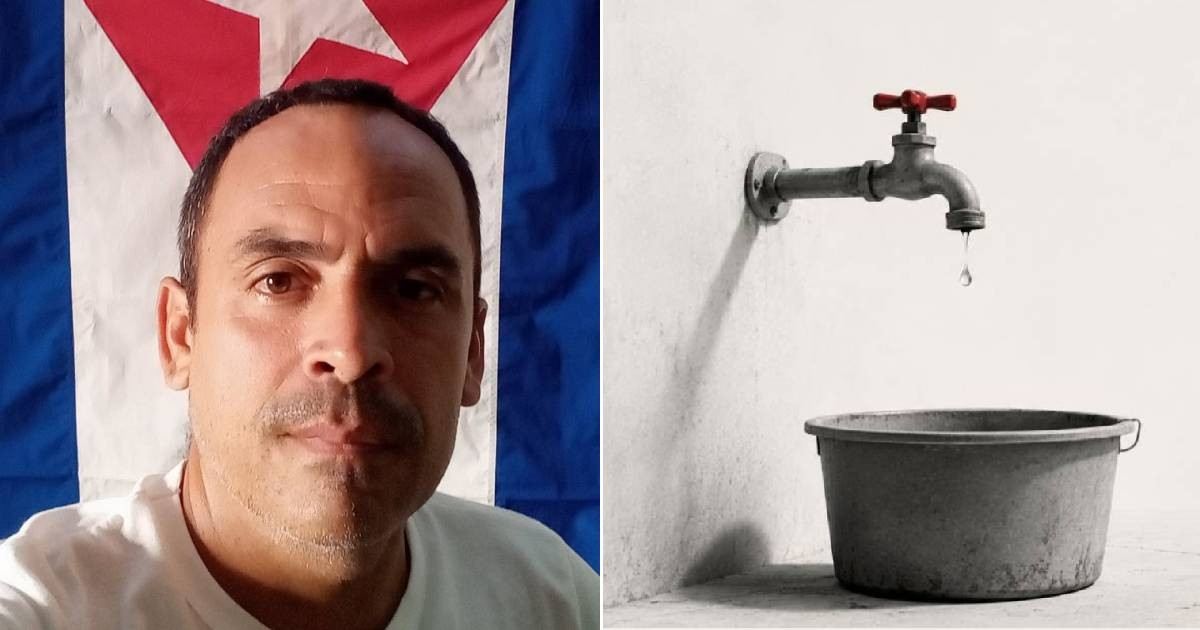
For a staggering 45 days, the residents of Mulgoba, a neighborhood in the Boyeros municipality south of Havana, have been left without access to clean water. Yet, no official from the local government has stepped forward to offer any explanations or solutions. This dire situation was brought to light on Facebook by Alexis Torriente, a local resident, who described the situation as a complete collapse and urged the community to take matters into their own hands.
"Forty-five days without water and no one speaks up, no one from the municipal government faces us," Torriente expressed in his post, where he also highlighted other severe shortages that are suffocating the neighborhood: extended power outages, food scarcity, and rampant inflation.
In response to the government's inaction, Torriente suggested a community-based solution: "Let's pool money among neighbors to buy two submersible pumps, and let the ineffective government go to hell."
Root Causes of the Water Crisis
The origin of Mulgoba's water crisis dates back to mid-year when the "Lola" water supply source, which serves Mulgoba and other areas in Boyeros, was halted due to a lack of electricity. Havana's water supply system relies heavily, about 87-88%, on electricity for pumping, making every power outage a direct disruption of the water supply.
Boyeros is one of the hardest-hit municipalities in the capital by this crisis. Since January 2026, over 40,000 residents have experienced severe disruptions in their water supply. In August, a malfunction in the main pipeline of Cuenca Sur left six Havana municipalities without water, including parts of Boyeros. Another power failure in October, this time in 110-kilovolt lines, again stopped water pumping in areas like La Fortuna, Capdevila, Mazorra, and Alta Habana.
Community's Response and Protests
Torriente is no stranger to speaking out. In August, he confronted Prime Minister Manuel Marrero Cruz on social media, receiving no official response. In September, he raised alarms about potential water contamination in Boyeros, citing damaged cisterns, a broken chlorinator, and cases of diarrhea and hepatitis among locals.
The frustration in Boyeros has led to repeated protests. In Fontanar, a cacerolazo protest in September was suppressed by the regime with about ten patrol cars and at least two arrests. On October 30, residents blocked the Boyeros avenue with garbage containers after enduring more than three days without electricity.
The scale of the problem goes beyond Boyeros. Even the regime admitted that 2.7 million Cubans face total or partial disruptions to potable water access, a figure representing about 35% of the population served by networks. In September alone, over 577,000 people in Havana faced water supply challenges.
In the face of institutional void, Cubans increasingly turn to private solutions: private water trucks, personal wells, and neighborhood collections to purchase pumping equipment. Torriente puts it starkly: "If you can't do anything for the people, the people must and should organize for their own survival."
"They're killing us. Mulgoba neighborhood: without power, without water, without food, inflation at 1000%, without rights, without government support—we will soon face extinction," Torriente concludes in his post.
Understanding the Water Crisis in Havana
What is causing the water shortage in Mulgoba?
The water shortage in Mulgoba stems from a lack of electricity to power the "Lola" water supply source, which has been inactive since mid-year. The situation is exacerbated by frequent power outages impacting the water supply system.
How are residents responding to the lack of government action?
Residents, led by Alexis Torriente, are considering self-managed solutions, such as pooling resources to purchase submersible pumps. They are also resorting to protests to demand action from the government.
What has been the government's response to the crisis?
So far, the local government has not provided any official explanation or solution to the water crisis, leaving residents to fend for themselves.