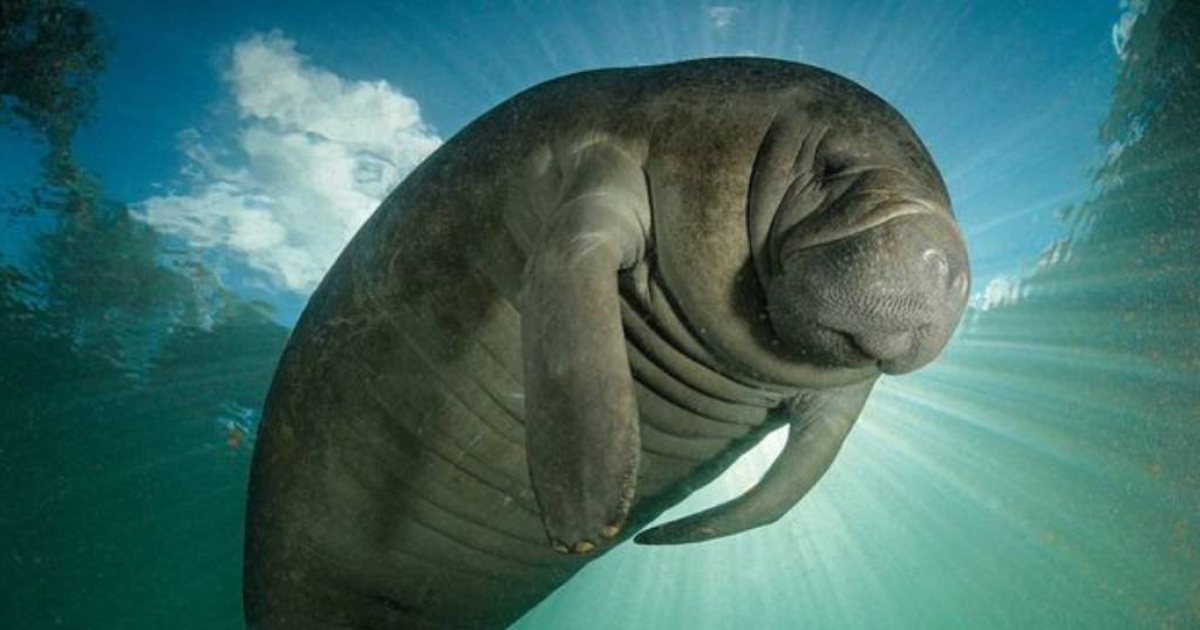
As cooler months approach, Florida's manatees are beginning their annual migration to warmer waters, prompting state authorities to issue a safety warning to boaters to prevent potentially fatal accidents with these gentle giants.
The Florida Fish and Wildlife Conservation Commission (FWC) announced on Monday that the start of Manatee Awareness Month coincides with the period when these marine mammals head towards their winter safe havens.
Residents and tourists are urged to slow down their vessels, be vigilant for manatees, and maintain a respectful distance when encountering them in waterways such as rivers and canals.
"Manatees rely on warm water locations to survive the winter," stated Ashley LaVere, the Manatee Management Program Coordinator for the FWC.
According to LaVere, when water temperatures dip below 68 degrees Fahrenheit (around 20 degrees Celsius), manatees seek refuge in natural springs, power plant warm-water discharges, and other areas that maintain higher temperatures.
LaVere cautioned that boaters and jet ski users might encounter manatees more frequently as they make their way to winter habitats.
Collisions with boats pose a significant threat to the species. Despite their large size, manatees can be challenging to spot beneath the water's surface, especially in bright reflections or low visibility conditions.
To mitigate this risk, the FWC advises assigning a lookout on board to constantly watch the water for signs of manatees, such as snouts, backs, tails, or flippers breaking the surface.
Another indicator is the presence of "manatee footprints," circular patterns on the water's surface created by a manatee swimming below.
The agency also recommends wearing polarized sunglasses, navigating slowly, and strictly adhering to speed limits in designated manatee protection zones.
These zones are marked in waterways and may require reduced speeds or restricted access for certain vessels to prevent accidents.
FWC officers patrol state waters to educate boaters about current restrictions and enforce compliance when violations are observed.
Protected area maps are available on the FWC's official manatee conservation website.
Authorities also urge heightened caution when visiting areas where manatees gather to shield themselves from the cold.
The FWC reminds the public that feeding, harassing, disturbing, or harming manatees is illegal under state and federal law.
The warning is critical: disturbing manatees in their warm-water refuges can drive them away to dangerously cold waters, threatening their survival.
Those wishing to observe manatees should do so from a safe distance, preferably using binoculars, and should not attempt to touch or alter their natural behavior.
If someone finds an injured, sick, distressed, or deceased manatee, they should report it immediately to the FWC’s Wildlife Alert Hotline at 888-404-3922.
The agency emphasizes that individuals should not attempt to handle or rescue injured animals themselves, as this could worsen the animal's condition and pose injury risks.
Reports allow trained specialists to respond appropriately to these situations.
Cold weather poses another significant threat to these mammals. In January, Florida rescue teams saved a young manatee showing signs of cold stress at Bear Creek.
The operation, conducted on January 27, involved FWC experts and various marine wildlife protection and rehabilitation organizations.
Days later, amid another cold snap, Florida authorities warned about the impact of low temperatures on manatees, sea turtles, and other wildlife, urging the public to avoid actions that might exacerbate their plight.
Understanding Manatee Migration and Protection in Florida
Why do manatees migrate in Florida?
Manatees migrate to warmer waters during cooler months to survive, as they require warm environments to maintain their body temperature.
How can boaters help protect manatees?
Boaters can protect manatees by reducing speed, staying vigilant for signs of their presence, and adhering to manatee protection zone regulations.
What should you do if you encounter a distressed manatee?
If you encounter a distressed manatee, report it immediately to the FWC’s Wildlife Alert Hotline at 888-404-3922. Do not attempt to handle or rescue the animal yourself.