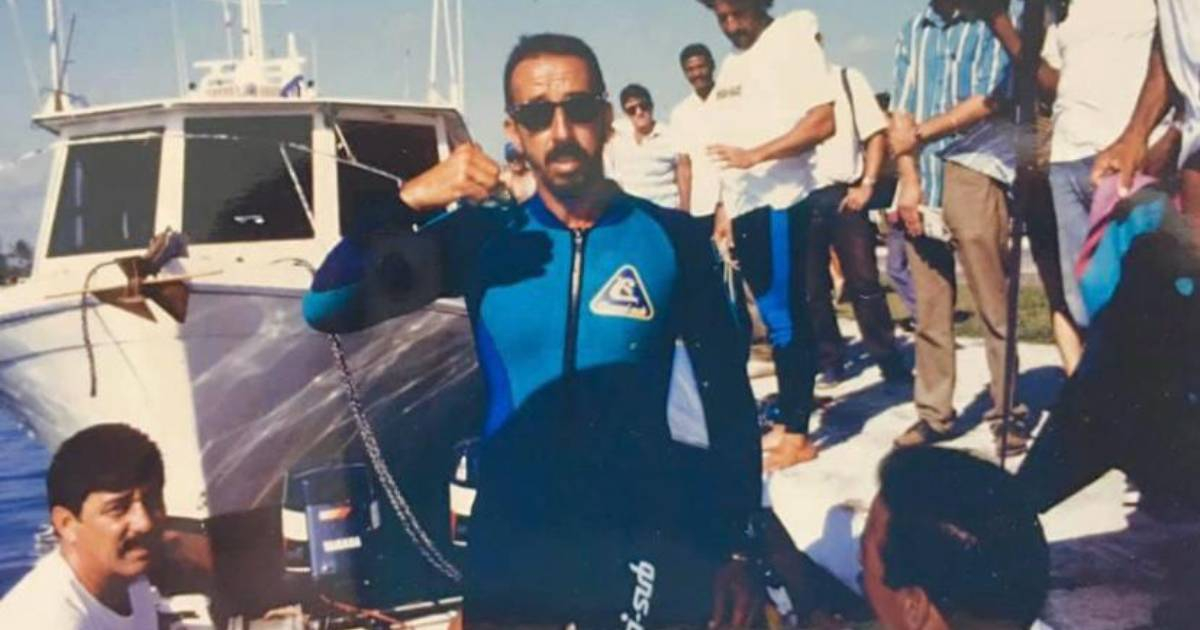
Despite being in awe of his underwater achievements, I never had the chance to interview him. Years have passed, and who would have thought that I would meet Jorge Mario García, the legendary "King Triton" with nine world records in diving, right here in Miami.
Now, sitting across from him, Jorge Mario appears older but remains as engaging and friendly as ever, allowing me a glimpse into his life.
From Cuba to the U.S.: A Personal Journey
"What have you been up to, and how long have you been in the United States?" I asked. Jorge Mario explained, "I've been living in Miami for 21 years. I left Cuba for personal reasons, unrelated to politics or my life there. I came here to reunite with my son, and thankfully, I succeeded."
Once in Miami, Jorge Mario returned to fishing—a trade he had known since his youth in Cuba. He started by selling fish, a tough job, but one that proved lucrative, especially when fishing with friends who held commercial licenses.
Building a New Life by the Sea
Jorge Mario soon realized his dream of owning a boat, enabling him to take people on fishing charters, teach courses, and share his expertise. "With my reputation in the sport, I quickly found success," he chuckled.
His son, Jorge Mario Jr., 28, is now studying medicine in Puerto Rico, a future that might not have been possible in Cuba. Jorge Mario also has a five-year-old daughter, Antonella, who he describes as beautiful and intelligent.
A Passion Ignited in Youth
Jorge Mario's love for underwater hunting began at an early age. "I started fishing when I was about nine or ten. I fell in love with it and dreamed of becoming a world champion," he recounted. Despite not initially aiming for world records, his dedication was unwavering, sometimes even skipping school to pursue his passion.
With the mentorship of Fernando Morán, a seasoned spear fisherman, Jorge Mario honed his skills, becoming a "deep diver" who fished in areas others dared not. By his mid-teens, he was already selling fish and earning enough to buy a motorcycle at 17.
The Struggles Under Cuban Restrictions
However, the Cuban government eventually banned sport fishing, a decision that baffled many, including Jorge Mario. "Fidel Castro loved fishing but reserved it only for himself," he noted. The ban was so stringent that fishing was only allowed on weekends, forcing enthusiasts like Jorge Mario to fish clandestinely.
Inspectors would fine those caught, confiscate their equipment, and then resell it illicitly. "The situation was absurd and corrupt," he lamented, highlighting the difficulties faced by Cuban divers.
The Decline of Underwater Sports in Cuba
Underwater sports in Cuba dwindled because they weren't part of the Olympic agenda, which was the government's main focus. "Cuba was interested in Olympic medals, not a sport like spear fishing that didn’t yield such accolades," Jorge Mario explained.
While Castro indulged in fishing at Playa Girón, others risked severe consequences if caught fishing in restricted areas. "It was a bizarre and unjust system," he reflected.
From Fisherman to Motivational Speaker
Despite health challenges, including diabetes and a heart attack, Jorge Mario continues to defy the odds. "Doctors told me to quit fishing and diving, but I couldn't stay away," he admitted. His resilience led Merck to invite him to give motivational talks, sharing his journey of recovery and perseverance.
Reflecting on a Storied Career
Jorge Mario's career was marked by a fierce rivalry with fellow Cuban diver Francisco "Pipín" Ferreras. "We were friends and competitors. Breaking each other's records was part of our dynamic," he said, acknowledging the mutual respect they now share.
The Legacy and Future of Cuban Sports
Reflecting on his legacy, Jorge Mario is unsure how he is remembered in Cuba today. "Older generations might recall my world records, but I'm not sure about the younger crowd," he pondered.
He critiqued the current state of Cuban sports, emphasizing the lack of support for athletes. "World-class athletes were often given outdated cars or apartments as rewards—hardly motivating," he criticized, noting that many athletes left Cuba seeking better opportunities.
Jorge Mario's first world record came at 37, an age when most athletes consider retirement. Yet, he set nine world records, became a national champion in underwater hunting, and even authored a book, "Profundamente... mi vida," which he hopes might one day be adapted by Netflix.
Today, Jorge Mario continues to share his expertise and passion for the sea, offering a unique experience to those eager to fish with a world champion.
Understanding Jorge Mario García's Influence on Underwater Sports
How did Jorge Mario García start his career in underwater sports?
Jorge Mario García began fishing at a young age, around nine or ten years old. His passion for underwater hunting grew, leading him to dream of becoming a world champion. He was mentored by Fernando Morán, which helped him refine his skills and pursue a career in the sport.
Why did underwater sports decline in Cuba?
Underwater sports in Cuba declined because they were not part of the Olympic agenda, which was the government's primary interest. As a non-Olympic sport, it did not receive the same support or attention, leading to its disappearance.
What challenges did Jorge Mario García face in his career?
Jorge Mario García faced numerous challenges, including government restrictions on sport fishing in Cuba, health issues like diabetes and a heart attack, and the need to find sponsors independently. Despite these obstacles, he achieved significant success in his field.