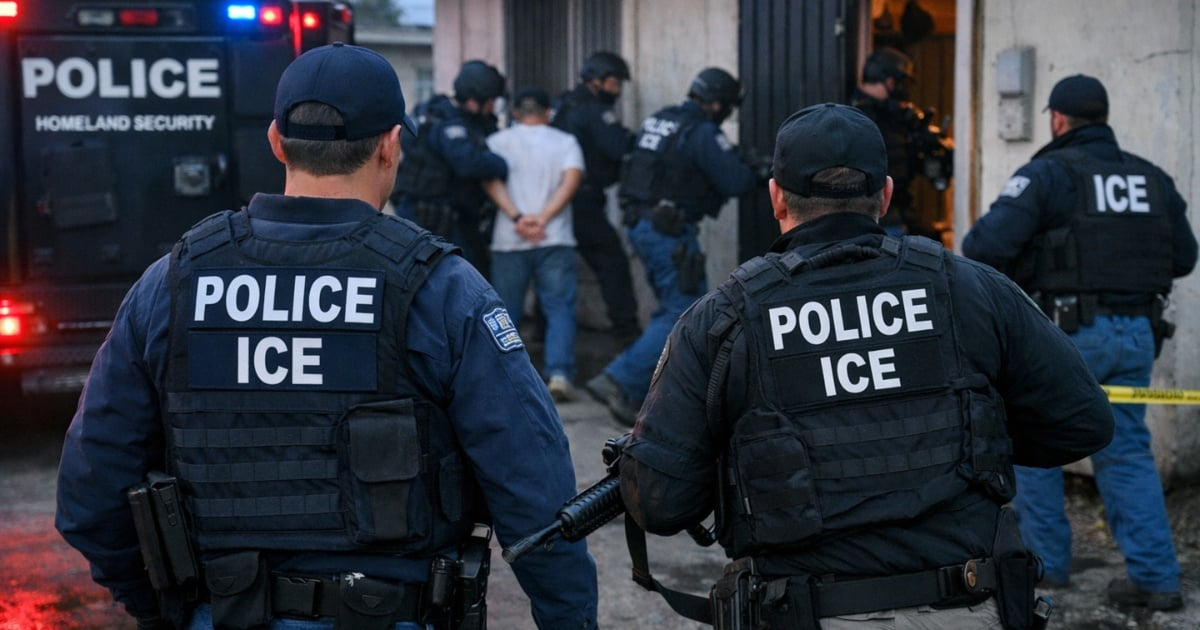
A U.S. federal appeals court has thwarted the Trump administration's effort to lift restrictions on specific Department of Homeland Security (DHS) operations targeting American citizens during the election period. This ruling ensures that these limitations remain in place in nine states until the polls close on November 3.
On Friday, the Ninth Circuit Court of Appeals denied the government's request for a stay in the case of California Nurses Association v. Mullin.
The judges also dismissed an administrative stay petition, thereby upholding the judicial order throughout the legislative election period.
This decision impacts states including California, Connecticut, Georgia, Missouri, Nevada, New York, Pennsylvania, Washington, and Wisconsin, where federal agents have been investigating individuals suspected of illegally registering or voting without U.S. citizenship.
Specifically, the directive prevents the DHS from conducting certain field operations and interviews related to elections involving individuals whom agents know, suspect, or should reasonably suspect to be American citizens.
The restriction extends to operations based solely on specific records from the federal TECS database, generated through the electoral eligibility data comparison system, where investigated individuals are known or reasonably identifiable as citizens.
This issue holds particular significance for naturalized citizens, including Cuban immigrants who have obtained U.S. citizenship and reside in one of the nine affected states.
Court documents describe investigations targeting individuals suspected of registering or voting before acquiring citizenship, even if they are currently U.S. citizens.
The controversy arose from a DHS initiative aimed at identifying alleged cases of illegal electoral participation by non-citizens.
According to the court-reviewed documents, the program utilizes extensive information from electoral records and other databases to compile lists of individuals who may subsequently be questioned by federal agents.
The judges highlighted that the procedure poses risks of citizenship misidentification, especially when relying on incomplete or outdated records.
The ruling notes that some naturalized individuals might be incorrectly classified as foreigners based on the information used to select investigation targets.
The lawsuit was filed in September by the California Nurses Association, National Nurses United, the Voto Latino Foundation, and local California authorities.
The plaintiffs argued that home visits and interrogations could intimidate American citizens and deter their participation in electoral activities.
The court found that members of the nursing organizations provided sufficient evidence that fear of these operations affected their involvement in campaign events, voter mobilization activities, and other election-related initiatives.
The core of the dispute lies with Section 11(b) of the Voting Rights Act, a federal provision prohibiting voter intimidation, threats, or coercion.
The government sought to lift the injunction, contending it impeded the Executive Branch's capacity to investigate potential electoral crimes. It also questioned the order's scope, arguing that its restrictions could impair federal agencies' functions.
However, the judges concluded that the authorities failed to demonstrate that maintaining the restriction in the days leading up to the election would cause them irreparable harm.
The court determined the order was sufficiently limited, both by the states and individuals it applied to and by its duration.
This decision does not impose a blanket ban on investigating voter fraud. The judges clarified that the DHS retains the ability to probe alleged infractions through other legal means without resorting to the specific actions that were restricted.
That same Friday, the court declined to re-examine the decision before the full bench, as the proposal did not garner the requisite majority support.
The refusal was accompanied by a dissenting opinion from Judge Sarah Tung, joined by other judges, who argued that the order constrained the government's investigations into potential electoral violations. However, this minority stance did not alter the court's decision.
The Ninth Circuit's decision upholds the injunction issued by federal judge Araceli Martínez-Olguín on October 21, which established limits to prevent voter intimidation among Americans.
The organization Protect Democracy, representing the plaintiffs, welcomed the ruling, emphasizing that home investigations could discourage electoral participation by both native-born and naturalized U.S. citizens.
The measure remains temporary and does not represent a final judgment on the overall legality of the DHS's investigation program.
As stipulated by the courts, the order will automatically expire when the polls close on Tuesday, November 3, 2026.
Understanding the Ninth Circuit Court's Decision
What restrictions did the court uphold against the DHS?
The court upheld limitations preventing the DHS from conducting certain field operations and interviews related to elections when they involve or likely involve American citizens.
Why is this ruling significant for naturalized citizens?
This ruling is significant as it protects naturalized citizens, including immigrants, from being wrongfully targeted in election-related investigations due to citizenship misidentification.
What was the basis of the lawsuit against the DHS operations?
The lawsuit argued that DHS operations could intimidate American citizens and discourage their participation in the electoral process, violating the Voting Rights Act's provisions.