A recent advertisement from a private company offering water truck services in Cuba has sparked significant discussion on social media, following its sharing by Fabio Fernández Batista, a historian and professor at the Department of History of Cuba at the University of Havana.
When Fernández Batista shared the flyer from the company "agranel" this past Saturday, he accompanied it with a thought-provoking reflection: "When the State fails to guarantee a right, the market—ever astute—seizes the opportunity to profit."
"Agranel" advertises water delivery via tanker trucks with slogans such as "Tailored to you" and "Never run out of water!" targeting homes, businesses, institutions, and construction sites.
The post quickly gathered hundreds of interactions and sparked numerous comments from Cubans who debated the privatization of essential services and the discrepancy between the official discourse and everyday realities.
Constitutional Rights versus Reality
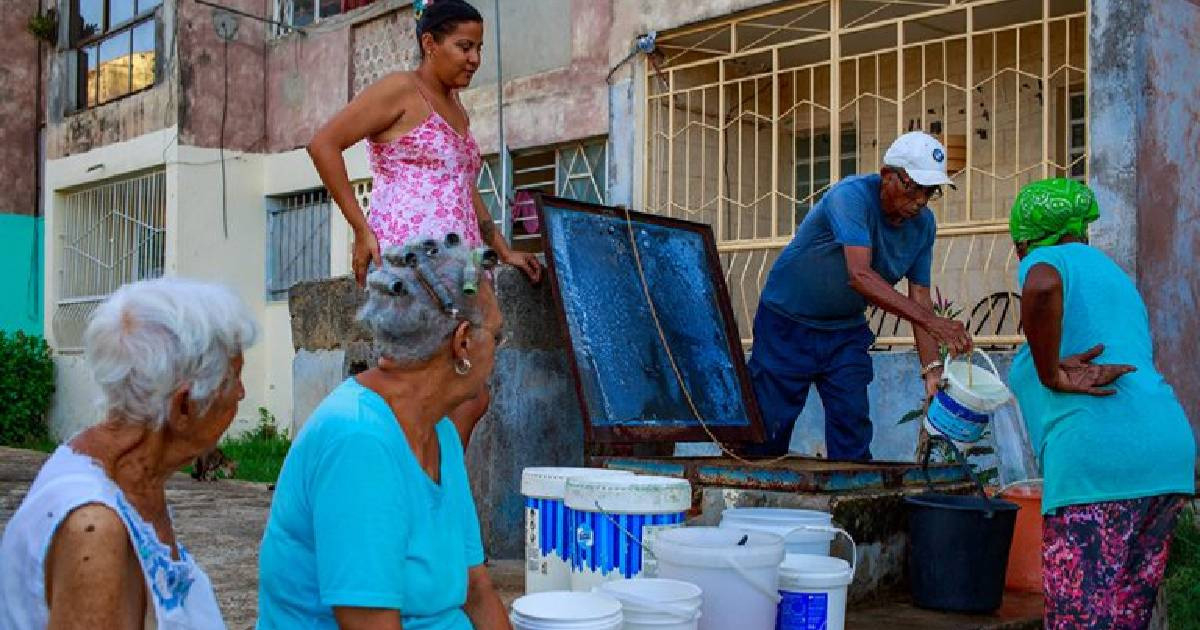
Fernández Batista's commentary is rooted in a specific legal foundation: Article 76 of the 2019 Cuban Constitution asserts that "all individuals have the right to water" and mandates the State to ensure access to potable water and sanitation. However, the stark reality is that millions of Cubans are forced to turn to the private market to obtain this supposedly fundamental right.
The extent of the crisis is glaring. According to official figures cited by AFP, more than 2.1 million Cubans do not receive regular water supply. The causes are deeply structural, including aged pipelines that lose a significant percentage of water before reaching homes, and the fact that over 80% of pumping stations rely on the National Electric System, meaning blackouts automatically lead to water outages.
The Role of the Private Market
In this gap, the private market steps in. The cost of water trucks varies by region: in Havana, prices range from 18,000 to 50,000 Cuban pesos; in Santiago de Cuba, reports indicate prices between 7,000 and over 15,000 pesos; in places like San Juan y Martínez and Songo-La Maya, residents report prices between 15,000 and 20,000 pesos per truck.
In Pinar del Río, residents on Calle Real experienced over 50 days without water, leading one neighbor to suggest that the local aqueduct be handed over to a small enterprise due to the state system's inadequacy.
The comments on the post reveal various interpretations of the situation. One user remarked that "the State guarantees little to nothing, and I wouldn't be surprised if it's part of a [privatization] plan," drawing parallels with the shortage of domestic gas: "One must consider the exorbitant private dollar-based options available for acquiring a gas cylinder at prices even Trump wouldn't pay for something so basic yet essential."
Another commentator noted the country's progression with "a government that claims to continue advocating for a form of socialism nobody understands, while the economic reality increasingly follows neoliberal capitalist logic." A third voice added another layer of complexity: "The problem in Cuba is that many of these new businesses are actually the State disguised as small enterprises."
Old Problem, Intensified by Current Conditions
The phenomenon of private water trucks and wells in Cuba isn't new, but it has intensified in 2026 alongside power outages and the deterioration of the hydraulic infrastructure.
The disparity between the percentage of Cubans who can regularly access the service and the constitutional mandate is, in itself, the measure of failure that Fernández Batista captured in a single sentence.
Understanding the Water Crisis in Cuba
Why are private water truck services emerging in Cuba?
Private water truck services are emerging in Cuba due to the State's failure to provide regular water supply, leaving millions without reliable access to this essential resource.
What does the Cuban Constitution say about water rights?
Article 76 of the 2019 Cuban Constitution states that all individuals have the right to water, obligating the State to ensure access to potable water and sanitation.
How do power outages affect water supply in Cuba?
Since over 80% of Cuba's pumping stations depend on the National Electric System, power outages automatically result in water supply interruptions.