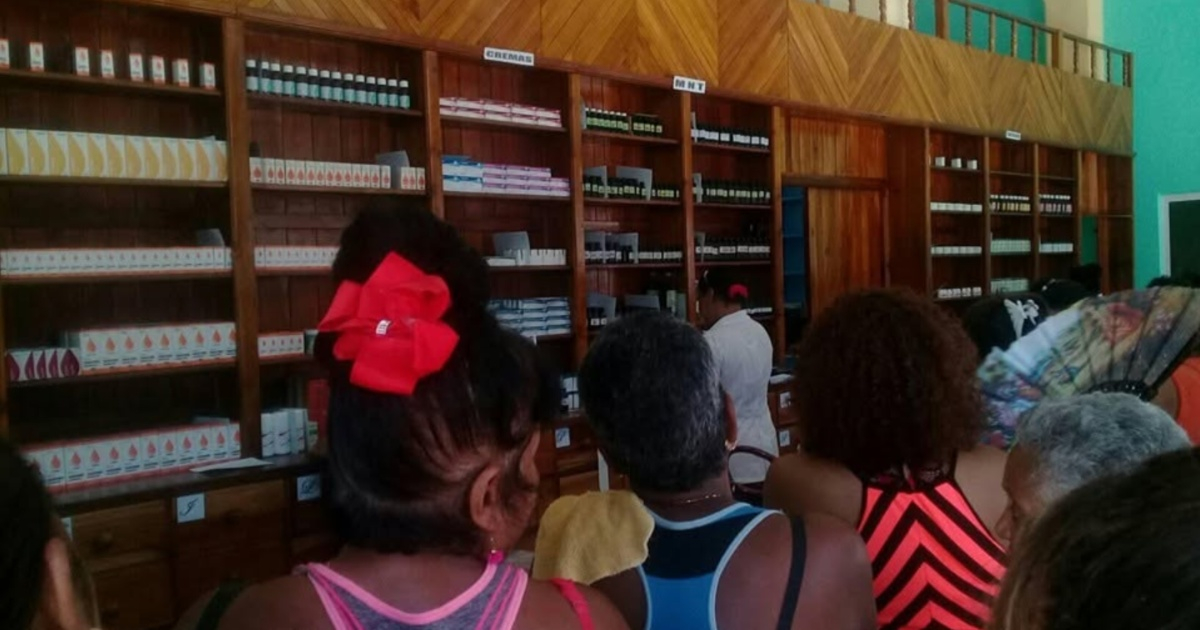
A once-renowned pharmacy known for its natural remedies in Sancti Spíritus has ceased offering the traditional medicines that distinguished it for decades, according to a report by 14ymedio published on Sunday.
Where customers once found passionflower, lime, and other medicinal concoctions, they now encounter shelves lined with small plastic bottles of shampoo, dyes, peroxide, detergent, and mosquito repellent.
Located at 38 South Máximo Gómez Street, across from the Parroquial Mayor Church, the pharmacy occupies an 18th-century building restored in 1986 specifically to revive traditional Cuban medicines and furnish it with furniture reminiscent of colonial-era apothecaries.
A local resident, a frequent visitor, told the independent newspaper that after finding the shop closed several times, she finally entered this week only to discover that the remedies she sought were no longer available.
“This pharmacy has always been here, as long as I can remember, with natural products that were in demand by the public,” she said, explaining her regular visits to buy passionflower and lime for her mother.
She described the current merchandise as "local"—nationally and artisanally produced—displayed in small plastic jars with rudimentary labels: “Now they sell what seem to be local products, like shampoo, dyes, peroxide, detergents, and mosquito repellent.”
Her opinion was straightforward: “I have nothing against selling these things, but losing access to natural medicines is something I really don’t like.”
Photographs from the newspaper show long rows of colorful containers on the old dark wood furniture. Behind the glass showcases, ceramic jars with inscriptions of medicinal plants remain, now little more than decorations in a place that no longer serves its original purpose.
This issue is not isolated. In September 2026, the Peralta Pharmacy in Holguín also transformed into a sort of variety store, with privately consigned products and only a few bottles of eye drops as pharmaceutical offerings. In July 2025, a pharmacy in Matanzas had empty shelves and a closed laboratory. “They have no bottles, they have nothing,” a consumer summarized at the time.
The decline stems from structural issues. In September 2024, pharmaceutical authorities in Camagüey admitted the inability to procure basic supplies like garlic, onion, oregano, aloe, sugar, and alcohol needed to make syrups, extracts, and creams. National production of natural medicines reached just 56% of what was planned by July 2025.
The overall situation is equally dire. The Cuban government itself acknowledged in August 2026 that only about 30% of the Basic Medicine Chart was available, with approximately 461 of the 651 essential drugs in short supply. Sancti Spíritus reported over 300 missing medications by June 2026.
Filling the void left by the state, the Catholic Church has stepped into a role that should belong to the public health system. Just a few steps from the former pharmacy on Máximo Gómez Street, the Parroquial Mayor Church distributes medicines for free every Saturday to chronic patients with prescriptions for conditions like hypertension and diabetes.
Today, anyone entering the historic pharmacy in Sancti Spíritus in search of a remedy might leave with nothing more than a bottle of shampoo.
Understanding the Decline of Traditional Pharmacies in Cuba
What happened to the historic pharmacy in Sancti Spíritus?
The historic pharmacy in Sancti Spíritus, once known for its natural remedies, has stopped offering these products and now sells items like shampoo and mosquito repellent.
Why are traditional pharmacies in Cuba facing challenges?
Traditional pharmacies in Cuba are struggling due to structural issues, including a lack of basic supplies and ingredients needed to produce natural medicines.
How is the Catholic Church assisting with the medicine shortage?
The Catholic Church has taken on a role typically reserved for the public health system, offering free medication to chronic patients with prescriptions every Saturday.