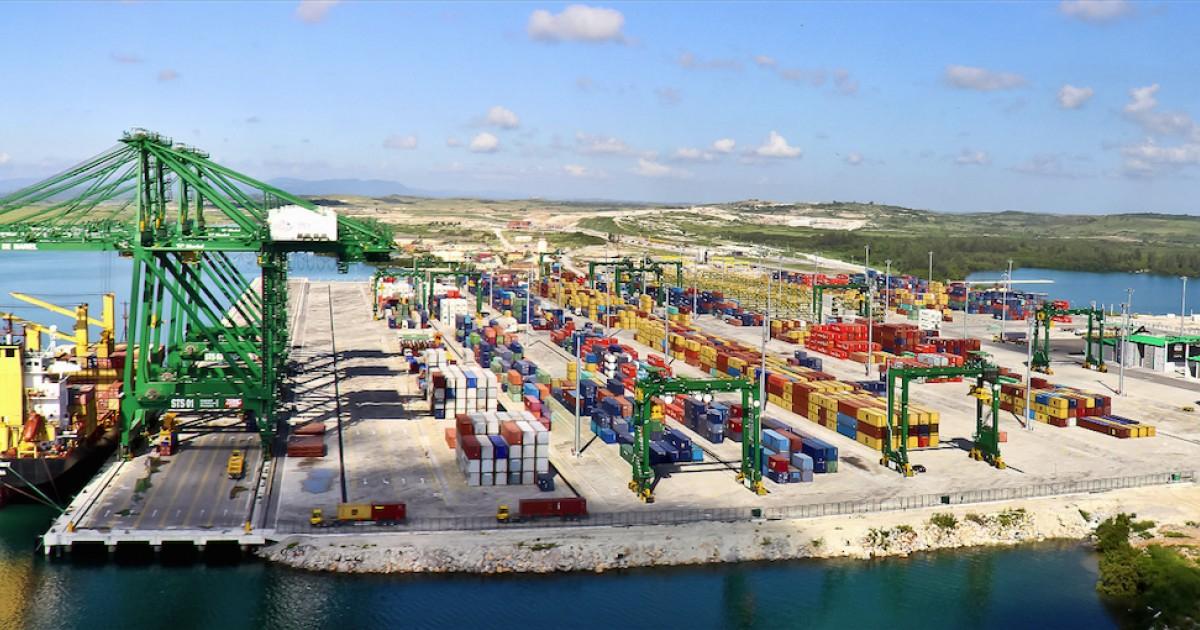
The Cuban government has announced a trade exhibition fair to commemorate the 13th anniversary of the Mariel Special Development Zone (ZED Mariel). This comes at a time when a significant departure of foreign companies starkly contradicts the official narrative of investment and openness.
The event, scheduled for November 2-3 at the Morro-Cabaña Historical Military Complex in Havana, will feature participation from over 55 zone users and approximately 200 exhibitors.
Aimed at fostering connections between zone users and new economic players in the country, the event also seeks to promote products, services, and incentives intended to boost foreign trade and investment, according to the organizing committee's statement to EFE.
The stark contrast between these aspirations and reality couldn't be more pronounced.
Since May, following the implementation of Executive Order 14404 signed by Donald Trump, numerous foreign businesses have exited the island at an unprecedented pace.
Canadian mining company Sherritt International, after more than three decades in Cuba, has halted its direct participation in its Cuban joint ventures—Moa Nickel and Energas—and started the immediate repatriation of its staff.
The bank managing Visa and Mastercard transactions through FINCIMEX, a GAESA military conglomerate entity, ended its 32-year operations of these cards on the island.
The largest shipping companies serving Cuban ports, Hapag-Lloyd and CMA CGM, have stopped accepting new bookings to Cuba, leaving around 7,000 containers stranded in Jamaica, Panama, and Colombia.
The most significant blow to ZED Mariel occurred in July when the U.S. Department of the Treasury sanctioned Mariel Container Terminal S.A. and Coral Marítima S.A. for allegedly circumventing restrictions.
This was compounded by the departure of Meliá Hotels, which closed its 34 hotels on the island after a 36-year presence, along with Iberostar, Barceló, Blue Diamond Resorts, and British American Tobacco, which sold its stake in Brascuba Cigarrillos at a loss of approximately 12 million pounds.
The failure of ZED Mariel is neither a new phenomenon nor solely attributable to external sanctions.
Established in November 2013 with a loan of about $862 million from the Brazilian bank BNDES, the Mariel Zone has operated at just 40% capacity over 13 years, attracting just over 60 companies in a decade.
Its Container Terminal, designed to handle 800,000 TEU annually, processed only 300,000 TEU in 2023, less than half its potential.
Controlled by GAESA, the military business conglomerate that dominates between 40% and 70% of Cuba's formal economy, any investment in the zone poses a regulatory compliance risk for foreign companies and banks.
Even Prime Minister Manuel Marrero Cruz admitted to the National Assembly in December 2024 that ZED Mariel was "not meeting its objectives," citing lost competitiveness, excessive bureaucracy, and lack of legal guarantees.
Despite this assessment, the regime has continued to tout the "logistics hub" promise at international forums throughout 2025 and 2026, from Minsk to Moscow and Shymkent, without achieving concrete agreements.
The backdrop of the fair is an economy in freefall: Cuba has faced a contraction of over 15% between 2020 and 2025, and the Economic Commission for Latin America and the Caribbean (ECLAC) forecasts a 10.3% GDP decline for this year, the worst in the region.
Understanding the Challenges Facing ZED Mariel and Cuba's Economy
What is the Mariel Special Development Zone?
The Mariel Special Development Zone (ZED Mariel) is an economic area in Cuba established in 2013 to attract foreign investment and enhance trade with a focus on industrial and logistics activities.
Why are foreign companies leaving Cuba?
Foreign companies are exiting Cuba due to increased regulatory risks, sanctions imposed by the U.S., and difficulties in operating within an economy dominated by the military conglomerate GAESA.
How has the Cuban economy performed in recent years?
Cuba's economy has experienced significant contraction, with a decline of over 15% from 2020 to 2025, and a projected GDP drop of 10.3% for the current year, according to ECLAC.