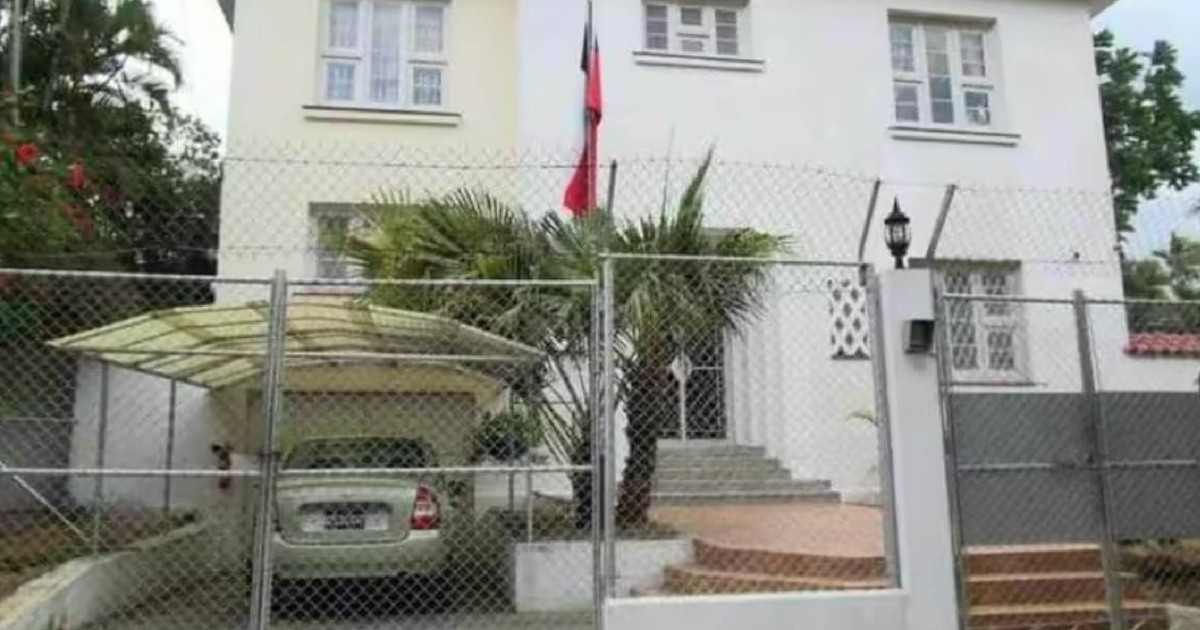
A Cuban graduate in Social Communication missed out on a Chilean government scholarship for a postgraduate program at the Austral University of Chile. This unfortunate circumstance arose after the Chilean Embassy in Cuba prematurely closed the application period a full month earlier than other participating countries, without public notification.
Arismeilyn Reyes Peraza, who graduated in 2025 from the Central University "Marta Abreu" of Las Villas, expressed her frustration on Facebook, describing the embassy’s handling as "inefficient." This inefficiency prevented her from applying for the Republic of Chile Scholarship, managed by the Chilean Agency for International Development Cooperation (AGCID).
On September 24, Reyes Peraza submitted her application for the Master's in Communication at Austral University, intending to fund her studies through this scholarship. By October 15, she had received an official acceptance letter for the program, slated to begin in the first semester of 2027.
Unexpected Deadline Change
Five days post-acceptance, she reached out to Addys Santos Acosta, the embassy's Cooperation Assistant, to start the scholarship application process. On October 22, she received a blunt response: the Cuban deadline had closed on September 30, a full month before AGCID's official deadline of October 30.
"She informed me on October 22 that the application period in Cuba had closed on September 30, meaning I missed my chance," Reyes Peraza lamented on her social media post.
Timing and Requirements Issues
Reyes Peraza pointed out that Austral University mandates that master's applications be submitted 30 days before the scholarship deadline, indicating her September 24 submission was timely. However, the essential acceptance letter did not arrive until October 15, after the embassy's internal deadline had already passed.
She further questioned why Chile’s embassy imposed a month-early deadline when other focal points around the world closed only five to ten days before October 30. "Why close a month earlier when other focal points wrap up 10 or 5 days before 10/30?" she queried.
Disparity in Handling Applications
Santos Acosta admitted in her email that those who contacted the embassy before September 30 were assisted to expedite the issuance of university acceptance letters, and provisional acceptance of other documents was allowed. This led Reyes Peraza to another question: "How can other documents be accepted without the master’s acceptance letter, a crucial requirement?"
The official focal point for Cuba with AGCID is MINCEX, located in Havana, although the Chilean Embassy is also involved in facilitating the process. The scholarship does not accept direct individual applications; all must be processed through the applicant's country's focal point.
This case highlights ongoing challenges Cubans encounter with foreign embassies on the island, including recent reports of long lines and disorganization at the Spanish consulate.
"Clearly, the Chilean Embassy in Cuba has mishandled this process," concluded Reyes Peraza, who anticipates no response or resolution to her predicament.
Key Questions About the Chilean Scholarship Application Process
Why did the Chilean Embassy in Cuba close the application period early?
The embassy closed the application period a month early without public notice, deviating from the official AGCID deadline of October 30.
What was required for the scholarship application?
Applicants needed an acceptance letter from the university, which is a fundamental requirement for the scholarship application.
How did other focal points handle the application deadlines?
Other focal points worldwide typically closed their applications five to ten days before the official deadline, unlike the month-early closure in Cuba.