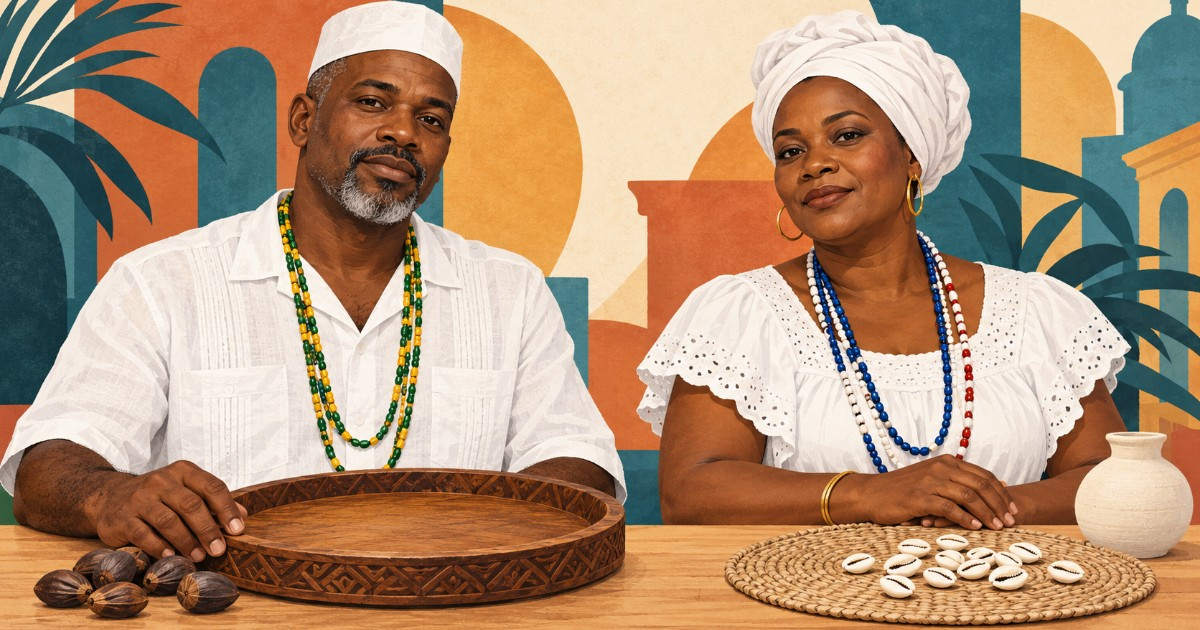
A babalawo is a priest in the Ifá tradition, known for their expertise in its divination system. In contrast, the terms santero and santera refer to individuals in the Regla de Ocha who have undergone the initiation process known as "hacerse santo" or "becoming a saint." Although both roles belong to interconnected religious traditions, they each possess distinct knowledge, rituals, and responsibilities.
Examining Religious Roles: Babalawos and Santeros
The project on the sacred arts of the Atlantic by Duke University highlights these differences, characterizing santeros as Ocha initiates and babalawos as Ifá specialists. Both traditions are rooted in Yoruba culture and involve the worship of orichas, the deities revered by their followers.
The Role and Meaning of Babalawo
The term "babalawo" translates to "father of secrets." Their role is deeply connected to the study and interpretation of Ifá, a religious tradition that preserves stories, teachings, and a system of symbols used during consultations.
The UNESCO describes Ifá as a practice among Yoruba communities and the African diaspora in the Americas and the Caribbean. It involves the interpretation of signs by a specialized priest, guiding individuals or communities in making significant decisions.
In this belief system, Ifá is associated with Orunmila, known in Cuba as Orula, who is revered for his wisdom and guidance. Discussing a babalawo's work involves acknowledging their specific religious training and understanding of these teachings.
Understanding the Role of Santeros and Santeras
In the Ocha tradition, initiation establishes a religious connection with the orichas and a sense of belonging to a community. The Historical Museum of Oslo's glossary identifies a santero or santera as someone who has undergone the "hacerse santo" ceremony.
Learning continues beyond this consecration. According to Harvard's Pluralism Project, Ocha communities organize into religious houses, known as ilés, where initiates and aspirants coexist under the guidance of priestesses or priests.
Within this context, terms such as iyalocha and babalocha refer to Ocha priestesses and priests. Over time, initiates may take on responsibilities for training and consecrating their own godchildren. The title of santero alone does not fully encompass an individual's experience or duties.
Intersections and Hierarchies in Afro-Cuban Religions
Some religious journeys may include both Ocha and Ifá consecrations. Babalawo Fernando Buján explained in an interview with CiberCuba that in Cuba, there may be a progression from Ocha to Ifá, differing from the initiation sequence in Nigeria.
This distinction clarifies why the two terms are not synonymous: an Ocha initiation does not automatically equate to becoming a babalawo. Understanding an individual's role requires knowledge of their personal journey and the traditions of their religious house.
Regarding the hierarchy, religious organizations recognize various levels of authority, knowledge, and ritual duties, yet lack a singular central leadership governing all houses. The Historical Museum of Oslo notes that a religious house may be led by a babalawo, a santera, or a santero, with practices varying accordingly.
Thus, simplifying the babalawo's role as the leader of all santeros oversimplifies a diverse organization. Authority and involvement in each ceremony must be understood within the context of the respective community, considering the acknowledged consecrations and knowledge.
The Role of Women in Religious Communities
Santeras can lead religious houses and serve as godmothers. They are not merely assistants to priests but are instrumental in guiding and educating their godchildren within Ocha.
In Ifá, traditions differ. Buján described the male-centric consecration in the Afro-Cuban tradition and the presence of priestesses called iyanifás in Africa. This diversity necessitates specifying the community when discussing the roles of women and men.
Other terms signify stages or relationships. The title iyawó is given to a recent initiate; padrino and madrina refer to those who guide them through initiation and beyond. This religious kinship is formed within the house and does not require a blood connection.
Key Questions About Afro-Cuban Religious Practices
What is the primary role of a babalawo?
A babalawo is primarily responsible for interpreting the Ifá divination system, offering guidance based on its teachings and helping individuals or communities make important decisions.
How do santeros differ from babalawos?
Santeros are initiates of the Ocha tradition, forming a connection with the orichas through ceremonies. In contrast, babalawos are specialists in Ifá, focusing on divination and interpretation.
Can an individual be both a santero and a babalawo?
Yes, some individuals undergo both Ocha and Ifá initiations, although the sequence and traditions may vary between regions like Cuba and Nigeria.