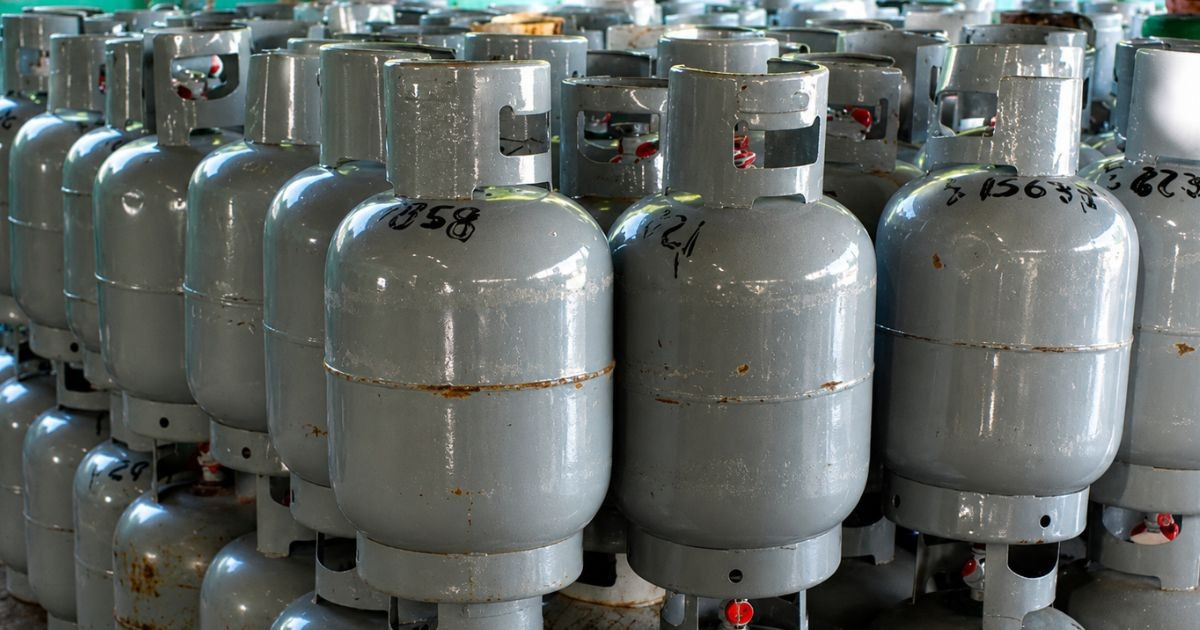
Residents of Isla de la Juventud are expressing their anger after the cost of liquefied gas cylinders, imported by some Cubans for their families, surged from $50 to $89 at sales points in Micro 70 and La Fe.
A concerned citizen, known as Mae Mae, labeled the price hike as "a total disrespect to the Cuban people" and "an unwarranted abuse and disdain towards us" in a post shared on Facebook through the public profile Carapachibey Pinero, managed by broadcaster Ramón Leyva Morales.
Mae Mae articulated the exhaustion and frustration felt by many who believe their grievances go unheard. "It feels like you're shouting into the void; you report issues, yet nothing changes. That drains you. It tires you. It hurts," she expressed.
She also criticized the apparent disregard for a situation that seems unsolvable. "You can endure scarcity, but indifference is harder to bear," she added.
Comments from the community supported Mae Mae's complaint, highlighting the frustration of residents who see liquefied gas as a luxury, inaccessible to those earning in Cuban pesos.
This price increase is part of a broader trend affecting various provinces. Back in June, gas cylinders were already being resold for $50 on the black market.
In August, a Cuban woman spent $99 on a mere eight-kilogram cylinder via a Florida-based shipping company.
In the same month, private offers in Santiago de Cuba reached up to 65,000 pesos for refilling and 75,000 pesos if the container was included. By October, a seven-kilogram cylinder was being offered for as much as $109.
In July, the government attempted to set an official price of 350 Cuban pesos for a 10-kilogram cylinder through a resolution by the Ministry of Finance and Prices. However, this measure has limited impact due to the near non-existence of state distribution, leaving room for private sales in dollars to fill the gap.
The disparity between product costs and local income exacerbates the situation. In September, annual inflation reached 28.44%, with food prices accounting for 73.39% of the monthly price index increase. The minimum monthly wage stands at just 3,210 Cuban pesos, while some economists estimate that 96,000 pesos per month are needed to meet basic personal needs.
Similar complaints about pricing and business practices are echoed in other areas. In Holguín, a writer reported on Friday that merchants are hoarding basic goods like soap to resell them later at inflated prices.
Additionally, reports have surfaced that in the city of Cárdenas, Matanzas, a local market raised the prices of four products within less than 20 days.
FAQs on Liquefied Gas Price Hike in Cuba
What caused the liquefied gas price increase in Isla de la Juventud?
The price hike in liquefied gas is attributed to increased costs imposed at sales points in Micro 70 and La Fe, rising from $50 to $89. Broader economic factors, including inflation and limited state distribution, also contribute to the issue.
How are residents affected by the gas price increase?
Residents face significant financial strain as liquefied gas becomes a luxury item, unaffordable for those earning in Cuban pesos. The price increase adds to their frustration and sense of neglect by authorities.
What measures has the Cuban government taken regarding gas prices?
In July, the government set an official price of 350 Cuban pesos for a 10-kilogram cylinder through a resolution by the Ministry of Finance and Prices. However, the effectiveness of this measure is limited due to insufficient state distribution.