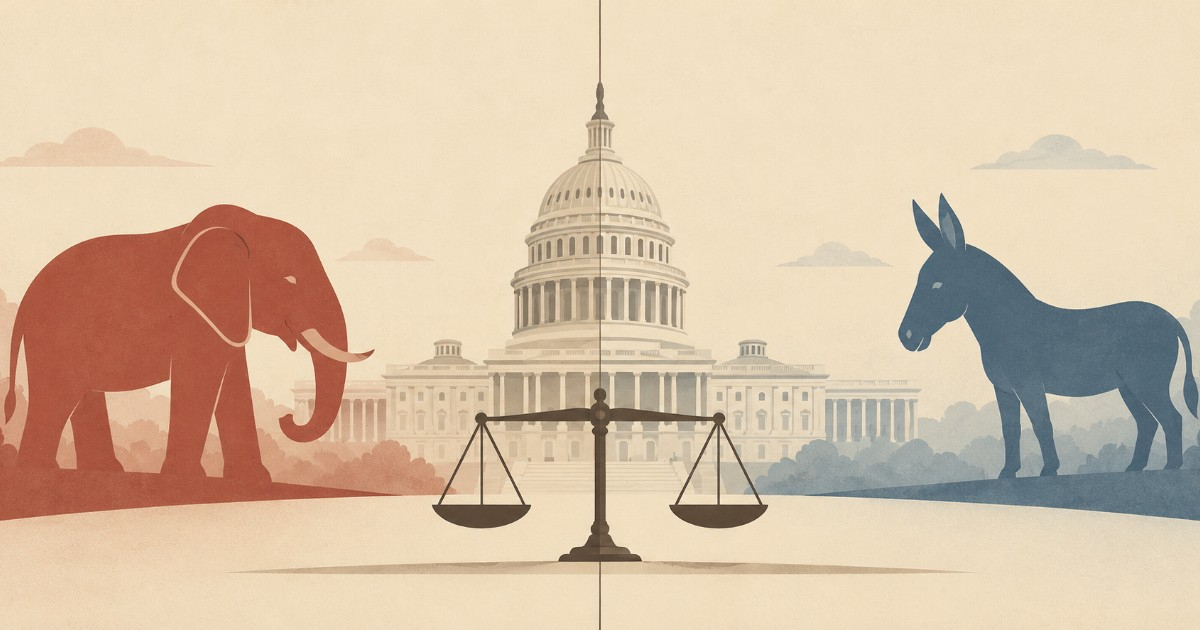
As the United States approaches the November 3 legislative elections, the battle for Senate control intensifies with many races showing razor-thin margins. Varying poll results across states like Texas, Kansas, Iowa, Maine, and Ohio highlight the fierce competition.
Recent surveys by CNN and SSRS indicate Democratic candidates are leading in Texas and Michigan, while Maine and Kansas show no clear frontrunners. Conversely, other polls suggest tighter margins, occasionally favoring Republicans.
Conservative Brief recently analyzed this uncertainty, noting Republican-favorable polls in states like Texas and Kansas, while acknowledging contrasting results in other surveys.
Senate Majority at Stake
The Republican Party currently holds a slim majority of 53 seats in the Senate, compared to 47 for Democrats and allied independents. To reclaim control, Democrats must gain at least four seats without losing any currently held positions. Republicans aim to maintain their majority, defending seats in traditionally supportive states.
Key Senate Battles Across States
In Texas, conflicting poll results reflect the contentious race between Republican Ken Paxton and Democrat James Talarico. A CNN/SSRS poll from late October put Talarico ahead with 49% support compared to Paxton's 43%, but a Quantus Insights poll showed Paxton narrowly leading.
Kansas presents another unexpected challenge, with Republican Senator Roger Marshall facing a tough race against Democrat Adam Hamilton. An Emerson College poll showed Hamilton slightly ahead, a significant development in a state that hasn't elected a Democratic senator since the 1930s.
In Iowa, Republican Ashley Hinson and Democrat Josh Turek are locked in a tight race for the seat vacated by Senator Joni Ernst, according to a recent co/efficient poll.
Michigan sees Democrat Abdul El-Sayed leading Republican Mike Rogers, as per CNN/SSRS. This state is crucial for Democrats as they defend a seat vacated by Senator Gary Peters.
Maine's race between Democrat Troy Jackson and Republican Susan Collins remains close, reflecting the state's competitive Senate history and the influence of independent voters.
In Ohio, Republican Jon Husted and Democrat Sherrod Brown face off in a special election. Mixed polling results make this race one to watch.
Broader Electoral Context
These Senate contests occur alongside the renewal of all 435 House seats and 35 Senate seats. President Donald Trump actively campaigns for Republicans, while Democrats focus on economic concerns and policy critiques.
Florida hosts an important race following Marco Rubio's departure to become Secretary of State. Republican Ashley Moody and Democrat Angie Nixon vie for his former Senate seat, with Moody holding a slight advantage in recent polls. Nixon's campaign includes promises to support Cuban immigrants, a crucial issue for Florida's Cuban community.
Understanding the 2023 Senate Races
Why are the Senate races so critical in 2023?
The Senate races are pivotal because they will determine which party holds the majority, affecting legislative agendas and judicial appointments.
What makes Texas a significant battleground state?
Texas is significant due to its long history of electing Republicans at the state level, and a Democratic win could signal a major political shift.
How might Florida's Senate race impact national politics?
Florida's Senate race is impactful due to its diverse electorate and key issues like immigration, which could influence national policy discussions.