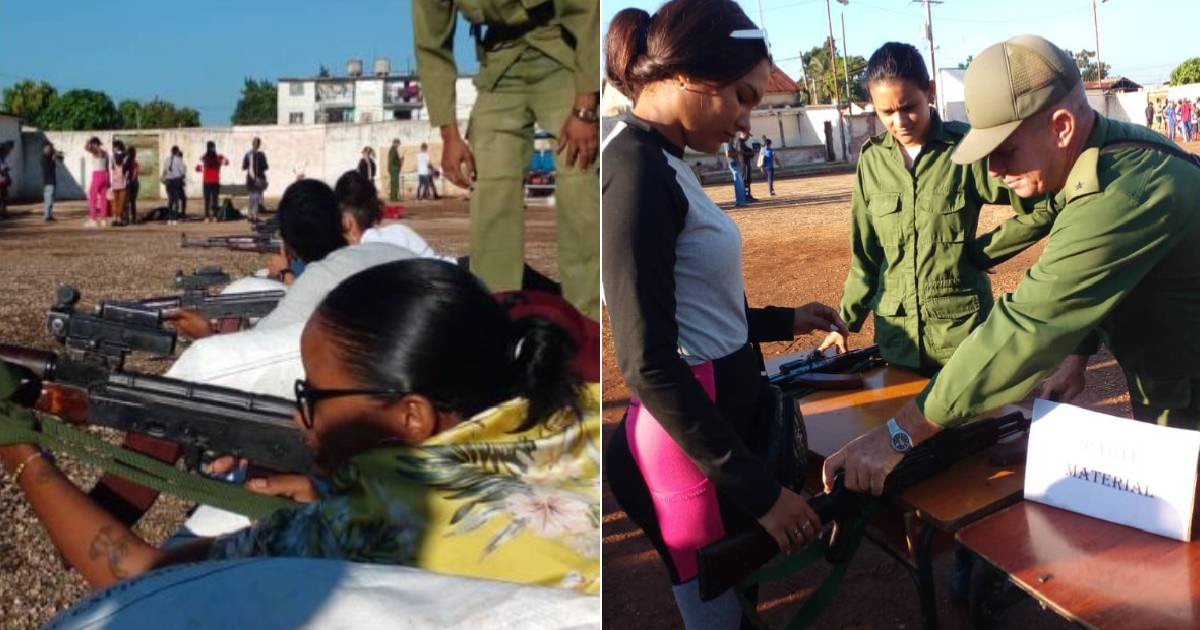
This past Friday, marksmen gathered in Alquízar, located in the province of Artemisa, to engage in military exercises aimed at training them to shoot down unmanned aerial vehicles (drones) as part of the National Defense Day activities.
The drills were held in the Urban North Defense Zone 01 and involved the installation and removal of anti-personnel and anti-tank mines, assembling and disassembling rifles, and combat medical training exercises.
According to the official newspaper, El artemiseño, these activities took place near the Antón Nilsson educational institution, with the involvement of workers from the UBPC Felipe Herrera and CPA Héroes de Yaguajay.
The day’s agenda also included training on transporting the wounded, immobilizing limbs, and applying self-help techniques, in addition to approximately 50 blood donations.
Presiding over the exercise were Gladys Martínez Verdecia, President of the Provincial Defense Council of Artemisa; Ricardo Concepción Rodríguez, Vice President of the organization, and First Colonel Luis A. Corujo Estrada, Chief of Staff of the Military Region of Artemisa.
Andrés Collazo Barnet, President of the Urban North Defense Zone 01, explained that the area covers 32.5 square kilometers, includes five populated settlements with over 10,000 residents, and plans to evacuate 4,856 people in the event of a conflict.
This training against drones is part of a broader series of similar exercises conducted in other provinces. In June, a squad from the Military Region of Matanzas simulated drone confrontations during simultaneous maneuvers with Villa Clara, Sancti Spíritus, Camagüey, and Cienfuegos.
In August, Cienfuegos activated its defense structures in Aguada de Pasajeros through reservist training.
These mobilizations are part of the "Year of Preparation for Defense" initiative declared by the regime for 2026, within the framework of the "War of All the People" doctrine.
The strategy gained increased political significance following the January capture of former Venezuelan President Nicolás Maduro by U.S. special forces, an event interpreted by Havana as a potential precursor to an action against Cuba.
Yet, the military preparation announced by the authorities stands in stark contrast to the material limitations faced by the Revolutionary Armed Forces.
A CNN analysis published in June highlighted that active personnel numbers have dwindled from 235,000 soldiers in the early 1990s to a maximum of 50,000 today, with much of their Soviet-era equipment remaining outdated.
Lack of fuel and spare parts has also rendered the MiG fighters nearly inoperable, according to the analysis.
In April, other military maneuvers in Villa Clara attracted attention for using mules and ox carts as transportation means. These exercises drew ridicule on social media in a country grappling with prolonged power outages and a deep economic crisis. In May alone, more than 1,300 protests were recorded, according to provided data.
Understanding Cuba's Military Exercises and Challenges
What is the purpose of the military exercises in Alquízar?
The exercises aim to train marksmen to counter unmanned aerial vehicles (drones) and enhance overall defense readiness as part of the National Defense Day activities.
Who participated in the Alquízar military drills?
Participants included workers from the UBPC Felipe Herrera and CPA Héroes de Yaguajay, alongside military personnel and defense council leaders.
What are the limitations faced by the Cuban military?
The Cuban military struggles with outdated Soviet-era equipment, reduced personnel numbers, and shortages of fuel and spare parts, which affect their operational capacity.