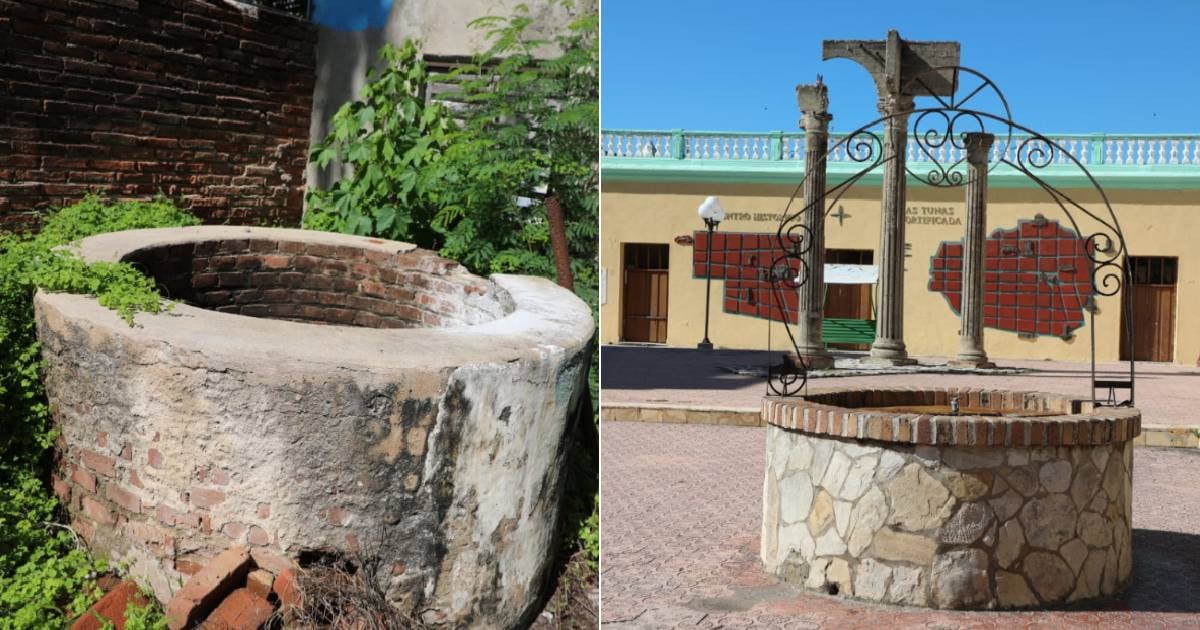
The cost of drilling a hand-dug well in Las Tunas has surged to approximately 20,000 Cuban pesos per meter. Despite this hefty price, around 5,000 such wells have been constructed across the province due to the unreliable water supply services.
The financial burden is evident in the case of a local resident who has drilled 13 meters deep without locating water. Each additional meter adds to the household's expenses, with no assurance of finding the essential resource, as reported by the provincial newspaper 26 on Friday.
Growing Practice Amid Water Supply Challenges
In recent years, the practice of well drilling has grown significantly. Sources indicate that the province hosts about 5,000 artisan wells, a number that continues to rise as residents face ongoing challenges with the water distribution system.
Erichel Martínez Betancourt, the sub-delegate of Hydraulic Resources, highlighted that since 2017, the Cuban Water Law 124 has allowed the drilling of wells for domestic purposes without prior authorization. "No permission is needed for extracting groundwater for household use or for the rational self-consumption of livestock," he explained.
Technical and Environmental Concerns
Technical guidance from Hydraulic Resources hinges on requests from individuals. Furthermore, the entity’s laboratories are not set up to assess the water quality from private wells.
Adding to the economic and technical issues is the contamination risk. Tania Vázquez Góngora, the deputy for Territorial and Urban Planning, warned that Cuban regulations demand a minimum separation of 15 meters between wells and any sanitary latrine or pit, a distance that is hard to ensure in urban areas.
"Many builders of unsupervised wells overlook the fact that a block contains several plots and homes, each with its own waste solution," she pointed out.
Challenges in Ensuring Clean Water
The limited size of plots exacerbates the issue. In Las Tunas, properties range from 150 to 200 square meters, with depths barely reaching 15 to 20 meters, making it difficult to meet the required sanitary distance.
The Provincial Center for Hygiene, Epidemiology, and Microbiology also lacks sufficient resources to fully evaluate the water. A shortage of reagents restricts testing to physical-chemical analyses and a portion of bacteriological examinations.
Yumara Acosta García, the director, acknowledged the difficulties in handling the increased sample intake. "We are reorganizing the sample reception due to the rise in wells, primarily in the city of Las Tunas," she stated.
In May, the Provincial Government expressed “concern” over the uncontrolled drilling of wells amidst the ongoing water crisis affecting the population.
"Health authorities need to assess the potability of these waters. What are the measurement criteria for these wells? There must be a study for the water; it cannot mix with wastewater," warned Osbel Lorenzo Rodríguez, the first secretary of the Communist Party in the eastern region, at that time.
Struggling Water Supply and Health Risks
Official data shows that the provincial aqueduct only pumps between 420 and 430 liters per second, far short of the 600 to 700 liters needed to ensure distribution cycles every three days.
In March, the deteriorating supply also sparked an informal market for water tankers, with prices reaching up to 7,000 pesos per trip.
In Matanzas, the rise in makeshift wells has been linked to outbreaks of hepatitis A. For instance, 18 active cases were confirmed in the Versalles neighborhood in May.
By early October, authorities acknowledged that approximately 2.7 million Cubans faced difficulties accessing potable water in their homes. As the public system fails to meet needs, more families are forced to seek private solutions, bearing both the costs and risks involved.
Understanding the Water Crisis in Las Tunas
What are the costs associated with drilling a well in Las Tunas?
Drilling a well in Las Tunas costs about 20,000 Cuban pesos per meter, with no guarantee of finding water.
Why is there an increase in well drilling in Las Tunas?
The increase in well drilling is due to the unreliable water supply services, prompting residents to find alternative solutions.
What are the potential risks of drilling wells without proper guidance?
Drilling wells without proper guidance can lead to contamination risks, especially if sanitary distance regulations are not met.
How has the water crisis affected public health in Matanzas?
In Matanzas, the proliferation of makeshift wells has been linked to outbreaks of hepatitis A, highlighting the public health risks.