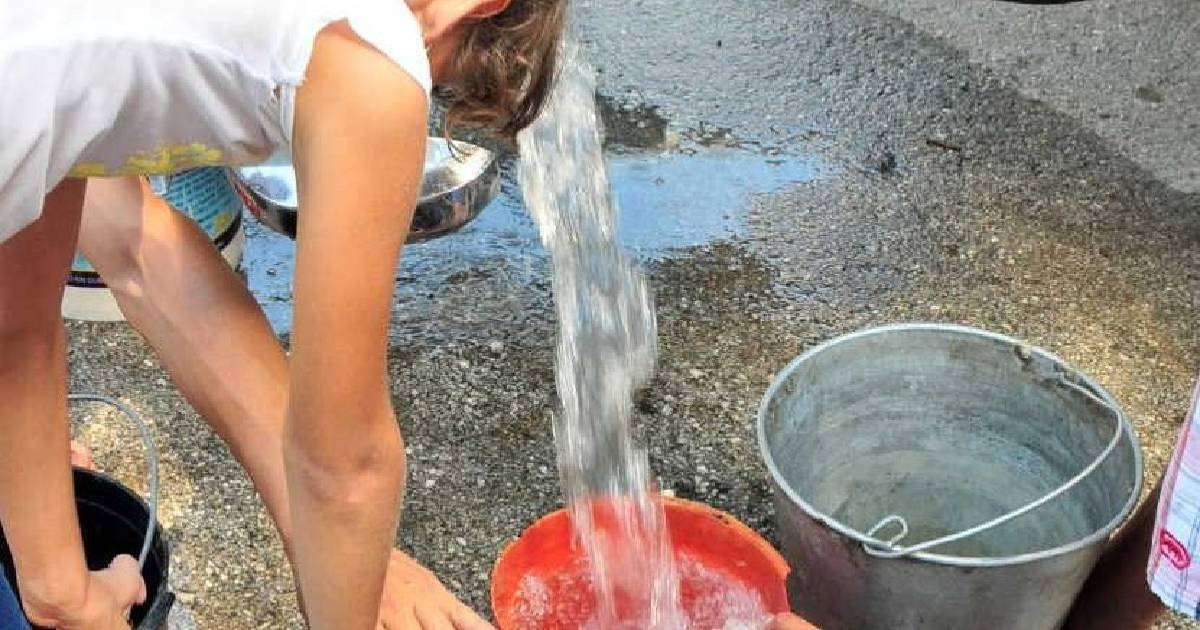
In the province of Sancti Spíritus, over 57,800 residents are grappling with difficulties in accessing potable water. Local authorities acknowledge that power outages and equipment failures at pumping stations are major obstacles to ensuring a stable supply.
A recent report from the provincial newspaper Escambray, citing data from the Provincial Water and Sewer Company, reveals that approximately 19,600 people are directly impacted by malfunctioning equipment at the Vanguardia and Guasimal pumping stations.
Trinidad's Unique Struggles
The municipality of Trinidad is particularly hard-hit. Roberto Nápoles Darias, head of the provincial company, explained that each pumping station in Trinidad is linked to separate electrical circuits. This setup complicates efforts to maintain consistent water delivery during network interruptions.
"Due to electrical issues, Trinidad faces the most significant challenges in ensuring water supply," Nápoles admitted.
Pumping Challenges Across the Province
The provincial capital also struggles to provide a continuous water service. Nápoles mentioned that water is pumped twice daily, but this frequency doesn't guarantee that every household receives a regular supply.
One positive development is the solar panel installation at the La Boca pumping station in Trinidad. This upgrade allows for nearly 24-hour service, filling the tank that supplies both the Ancón Peninsula and the lower areas of the city.
Efforts to Improve the Situation
On a larger scale, the province has installed 99 pumps by transitioning to a different energy matrix. However, this change only benefits smaller communities, each with around 800 residents.
The most ambitious project involves setting up 15 solar-powered pumps at stations with capacities exceeding 15 liters per second, potentially serving over 2,000 people per station. Unfortunately, this initiative hinges on the importation of necessary technology.
Nápoles noted that this investment would enable service to reach all municipalities, addressing the most critical areas reliant solely on electricity. However, he did not provide a timeline for its completion.
National Context of Water Crisis
While Sancti Spíritus is not among the worst-affected regions, the nationwide scenario is much bleaker. Provinces like Santiago de Cuba, Mayabeque, Holguín, and La Habana are experiencing distribution cycles that can prolong for 30 days or more.
In Santiago de Cuba, a 900-millimeter pipe rupture recently left over 93,000 residents in 13 neighborhoods without water.
In Pinar del Río, nearly 170,000 people lack consistent access to water services, exacerbated by power outages lasting over 16 hours daily at pumping stations. Matanzas is similarly plagued by water supply issues affecting 265,000 residents.
Nationally, the National Institute of Water Resources reported at the end of October that over 2.6 million people had partial or total disruption in water access. Earlier in the month, this figure reached 2.7 million Cubans, equivalent to 35% of the population served by water networks.
Lack of electricity and equipment failures accounted for approximately 88% of reported disruptions, according to the Institute.
Understanding the Water Crisis in Cuba
What are the main causes of water supply issues in Sancti Spíritus?
The primary causes are electrical outages and equipment breakdowns at pumping stations, which disrupt stable water supply.
How is Trinidad attempting to solve its water supply problems?
Trinidad is addressing its water issues by installing solar panels at the La Boca pumping station, allowing for nearly continuous service.
What is the potential impact of the solar-powered pump project?
If implemented, the project could serve over 2,000 people per station, significantly improving water access across municipalities.