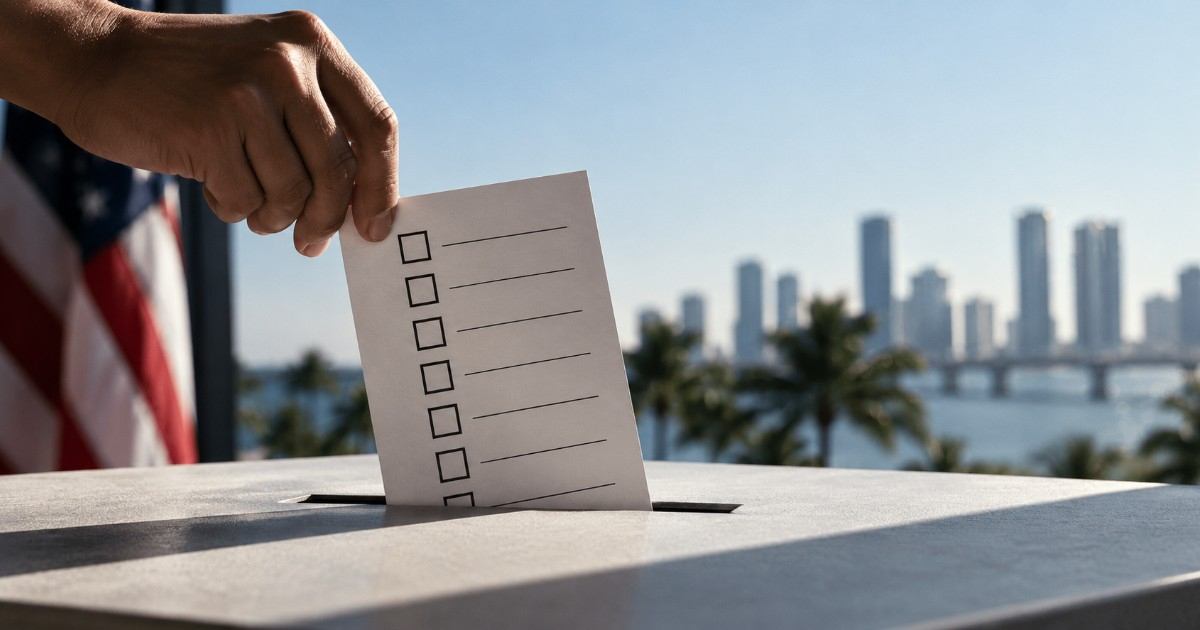
According to a report by Harvard's Shorenstein Center on Media, Politics and Public Policy, released by WLRN, around one-third of Miami-Dade voters surveyed during the midterm election cycle reported encountering at least one voting-related issue.
The study, which surveyed 164 Miami-Dade residents between August 23 and October 26, 2026, revealed that 32.9% of participants experienced at least one of six monitored electoral problems. This figure contrasts with 26.5% nationwide and 26.4% in Florida.
Understanding the Survey's Limitations
Before delving into the data, it is crucial to note a significant methodological caveat: the sample does not represent the entire county or its general population. Participants were recruited online, and counties deemed higher electoral risks were oversampled.
The report itself advises that its findings should be viewed as "signals warranting further attention or verification," rather than accurate estimates of the actual state of election administration.
The margin of error for the county's figure is ±7.2 percentage points, placing the difference with the national rate within that margin.
Key Issues Facing Miami-Dade Voters
Among the most pressing concerns for Miami-Dade voters leading up to the upcoming election on Tuesday, November 3, are misleading calls, texts, or messages about the elections (19%, compared to 9.5% nationally) and challenges with electoral tasks such as verifying registration or requesting a mail-in ballot (17%, compared to 7.2% nationally).
Other issues reported above the national average include intimidation or harassment (15.2% vs. 7.7%), conflicting information about registration (12.8% vs. 5.1%), discouragement from registering (12.7% vs. 3.8%), and notifications of registration challenges (6.1% vs. 2.5%).
Local Example of Misleading Messages
One recent example of misleading messaging in the county involves a robocall by the Democratic super PAC Battleground Alliance against Congresswoman María Elvira Salazar, which PolitiFact described as "largely accurate" but missing important details.
These types of politically charged robocalls are precisely what the Harvard survey identifies as the most frequent problem in Miami-Dade.
Demographic Insights
The age group most affected by these issues was 25 to 44-year-olds, with 48.7% reporting problems, while those over 65 reported the least (15.4%). Among Hispanic or Latino respondents, 34.2% faced at least one issue.
"This survey highlights that election experiences can vary significantly between communities," stated Allison Wan, senior data scientist at the Shorenstein Center.
"Our goal is to provide a more systematic, data-driven picture of these local signals, so election officials, journalists, and voters know where to focus their attention," she explained.
Efforts to Address Voter Concerns
Alina García's office, supervising elections, responded by extending hours during early voting. "Midterm elections and all campaigns naturally cause some confusion and concern among voters, but we have been very clear and timely in all our messaging," a spokesperson noted.
Early voting in Miami-Dade is available until Sunday, November 1, from 7:00 a.m. to 7:00 p.m., at 28 designated centers within the county.
Voters can verify their registration, review their sample ballot, and find their polling place at votemiamidade.gov. Those receiving misleading calls or messages can file a complaint with the Federal Communications Commission (FCC) at fcc.gov or by calling 1-888-225-5322.
Frequently Asked Questions About Voting Challenges in Miami-Dade
What are the most common voting issues reported in Miami-Dade?
The most common issues include misleading election-related messages and difficulties with tasks like verifying registration or requesting mail-in ballots.
Who conducted the survey on voting issues in Miami-Dade?
The survey was conducted by Harvard's Shorenstein Center on Media, Politics and Public Policy.
How can Miami-Dade voters report misleading election messages?
Voters can file a complaint with the Federal Communications Commission (FCC) at fcc.gov or by calling 1-888-225-5322.