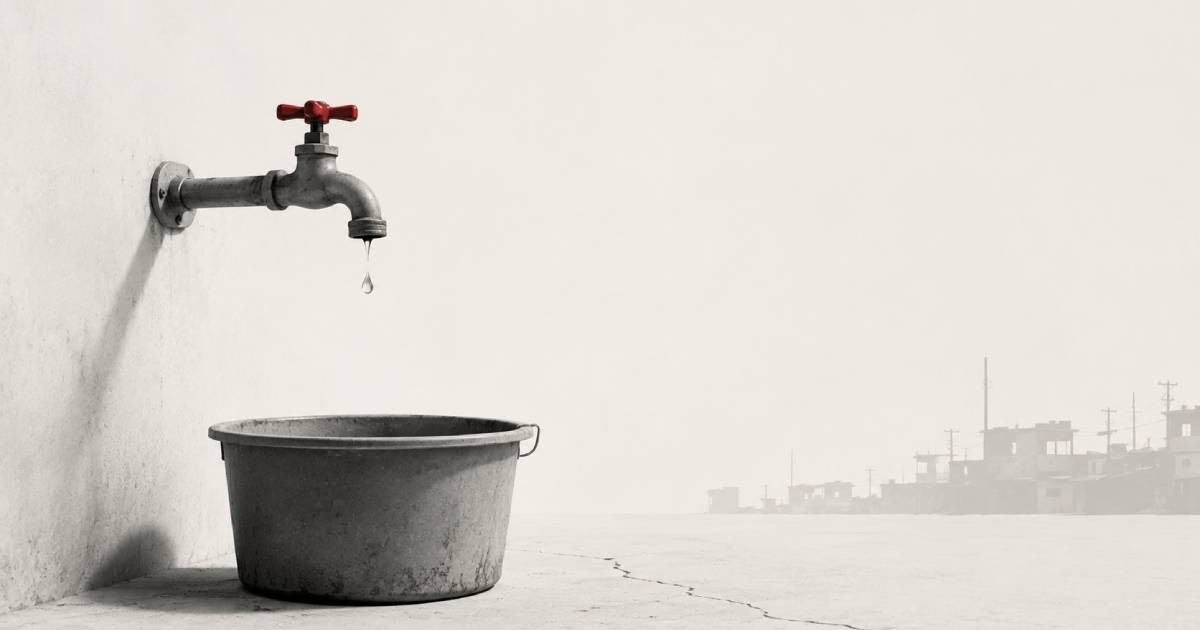
In the early hours of Thursday, a significant water main break in Santiago de Cuba left over 93,000 residents without water. This disruption stems from damage to the number five main pipeline in Zona Alta, as reported by the Aguas Santiago Water and Sewer Company.
The break occurred at 1:30 a.m. at the intersection of Federico Rey Avenue and Primera Street. Due to the complexity of the repair, the company estimates that it could take up to 48 hours to resolve the issue.
Impact on Local Communities
Thirteen neighborhoods and circuits are currently without water: C/U Antonio Maceo, Vista Alegre Bajo Este and Pastorita, Ampliación Terrazas, Sueño–Avenida Américas, Portuondo–Zamorana, Flores Bajo, Vista Hermosa, Mariana de la Torre Alto Parte Baja, Asunción–Municipal, Villalón–Flores Alto, Dessy Zona Alta and Media, Dessy Zona Baja–Chicharrones, and Veguita de Galo Alto. Additionally, the rebombeo stations Micro 1A and Van Van are also out of service.
The company assured that repair crews are fully committed to minimizing the repair time, despite the expected 48-hour timeframe.
Ongoing Water Challenges in Santiago
This incident adds to a series of water system failures that have plagued the city throughout 2026. In July, two consecutive breaks occurred in the main northwest pipeline, demanding similarly lengthy repairs. Earlier, in June, Aguas Santiago officials acknowledged that neighborhoods such as El Cristo, Altamira, and San Juan-Sevilla had been without water for 39 to 48 days, exacerbated by power outages that halted pumping stations.
The problem extends beyond the provincial capital. Residents in Songo-La Maya recently reported between three and four months without water access, while those in Palma Soriano have endured over six months without regular supply.
Health and Infrastructure Concerns
The water shortage has also led to health issues; October saw a rise in diarrheal diseases in Santiago de Cuba linked to consuming murky water, described by locals as dark, sediment-filled, and muddy-smelling.
Nationwide, the National Institute of Hydraulic Resources reported on October 27 that 2.14 million people—27.4% of the country's population—experienced complete or partial disruptions in water access. Just three weeks earlier, this figure was 2.7 million, or 35% of those supplied by the water network.
Over 85% of the country’s pumping stations rely on electricity, making power outages a significant factor in the ongoing water crisis. A state water and sanitation company official admitted to AFP that "between 80% and 85% of the distributed water requires pumping to reach homes."
For information regarding the current water outage, residents can contact the Aguas Santiago Public Attention Department at 628010 or 620686. The Cuban government plans to install 200 megawatts of solar power for water pumping, although this won't be implemented until after 2027.
Addressing Santiago de Cuba's Water Crisis
What caused the water outage in Santiago de Cuba?
The outage was due to a break in the number five main pipeline in Zona Alta, which affected over 93,000 residents.
How long is the repair expected to take?
The repair is anticipated to take up to 48 hours due to its complexity.
How has the water crisis impacted public health in Santiago de Cuba?
There has been a reported increase in diarrheal diseases associated with the consumption of contaminated water.
What steps is the Cuban government taking to address the water crisis?
Plans are underway to install 200 megawatts of solar power for water pumping, though this is not expected before 2027.