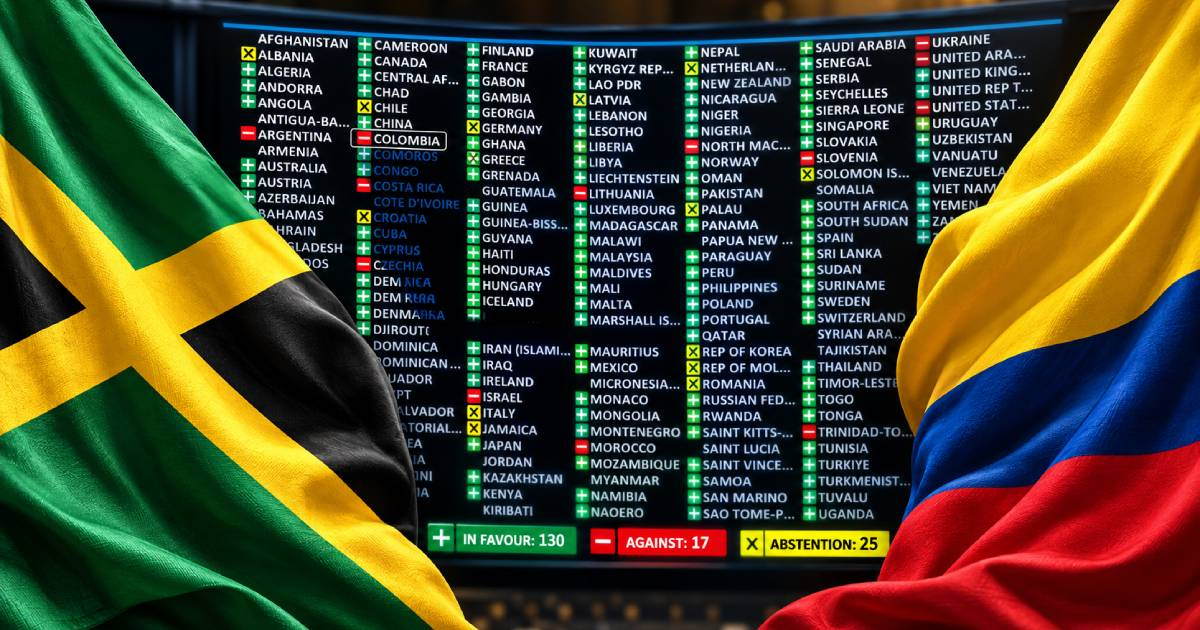
In a recent turn of events, both Jamaica and Colombia have defended their altered voting stances regarding Cuba at the United Nations. While Jamaica firmly denied any U.S. pressure leading to its abstention, Colombia justified its opposition to the resolution by emphasizing a staunch position against authoritarian regimes.
On Wednesday, October 28, the UN General Assembly once again passed a resolution calling for the end of the U.S. economic embargo on Cuba. However, the support was significantly less than in previous years, marking a shift in the traditional voting patterns of these nations.
Jamaica Denies External Influence
Jamaican Information Minister Dana Morris Dixon refuted claims that foreign pressure influenced their decision to abstain from the UN vote. According to IRIE FM, Dixon assured during a press conference that no external entities swayed Jamaica’s decision.
Foreign Affairs Minister Kamina Johnson Smith acknowledged the abstention as a shift in Jamaica's longstanding foreign policy, which had supported the resolution against the embargo for over three decades. Nevertheless, Johnson Smith explained that Jamaica opposes unilateral economic measures and advocates for broader discussions about Cuba.
Johnson Smith noted that the resolution fails to address necessary economic and institutional reforms on the island, human rights considerations, and the fostering of dialogue between the Cuban and U.S. governments. She argued that endorsing the same document annually, without tangible improvements in Cuban living conditions, fails to deliver the desired outcomes.
"We did not vote against it because we do not support unilateral actions," the minister stated, as reported by the Jamaica Observer. She emphasized that voting in favor would also be counterproductive, as it would not aid the Cuban people amid the deepening humanitarian crisis.
Opposition Voices in Jamaica
The decision to abstain faced criticism from Jamaica’s National People's Party (PNP), which demanded clarity on why the country deviated from its diplomatic norm. Opposition Foreign Affairs spokesperson Donna Scott-Mottley questioned the decision's timing, noting a contradiction with a parliamentary motion on Cuba passed just a day earlier. She highlighted the historical ties of cooperation between Jamaica and Cuba, particularly in health and education, and underscored the importance of sovereignty and self-determination principles.
Colombia's Direct Opposition
Contrasting Jamaica's stance, Colombia took a decisive step by voting against the resolution. The Colombian Foreign Ministry confirmed via X, formerly known as Twitter, that the vote followed directives from President Abelardo de la Espriella, with oversight from Foreign Minister Omar Bula.
The Ministry described the vote as historic, reflecting Colombia's foreign policy commitment to democracy, freedom, and national security. "Colombia strengthens its strategic alliances and maintains a firm stance against authoritarian regimes and narcoterrorism accomplices," the Ministry declared. This shift marks Colombia's departure from its usual support for the resolution against the U.S. embargo.
Within Colombia, the move was met with opposition from the Pacto Histórico movement, which advocated for respecting Cuba's sovereignty and acknowledged Havana's role in Colombian peace efforts.
Global Shifts in UN Voting
The voting positions of Jamaica and Colombia are part of a broader trend in the international community's stance on the U.S. embargo. On October 28, the UN General Assembly approved the resolution with 130 votes in favor, 17 against, and 25 abstentions. This represents a significant drop from 2025, when the resolution garnered 165 favorable votes, seven against, and 12 abstentions—a decrease of 35 supportive votes this year.
Colombia joined nations like Argentina, Costa Rica, Ecuador, and Paraguay in opposing the resolution, while Jamaica aligned with those opting to abstain. The reduced support for Cuba's resolution comes amid Washington's diplomatic efforts to diminish backing and Havana's allegations of U.S. pressure.
Understanding the UN Vote on Cuba
Why did Jamaica change its vote on the UN resolution regarding Cuba?
Jamaica altered its vote to abstain from supporting the resolution, citing a desire for broader discussions that include economic and human rights reforms in Cuba, rather than external pressure.
What was Colombia's reason for voting against the UN resolution?
Colombia voted against the resolution based on a foreign policy that emphasizes the defense of democracy and opposition to authoritarian regimes, aligning with instructions from President Abelardo de la Espriella.
How did the international community's support for the resolution change this year?
This year, the UN resolution received 130 votes in favor, 17 against, and 25 abstentions, marking a decrease in support compared to 2025 when it received 165 favorable votes.