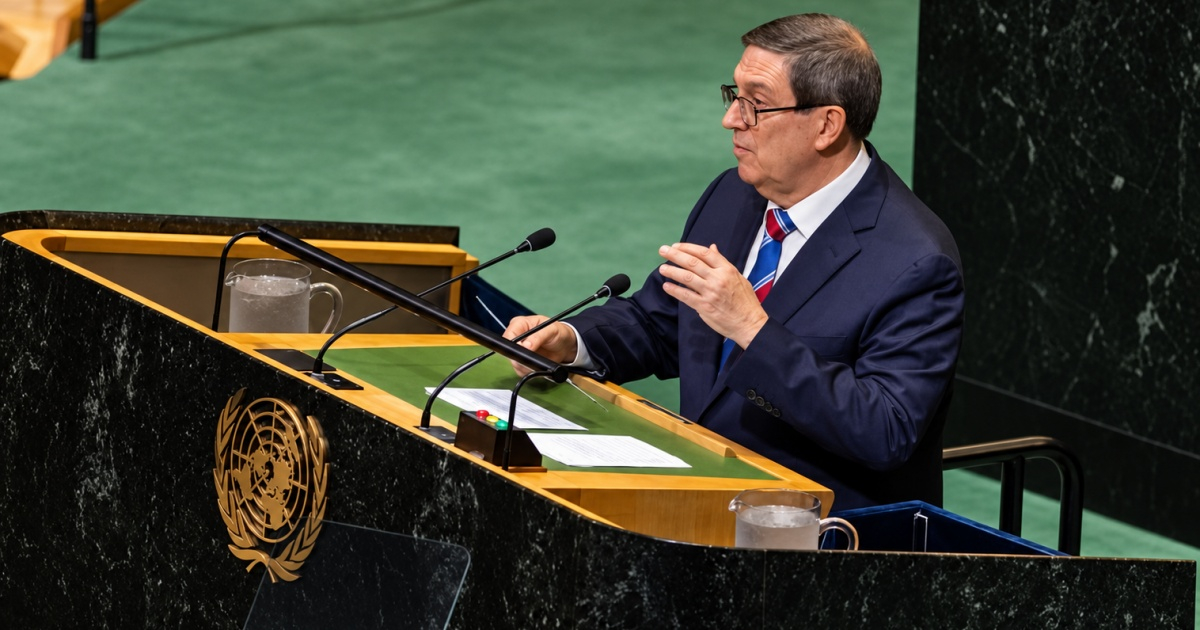
For the first time in over three decades, Italy has opted to abstain from voting in the United Nations General Assembly regarding the U.S. embargo on Cuba. This marks a significant shift in the country's longstanding position.
The administration under Giorgia Meloni cited the absence of political and economic reforms on the island, the suppression of freedoms, the plight of political prisoners, and Cuba's stance concerning Russia's invasion of Ukraine as reasons for their changed vote.
Italy Demands Accountability from Cuban Authorities
In a formal statement released on October 28, the Italian Ministry of Foreign Affairs, known as the Farnesina, emphasized the urgent need for transformative changes in Cuba. The statement pointed fingers squarely at the Cuban government as being responsible for the island's ongoing crisis.
"Reforms are overdue; the decisions by the Cuban authorities are directly causing the current crisis," asserted the ministry, delivering a stern critique of Cuba's leadership.
This abstention ended Italy's long-standing pattern of supporting the Cuban resolution. Italian media noted that since 1995, Italy had consistently voted in favor until now.
Italy Highlights the Dual Impact of the U.S. Embargo and Cuban Policies
The Farnesina acknowledged the negative economic and humanitarian consequences of the U.S. embargo on the Cuban population, suggesting that lifting it might promote economic openness. However, they also stressed that the mere removal of U.S. sanctions would not address Cuba's deep-rooted structural issues, attributing these problems to the decisions made by its leaders.
“The lack of political and economic freedoms, coupled with longstanding inefficiencies in the economic system, have greatly exacerbated the current crisis,” stated the Italian government.
Rome called for substantial reforms across political, economic, social, and judicial arenas, urging Cuban authorities to take concrete steps to alleviate the hardships faced by the people.
Addressing Human Rights and Political Prisoners in Cuba
A significant portion of the statement focused on human rights issues in Cuba, particularly in light of the government's crackdown following the anti-government protests on July 11, 2021.
“Italy remains deeply concerned about the human rights situation in Cuba, especially after the events of July 2021,” expressed the Farnesina. The ministry reiterated its call for the release of all political prisoners, emphasizing this demand as part of its rationale at the UN.
Italy Criticizes Cuba's Stance on Russian Aggression
Cuba's foreign policy, particularly its reaction to the conflict in Ukraine, also influenced Italy's decision. "We regret that Cuba's position on Russia's illegal war of aggression against Ukraine remains incompatible with the principles of the United Nations Charter," declared the Farnesina.
Italy pointed out that Cuba voted against a UN General Assembly resolution on February 24, 2026, which advocated for a ceasefire and lasting peace in Ukraine, highlighting that Italy's decision was influenced by Cuba's international positions as well as its domestic policies.
Continued European Humanitarian Aid Despite Diplomatic Shift
Despite its abstention, Italy reaffirmed its support for the Cuban people, pledging to continue humanitarian assistance. The Farnesina noted that the European Union increased its humanitarian aid to Cuba to €16 million in 2026, focusing on healthcare, emergency food supplies, and access to water and energy.
Italy is currently involved in twelve development cooperation projects in Cuba, valued at approximately €30 million, with an additional €32 million from EU-delegated programs.
Planned interventions for 2026 include a €250,000 contribution to the World Food Programme to support vulnerable groups' nutrition, alongside a €3.5 million rural development and food security project with the Lavazza Foundation, among other emergency aids.
Cooperation with Cuban Medical Professionals in Calabria
The Italian decision aligns with ongoing healthcare cooperation in the Calabria region, where local authorities have enlisted Cuban medical professionals to address doctor shortages. According to Il Fatto Quotidiano, the agreement involves around 500 Cuban doctors, with the program extended to 2027. This initiative has faced scrutiny over the terms of employment for these professionals.
European Nations Join Italy in Abstaining from Cuban Resolution
Italy was not alone in its diplomatic shift, joining Germany, the Netherlands, Poland, Greece, Bulgaria, Romania, Estonia, Latvia, and Croatia in abstaining from the vote. The resolution passed with 130 votes in favor, 17 against, and 25 abstentions, marking a notable decrease in support compared to the previous year.
Frequently Asked Questions about Italy's UN Vote on Cuba
Why did Italy abstain from the UN vote on the Cuba embargo?
Italy abstained due to the lack of political and economic reforms in Cuba, restrictions on freedoms, the situation of political prisoners, and Cuba's stance on the Russian invasion of Ukraine.
How has Italy traditionally voted on the Cuba embargo resolution?
Italy had consistently supported the resolution from 1995 until its recent abstention in 2023.
What are Italy's concerns regarding human rights in Cuba?
Italy is concerned about the human rights situation, especially after the government crackdown on protests in July 2021, and has called for the release of all political prisoners.