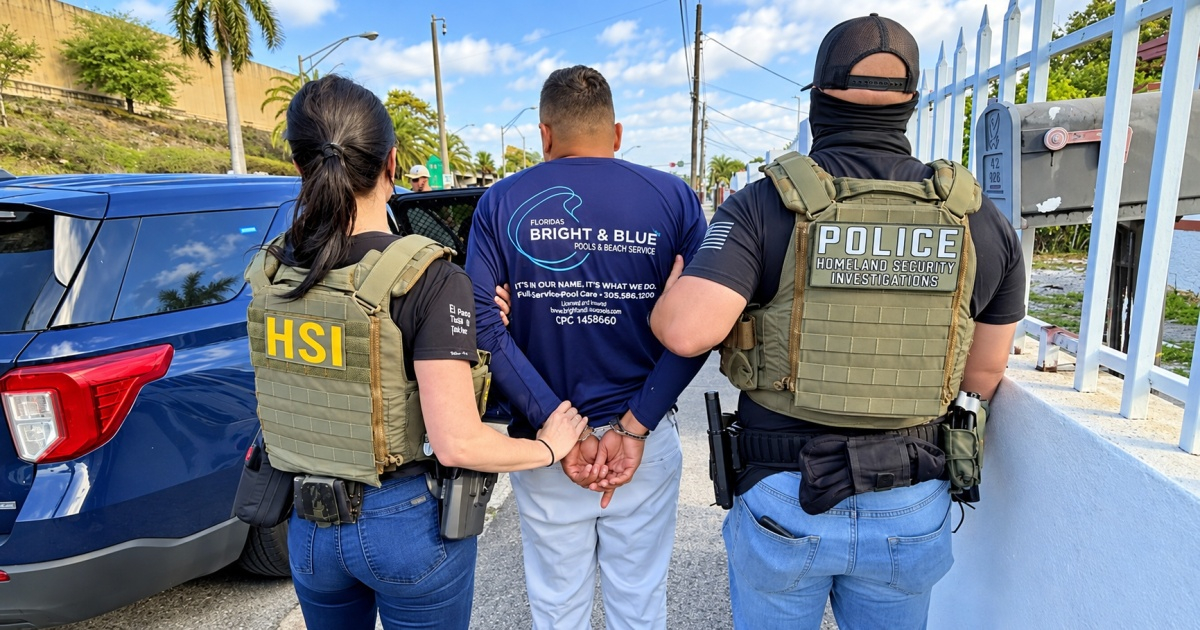
When a loved one is taken into immigration custody, families often find themselves in the dark about their whereabouts, how to communicate with them, or the future of their legal situation.
For many Cuban immigrants in the United States, particularly those with pending legal matters or old deportation orders, understanding their rights and knowing where to seek assistance can be crucial.
Being detained by ICE does not strip you of all your rights upon entering a detention center.
You have the right to seek legal representation, communicate with legal services, receive medical care, request an interpreter, and refuse to sign documents that you do not understand.
Familiarity with these rights can help prevent making decisions that could jeopardize your immigration defense.
Understanding Your Legal Rights in Detention
This guide, based on official U.S. government regulations and documents as of October 29, 2026, outlines what you should be informed of upon arrest, your rights while in detention, and how your family can assist you from outside. It is specifically intended for Cubans with parole, I-220A, pending cases, or old deportation orders.
If you are concerned about what to do when ICE agents come to your home or workplace, CiberCuba offers a step-by-step guide for those situations. Here, we explain what happens after detention occurs.
Legal Representation: What You Need to Know
Unlike certain criminal proceedings, there is generally no right to a government-paid attorney in immigration proceedings.
The Executive Office for Immigration Review (EOIR), which oversees immigration courts, states that you have the right to obtain legal representation at no cost to the government.
This means you can have an attorney, but you must find and pay for one yourself, or seek free assistance.
There is an official list of free legal service providers (pro bono) organized by immigration court for those seeking free help.
ICE's national detainee handbook indicates that this list should be available at detention facilities, and officers can provide it to you.
Two critical warnings:
Only an authorized attorney or a DOJ-accredited representative can represent you in court. "Notarios," consultants, or unauthorized agents cannot provide this representation, according to the EOIR.
Your attorney must file Form G-28 for ICE to formally recognize their representation and share protected information about your case following applicable rules.
What You Should Be Informed of When Arrested
Federal regulation 8 CFR 287.3 outlines several obligations for officers when arresting a person without a warrant and subjecting them to certain formal deportation proceedings:
- Informing you of the reason for your arrest.
- Informing you of your right to legal representation at no cost to the government.
- Providing a list of free legal services.
- Warning you that anything you say can be used against you during proceedings.
Additionally, barring emergencies or extraordinary circumstances, regulations set a 48-hour deadline for certain initial decisions regarding custody and immigration procedures.
This does not mean ICE must release you after that time nor that there is a general 48-hour detention limit.
These rights do not apply similarly to those subject to expedited removal, a procedure that generally allows expulsion without a standard court hearing, though exceptions and review mechanisms exist.
It is crucial for an attorney to quickly determine the procedure being applied to your case.
Since what you say can be used against you, it is wise to consult with an attorney before explaining your entry into the country, your immigration status, or your background. Never lie or provide false documents.
Documents You Should Not Sign Without Understanding Them
One of the most critical moments during detention is when you are presented with documents to sign. Some may involve waiving a hearing, certain remedies, or applying for immigration benefits.
Voluntary Departure: ICE's detainee handbook warns that accepting voluntary departure can affect the possibility of presenting your case before a judge. Regulation 8 CFR 1240.26 specifies that conditions depend on the stage of the process. When granted before the process concludes, it generally requires accepting specific conditions, withdrawing requests for relief, and waiving appeals on relevant issues. Voluntary departure granted at the end of the process has different requirements. Failing to leave within the deadline can result in fines and ten-year restrictions on certain immigration benefits, depending on circumstances and legal exceptions.
Stipulated Removal: This is a written agreement under 8 CFR 1003.25, where the individual accepts the charges and deportability, waives certain forms of relief, and agrees to a deportation order without a standard hearing. The judge must ensure the waiver is voluntary, knowing, and informed.
If you do not understand a document, especially if it is in English, request an explanation in Spanish and speak with your attorney before signing it.
For a Cuban with parole, I-220A, or a potential adjustment of status, accepting certain waivers can have serious implications for their immigration future.
Your Rights Inside a Detention Center
ICE's national detainee handbook outlines rights and services you can request. Their exact application also depends on the standards governing each facility.
- Legal Calls: You should have access to mechanisms to communicate with attorneys and legal assistance providers. Free calls to certain authorized numbers are available, and time limits may apply. Legal communications must be confidential. Ask how to register your attorney's number to prevent monitored calls.
- Attorney Visits: ICE standards include minimum access hours for legal visits, typically eight hours daily on weekdays and four hours on weekends and holidays. These slots do not guarantee eight or four individual hours for each detainee. Family visits are subject to the schedules and rules of each center.
- Legal Library: Detention standards provide access to legal materials and time to prepare your case, usually a minimum of five hours weekly, with the possibility of requesting additional time.
- Interpreter: You can request language assistance for medical matters and crucial issues related to ICE or your detention.
- Medical Care: Centers must provide necessary medical care per applicable standards, including mental health care. You can also request access to your medical records following established procedures.
- Report Abuse: You can file complaints about detention conditions, mistreatment, or standard violations without retaliation. You can communicate with an officer, submit a written complaint, or call ICE's Detention Reporting and Information Line (DRIL): 1-888-351-4024.
If you are prevented from contacting your attorney or cannot access the free legal assistance list, request to speak with an ICE official and document your request in writing. Also, inform your attorney or a legal assistance organization.
How Your Family Can Find You and Follow Your Case
Your family can try to locate you using ICE's Online Detainee Locator System. According to ICE's official information, the system operates 24/7, is available in Spanish, and allows searches with the A-number and country of birth, or with the full name, date of birth, and country of birth.
The locator does not show minors under 18 and may take time to reflect information on newly admitted individuals.
However, a detainee's absence from the system may also be due to other circumstances, including an ICE policy challenged in court.
On October 28, 2026, four legal aid organizations filed a federal lawsuit against ICE over a policy that, they claim, excludes individuals detained with final deportation orders from the public locator since September. The plaintiffs argue that the measure also prevents obtaining their location through direct inquiries by attorneys and family members, hindering access to legal assistance.
The lawsuit, filed in a federal court in Massachusetts, challenges a measure the organizations consider contrary to the Administrative Procedure Act, the First Amendment, and the Freedom of Information Act.
The plaintiffs request the court to nullify the policy. CiberCuba reported on the litigation and its implications for families and attorneys attempting to locate detained individuals.
Therefore, if your relative does not appear in the locator, this does not necessarily mean they have been released or deported. You can contact the local ICE office or call DRIL, which offers Spanish assistance from Monday to Friday, 8:00 a.m. to 8:00 p.m. Eastern Time. However, these efforts may not provide the location of an individual affected by the contested policy. Keep a record of calls and requests made and seek legal assistance to try to locate them.
To determine if you have an open immigration court case and when the hearing is scheduled, EOIR offers its automated case information system, available online and by phone at 1-800-898-7180.
The system does not display a new hearing date until the court sets it, and official notifications and judicial resolutions are the procedure's references.
If the next question is how to get out of detention, CiberCuba explains how to request immigration bond and who can pay it.
Preparing for a Possible ICE Detention
If you have ICE appointments or a pending immigration case, preparing certain information with your family can facilitate efforts in case of detention.
- Write down your A-number and store it in a secure place accessible to a trusted person.
- Have the name and phone number of an immigration attorney or free legal assistance organization handy. Try to memorize the number, as you may not have access to your cell phone.
- Keep copies of your documents: I-94, I-220A, USCIS receipts, court notifications, and proof of your time in the United States.
- Decide who will care for your children and who can assist with tasks and payments if you are detained. Check what legal authorizations would be necessary.
- If you have a final deportation order, inform your attorney and a trusted person. Keep in mind that your location might not appear in ICE's public locator, according to the policy challenged in court.
- Remember this rule: do not sign documents you do not understand without consulting an attorney first, especially if they involve accepting deportation or waiving rights.
- If you have an I-220A, also review CiberCuba's guide on what to bring to ICE appointments and how to prepare your family.
Legal Disclaimer: This article provides general information for informational purposes only and does not constitute legal advice. U.S. immigration laws and policies can change. To assess your specific case, consult with an authorized immigration attorney or a DOJ-accredited representative.
Frequently Asked Questions About ICE Detention and Rights
What rights do I have in an ICE detention center?
In an ICE detention center, you have the right to legal representation, medical care, communication with legal services, and language assistance. You can also refuse to sign documents you do not understand.
How can my family find out where I am detained?
Your family can use ICE's Online Detainee Locator System to find your location. They will need your A-number and country of birth, or your full name, date of birth, and country of birth.
What documents should I avoid signing in detention?
Avoid signing documents that you do not understand, especially those that involve waiving hearings, certain rights, or applying for immigration benefits. Consult with an attorney before signing.
Can I have an attorney in immigration proceedings?
Yes, you have the right to an attorney in immigration proceedings, but the government will not pay for it. You must find and pay for an attorney yourself, or seek free legal assistance.
What should I do if I have a pending immigration case?
Prepare by keeping your A-number handy, knowing the contact information for a legal representative, and having copies of important documents. Decide who will help with responsibilities if you are detained.