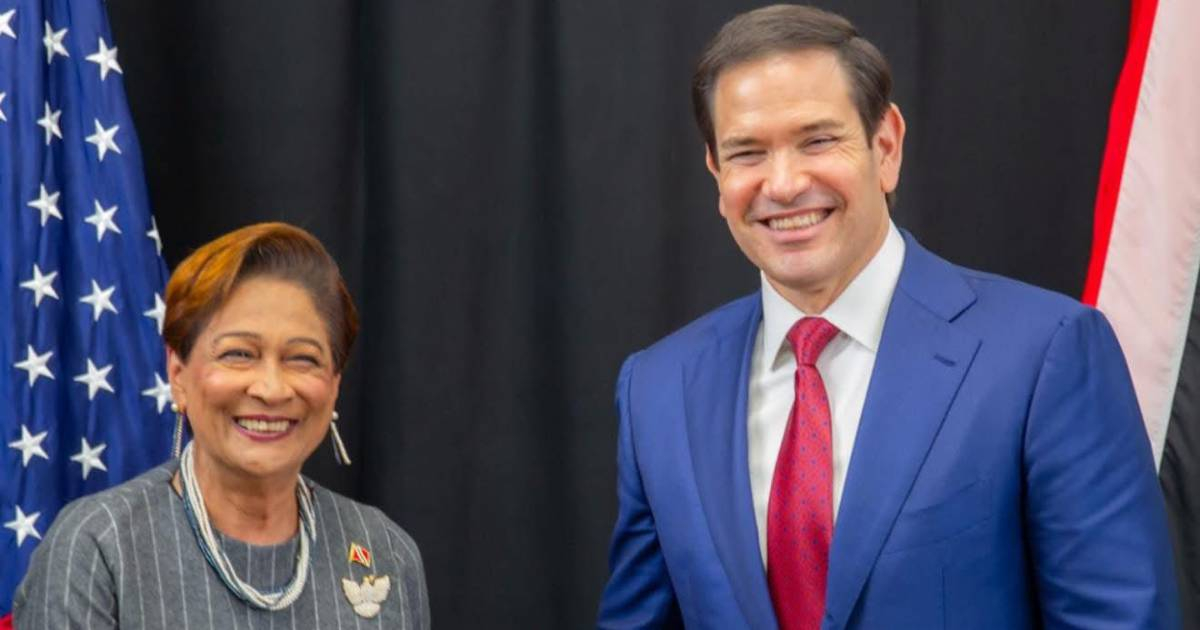
Kamla Persad-Bissessar, the Prime Minister of Trinidad and Tobago, issued a strong statement on Wednesday explaining her nation's decision to oppose the annual United Nations General Assembly resolution calling for the end of the U.S. embargo on Cuba. She emphasized that while her government stands with the Cuban people, it cannot support the dictatorship that rules them.
In a post on X, Persad-Bissessar stated, "I have made it clear publicly that Trinidad and Tobago will not support the military dictatorship in Cuba," underlining her stance with the message: "THE UNC SUPPORTS THE CUBAN PEOPLE, WE DO NOT SUPPORT A MILITARY DICTATORSHIP. THE CUBAN PEOPLE DESERVE DEMOCRACY."
The resolution, identified as A/81/L.5, was passed with 130 votes in favor, 17 against, and 25 abstentions. This marks the most unfavorable outcome for the Cuban regime since it began presenting this initiative in 1992. In stark contrast to previous years, the resolution saw overwhelming support in 2024 with 187 votes in favor and only two against, and in 2025, 165 in favor and seven against.
Trinidad and Tobago was among 12 nations that shifted their stance from the previous year, when they had voted in favor. In the Caribbean, while Jamaica, Guyana, and Haiti chose to abstain, Trinidad and Tobago, along with Barbados, opted to vote against, aligning themselves with Washington.
Persad-Bissessar expressed her unwavering support for U.S. Secretary of State Marco Rubio, who has led a diplomatic campaign to isolate the Cuban government at the UN. "Secretary of State Marco Rubio, of Cuban heritage, is correct: for Cuba to thrive, political reforms must occur, and the democratic rights and freedoms of the Cuban people must be restored," she asserted.
The Prime Minister also criticized those who champion democracy at home yet remain silent about its absence in Cuba: "We cannot demand democracy, free and fair elections, freedom of expression, and political rights for ourselves while staying silent when those same liberties are denied to the Cuban people."
Her statement directly challenged the regime's elite: "While the Cuban people suffer, the leaders of the Cuban regime and their families live in luxury. The exploitation of ordinary Cubans to sustain the luxurious lives of those associated with the ruling regime must come to an end."
The vote sparked significant internal controversy. Eleven former CARICOM heads of government — including former Trinidad and Tobago President Keith Rowley — signed an open letter on October 24 urging member states to support the resolution. Former Foreign Minister Amery Browne also publicly called for the country to vote in favor. Persad-Bissessar responded by accusing them of hypocrisy, noting that those who defend the Cuban dictatorship "would never support it in our own country."
This stance is not new. At the 50th Regular Meeting of the CARICOM Heads of Government Conference in February 2026, Persad-Bissessar had already declared she would not support "a dictatorship in Cuba or anywhere else." In July of the same year, Trinidad and Tobago abstained during an extraordinary UN vote on Cuba; this Wednesday marked their definitive step by voting against it.
The U.S. Ambassador to the UN, Mike Waltz, praised the outcome, describing the Cuban resolution as "fraudulent," noting that nearly three times as many countries voted against, abstained, or did not participate.
Persad-Bissessar concluded her statement with a message of solidarity: "The United National Congress commends all nations standing in solidarity with the wonderful people of Cuba."
Impact of Trinidad and Tobago's Vote Against Cuba at the UN
Why did Trinidad and Tobago vote against the UN resolution on Cuba?
Trinidad and Tobago voted against the UN resolution as they do not support the military dictatorship governing Cuba, despite backing the Cuban people.
What was the result of the UN vote regarding the U.S. embargo on Cuba?
The resolution was passed with 130 votes in favor, 17 against, and 25 abstentions, marking a significant shift in support compared to previous years.
How did other Caribbean nations vote on the resolution?
While Jamaica, Guyana, and Haiti chose to abstain, Trinidad and Tobago and Barbados voted against the resolution, aligning with the U.S.